


More than just a fanciful childhood dream, a tree house is a special means to turn an average backyard into an amazing haven. Adding a structure among the branches will bring nature closer and increase property appeal whether your goal is a quiet area for leisure or a gathering place for family events. The need for a calm and fascinating escape in one’s own outside environment gets stronger as modern lives becoming ever more busy. Tree houses excel here since they combine adventure with creativity and provide both utility and entertainment.
We shall investigate in this blog how a tree home can totally alter the dynamics of your outdoor surroundings. You will find all you need to know to make a wise choice from knowledge of architectural principles to discovering how these elevated areas could increase value to your house. Whether your ideal is a modern area with glass railings and environmentally friendly materials or a rustic hideaway high in a strong oak, a tree house can offer a plethora of advantages to you, your family, and the general ambiance of your house. Prepare yourself to be inspired; learn how to make your backyard the personal sanctuary you have always wanted.
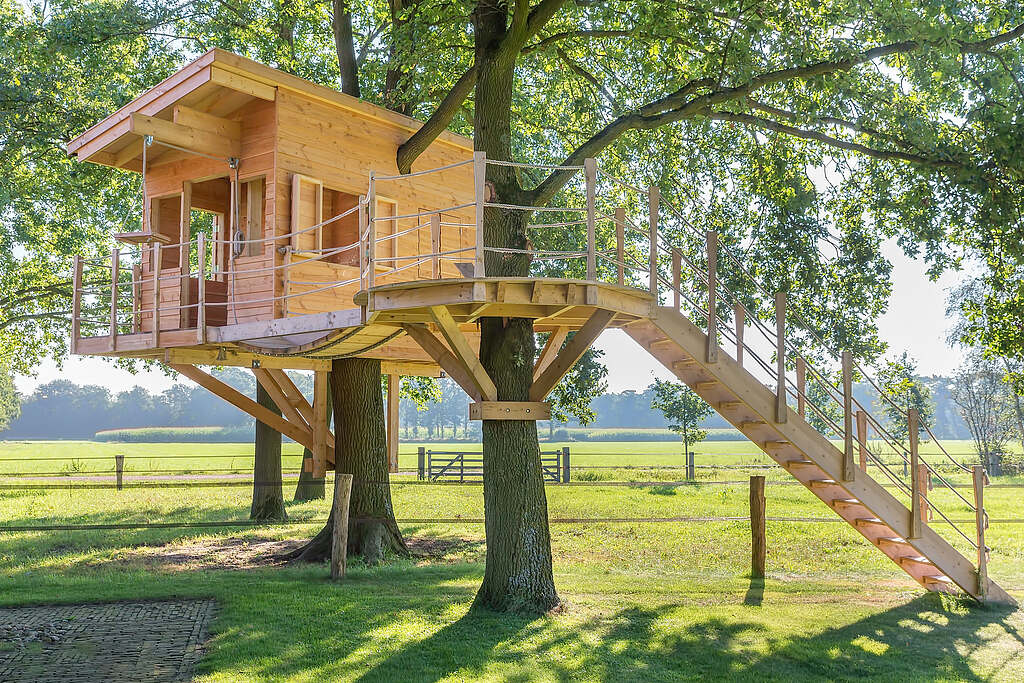
Why, therefore, is a tree house the best outdoor improvement?
When you image an outdoor refuge, you could see a well chosen patio, a peaceful water feature, or a rich garden. Although any home would benefit from all of these, a tree house offers a completely fresh perspective for your outside area. Rising above the daily scene, it invites you to see your surrounds from a different angle. Apart from providing breathtaking vistas, this higher vantage point helps one to develop a closer relationship with the surroundings.
Recovering the Childhood Spirit
The natural capacity of a tree home to inspire awe and nostalgia makes it among the most appealing structures. For many, it reminds of a time of inquiry and creativity when a basic wooden platform among the branches became a fortification, a pirate ship, or a peaceful reading nook. Building a tree home allows you and your loved ones an opportunity to regain that playful spirit and bring it into adulthood.
Simplicity in a Modern Environment
Modern life moves quickly, hence finding tranquility could prove difficult. A tree home provides a pocket of simplicity cut apart from the everyday grind. Rising inside your raised retreat asks you to stop, unwind, and concentrate on the natural surroundings. Surrounded by leaves fluttering in the breeze, it’s simpler to ignore distractions and focus on significant events—like listening to birdsong or enjoying a morning cup of coffee as you watch the sunrise.
An Invitation to Discover the Parks
Tree homes naturally inspire exploration and environmental inquiry. Both young people and adults can discover local flora and fauna, see animals, and develop respect of the ecosystems that flourish around their house. Families trying to foster a love of nature in next generations will find great value in this sense of awe. The raised form also provides chances for including naturalistic features like climbing vines or bird feeders, therefore strengthening the link with the outside world.
Stressing Original Architectural Flair
Tree homes add a creative aspect to the look of your house outside its practical and emotional attraction. They can be made to be a striking statement item that grabs attention or to complement your current landscaping. There are many ways to personalize your tree house from elegant modern designs with steel and glass to more classic wooden buildings that go perfectly with the surrounding landscape. Unlike traditional yards, this architectural diversity lets you create a unique character for your outdoor area.
A tree house really stands out as the best approach to improve an outdoor space since it provides both mental uplifting and physical attraction. An elevated structure amid the treetops will surpass your expectations whether your objective is to inspire imaginative play for children, design a tranquil hideaway for meditation, or just wow guests with a special feature.

Creating Your Dream Tree House for Best Effect
Building a tree home calls for careful planning to make sure it meets your functional demands and harmonizes with your surroundings, not only about hammering boards to a trunk. Good design affects the general visual appeal, safety, and durability of the construction.
Harmonizing Style and Function
Start by delineating the intended uses of your fantasy tree house as you start to design it. Will it be a home office, a kids’ play space, or a quiet haven for weekend reading sessions? Your intended use of the area will direct important design choices like size, layout, and facilities. You also want to make sure the selected look fits the larger yard theme. If your house has rustic accents, a tree house built of organic forms and salvaged wood could be ideal. Alternatively, think of sleek lines and simple details if you want a more modern touch.
Selecting the Appropriate Tree and Site
Safety as well as appearance depend on choosing the right tree. Look for a mature, healthy tree with sturdy limbs and a strong trunk. Structural integrity makes species like oak, maple, and beech popular. Just as crucial is where the tree in your yard stands. Think about the views you would want from the tree house windows, the proximity to the main house, and the degree of sunlight the area gets. A well-selected site guarantees that your new addition blends naturally with the surroundings, including patios or gardens, rather than seems out of place.
Designing the Layout for Comfort
The interior layout of a tree home is among the most underappreciated elements in design. Plan well since maximizing space in a limited area might be difficult. Your tree house will seem shockingly large with built-in shelves and chairs, multipurpose furniture, and well chosen windows. Comfort also depends on ventilation; including screened windows or vents guarantees appropriate airflow in warmer months. If you want to utilize the tree house in colder months, think about include weatherproofing and insulating techniques to maintain the inside comfortable.
Combining Seamless Access
Just as much as what’s within your tree house, your approach to building it counts. Though children are the main users, traditional ladders can be entertaining. For more practical access, you might also want to think about stairs or perhaps a ramp. Though they must be physically strong and safe, rope bridges can offer an exciting variation. Correct lighting, non-slip flooring, and handrails can make all the difference in offering a safe, user-friendly entrance.
Combining with the Surrounding Surroundings
A tree house that fits its surroundings is more likely to seem as a natural addition to your yard. Careful color selections, sustainable materials, and adding natural features like wood carvings or potted plants help you to create this integration. Design ideas that reduce tree damage, including employing floating brackets or tension cables instead of nails driven straight into the trunk, can help you to maintain the surroundings as unaltered as possible.
From the first functional concept to the particular materials you choose, carefully addressing these elements will help you build a tree home that not only looks great but also tests of time. Reaching maximal effect ensures that your elevated refuge adds continuous value to your outside environment by means of a balance between beauty, safety, and utility.
Welcome Nature and Improve Your Backyard Experience
By definition, a tree home helps you to be more in line with nature. Once your framework is in place, however, there are several ways to heighten that degree of immersion. Embracing the natural world may be a transforming component of your backyard life from including vegetation into the design to building observation platforms for local species.
Inviting Local Mammals
If you enjoy the outdoors, your tree house could be the ideal spot for viewing animals. Install tiny birdbaths or bird feeders next to windows to draw local species, and arrange a cozy seating place where you may calmly observe them. If you enjoy nighttime animals like owls, think about installing low-intensity lighting around your tree house to enable their spotting without upsetting their habitat. Along with enhancing your experience, this direct interaction with animals fosters a closer respect of the nearby ecosystem.
Elements of Green Design
Including vegetation inside and around your tree home helps to blur the boundaries between manmade construction and natural habitat. Provided they get enough sunlight, potted plants, hanging ferns, or a small vertical garden will flourish at these higher elevations. Guiding vines along railings or support beams will help your tree house seem to be a part of the forest canopy. Apart from improving the air quality around the construction, these live accents help to soften the look of the metal or wooden parts.
Natural Illumination and Ventilation
Big windows or skylights will let the room seem wide and airy, thereby maximizing the natural light availability. If you intend to use the tree home during daylight hours for reading, studying, or work, this is extremely helpful. Appropriate ventilation—through well positioned windows or roof vents—keeps you comfortable without depending mostly on electrical equipment. A little breeze blowing through leaves can be far more enjoyable on hot summer days than artificial cooling.
Connecting Decks and Walkways
If your yard is big or has several mature trees, think of extending your tree house experience with connected paths or several decks at different heights. This forms a network of view points from which you may go around several portions of your land from above. Every platform can be set aside for a different purpose—one for leisure, another for entertaining visitors, maybe another especially designed for wildlife viewing. This multi-deck concept provides an immersive, natural experience whereby one outdoor “room” can be easily accessed from another.
Ecological Methods for Building
Accepting nature goes beyond decoration or gardening to encompass your building style. Choosing environmentally responsible resources for your project, including reclaimed lumber, recycled metal, or FSC-certified wood, lessens its effect on the surroundings. Using non-toxic stains and finishes guarantees even more that your new construction is safe for people and wildlife. Careful building methods—such as reducing the number of holes drilled into the tree and applying movable supports—can help to maintain the host tree’s health for many years to run.
Red redefining what it means to spend quality time outside by submerging your tree house in nature and making sure it accentuates the surroundings. The outcome is a better backyard experience that feeds body and spirit and motivates you and your family to leave screens behind and enjoy the energizing environment just outside your door.
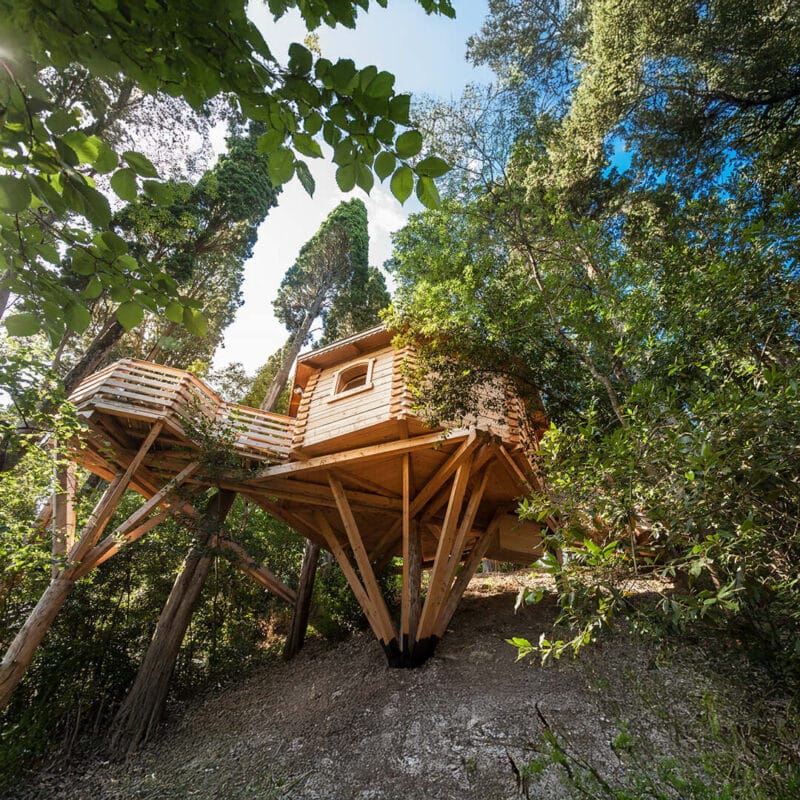
Original Ideas for Year-round Tree House Use
A tree home isn’t just a seasonal oddity for languid summer days. With some creativity, your raised hideaway can become a flexible area used all year long. Your tree house can be the center of outdoor activities independent of season or temperature by including some basic design and use changes.
Summer Vacues
A tree house might become your preferred lounge space in warm months to maximize sunlight and fresh air. Arrange the inside with cozy chairs, light drapes, maybe a little table for snacks and cool beverages. For the height of leisure, you might even include a hammock. The tree house can serve as a private haven for guests seeking a more subdued escape from the main gathering below if you are having parties or barbecues.
Autumn Retreat
Your tree house looks rather different as leaves start to change colour. It turns into a front-row view of the vivid presentation of nature. Add larger cushions, cosy blankets and weather-resistant rugs that produce a pleasant, inviting atmosphere to maximize it. To stifle the cold, think about adding an outdoor-safe heating element—such as a little propane heater. It’s also a fantastic opportunity to add seasonal decorations, maybe with lanterns with mellow glow during early evening and accents inspired by harvest.
Winter Hideaway
Many people believe a tree home is off-limits in winter, but with the correct preparations it can be a magical cold-weather hideaway. Crucially important are insulation and weatherproofing techniques, which include closing cracks where drafts might find access. If you have access to electricity, portable warmers or an electric fireplace unit can make the room a cosy retreat for reading or stargazing. From the vantage point of a tree home, the clear beauty of naked trees and snow-covered branches can be breathtaking and provide a serene quiet difficult to reproduce anywhere.
Spring Encounters
Your tree home becomes the ideal backdrop for seeing fresh life blossom when spring arrives. Birds create nests; flowers blossom; and the planet seems to come alive right before your eyes. To highlight the revitalizing environment, arrange fresh flowers, pastel pillows, even a little herb garden in hanging pots simply. Imagine yourself comfortably beneath cover, listening to the rhythmic patter of showers on your rooftop while you sip a hot cup of tea—spring rains may be just as mesmerizing.
Versatility in Adaptation
Beyond seasonal delight, consider the several uses your tree home could serve:
Office or Study Nook: Get away from home distractions and work or study in a surrounded by vegetation area.
Whether you paint, sculpt, or write, let the natural light and motivating vistas inspire your work.
Fitness Spot: Enough room allows you to conduct low-impact yoga or other workouts among the peaceful surroundings.
Family Movie Night: Your tree house might become a private outdoor movie theater with a portable screen and a tiny projector.
Under the stars, add a small bunk or hammock depending on local laws and structural soundness for a rustic sleepover.
From hot summers to frigid winters, a tree house can fit your needs and provide a friendly haven year-round. Little changes in décor and functioning can help you to guarantee that the area is pleasant, safe, and inviting whatever the season. This degree of adaptability helps you to maximize the investment you have made in your outdoor paradise, therefore transforming it from a passing curiosity into a regular feature of your life.
Safety Precautions and Durable Materials for Long Enjoyment
Although the creative and decorative aspects of a tree home take front stage, longevity and safety should be especially given careful thought. Not only can a well-built, long-lasting shelter protect your health and those of your loved ones, but it also preserves the general value of your land and the tree.
Foundations of Structural Integrity
Start your tree house’s lifetime with a firm foundation—both practically and literally. Galvanized bolts and brackets are among high-quality hardware that resist changes in temperature and humidity. Popular selections for the supporting framework are rot-resistant timbers like cedar and redwood or pressure-treated lumber. These products provide inherent barriers against harsh weather, insects, and deterioration.
Safeguarding the Tree
Since the host tree is a natural collaborator for your construction, its condition should be first concern. Reduce drilling into the trunk and branches; instead, use floating brackets or specific suspension systems that equally distribute weight without restricting development. As they can threaten stability, routinely check the tree for indications of disease, pests, or damage. You increase the lifetime of both by treating the tree with the same attention you do the building.
Safety Access and Railings
Whether you choose a ladder, staircase, or rope bridge, every way of access calls for careful design to stop trips and falls. Steps must be evenly placed and handrails installed at an appropriate height for both children and adults. Steps and decks can have non-slip surfaces—textured tape or anti-skid paint—applied to lower dangers in wet or icy situations. Local safety rules should guide railings around the tree house; generally, a minimum height is advised, and the distance between balusters must be small enough to keep tiny children from squeezing through.
Sealing and Weatherproofing
Your tree home will be outside, hence choosing finishes and materials resistant to the elements is crucial. Sealants and water-repellent dyes help to shield the wood from moisture, therefore lowering the chance of warping and rot. Choose premium shingles or metal panels able to withstand wind, rain, and snow on the roof. Using corrosion-resistant fasteners guarantees that, even in humid environments, your hardware stays tight. See a structural engineer for extra reinforcing if your area suffers from significant weather occurrences as tropical storms or heavy snowfall.
Safety Issues Regarding Electricity
Should you intend to put outlets, lighting, or other electrical components, these ought to be built to resist outside environments. Choose weatherproof conduits and fittings meant for outside use. Make sure a qualified professional handles all wiring, knowing local building codes as well as the special needs of a tree house. Particularly in a wooden construction, faulty or improvised electrical installation might cause fires.
Daily Maintenance
Regular maintenance is even required of the best-built tree house. Every six months or once a year, regular inspections should cover tightening bolts, looking over the tree for growth changes, and assessing the state of the deck, railings, and roof. Early simple fixes for things like tiny leaks or loose boards help to avoid later, expensive and deadly problems.
Giving strong building techniques and careful maintenance top priority helps you create a visually pleasing but also safe environment for everyone who uses it. Whether you’re having a party, looking for privacy, or just appreciating the view from above, knowing that your tree house is meant to survive gives you the freedom to appreciate it totally.

How a Tree House Increases Property Value and Appealing Curbs
You could be building a tree home mostly for personal delight when you commit time and money to do so. But this special feature can also help you financially since it increases the general worth and attractiveness of your house. Real estate experts and prospective homeowners are realizing more and more the appeal of well-made outdoor structures, especially those that promise both uniqueness and utility.
Differentiating Yourself from the Competition
A unique element like a tree house might help your property stand out in a congested real estate market from like properties. Although many houses feature conventional decks or patios, the sight of an elevated hideaway among the woods is striking and bears discussion. If a tree house is physically sound and well-considered, homebuyers looking for a unique living experience could be more likely to ask for a showing or perhaps bid more.
Flexibility in Different Lifestyles
A tree home can appeal to a broad spectrum of possible purchasers with varying needs. Some would view it as a creative studio or guest lodging (where suitable), others as a play room for kids, and still others as a peaceful home office. This adaptability helps since it may satisfy different tastes for living. You can draw attention to these several prospective applications while marketing your house, therefore increasing the pool of interested people.
Improving the Outside Beauty
Apart from serving as a personal highlight, a tree house can harmonize and balance the whole layout of your yard. When combined with careful landscaping—such as sculpted bushes, flower gardens, or garden paths—the building might seem to be a natural extension of the property. Buyers, who usually search for properties allowing them to enjoy nature without requiring major changes after purchase, find well-planned outdoor areas with recreational or leisure spaces appealing.
Long-Term Returns of Investment: Issues
Although building a decent tree home could have a high initial cost, the return on investment could show itself in several ways. Your house’s sale worth could have a little but significant price premium added to it, and a unique feature usually speeds the selling process. A tree house can also be a selling feature if you rent out your house, so justifying either more or less vacant times or higher rental fees. Still, it’s important that the tree house is built and kept with safety considerations in mind as any indication of neglect or inadequate construction could have the reverse effect and turn off customers.
Presenting Sustainable Credentials
In the eco-aware environment of today, a tree house built with sustainable materials and low influence on the surroundings can indicate to possible purchasers that the property fits with green principles. Emphasizing energy-efficient windows, recycled wood, or solar-powered lighting, you can enhance the “eco-chic” charm of the house. If you are selling in a region recognized for environmental preservation or if you expect a buyer target that appreciates green characteristics, this strategy can especially be helpful.
Your tree house becomes more than just a creative backyard project when you mix a careful landscaping with strong building and design. It turns into a value enhancing the marketability and character of your house. Building a tree house appeals to homeowners trying to create a unique outdoor environment because of this mix of fun and financial return.
FAQ
Does building a tree house on my land call for a permit?
Local rules affect permit requirements. Tree houses are categorized by some as auxiliary buildings, which would call for a license. For smaller, essentially recreational projects, others could be more forgiving. Before beginning construction, always ask local authorities or see a building inspector.
- Which tree would be appropriate for my construction?
Choose a mature, healthy tree with strong limbs to carry the necessary weight of the tree house from its trunk. Common favorites because of their strength and resilience are species like oak, maple, and beech. Before you start construction, have an arborist evaluate the tree’s condition and suitability. - A tree house needs what kind of upkeep?
Safety and lifespan depend on regular servicing. At least once a year check bolts, brackets, and supports. To stop UV damage and moisture, re-seal or paint the wood. Also monitor the condition of the host tree, looking for evidence of limb stress or disease. - In a tree house may I put plumbing and electricity?
Indeed, but these additions call both skilled installation and thoughtful design. Plumbing need for a consistent water supply and drainage system; electrical wiring has to be weatherproof. Should your town have rigorous building rules, you might also need licenses for these utilities. - Can I create a tree house in my yard without appropriate mature trees?
Indeed. Similar elevated experience might come from free-standing platforms or buildings supported by posts. Although you lose the direct link to a host tree, good design can still replicate the appearance and feel of a conventional tree house so you may enjoy many of the same advantages.
Following recommended practices and answering common concerns will help you start a tree house project that not only gives your backyard immediate beauty but also provides lifetime value for years to come. If you’re ready to advance, think about contacting experts in building raised outdoor structures. Their knowledge will help you through design ideas to building safety, so making sure your new tree home satisfies or beyond your best expectations.
