


Though designing and building a tree home calls for more than just choosing a tree and adding a platform, tree houses are a great approach to re-connect with nature. Whether for personal or business usage, building a tree house that makes best use of available space guarantees that every square foot of the construction is pleasant and useful.
Tree homes are becoming more and more popular as both dwelling quarters and business buildings, hence demand for creative, space-maximizing designs has grown. This is especially crucial when building tree houses on small yards, constrained spaces, or even on commercial sites where every inch of space has to be used for something.
This site will walk you over the several creative tree home designs meant to optimize available space. We will discuss several design ideas, materials, and techniques that enable the maximum use of little space without compromising comfort or flair. These ideas will provide you the skills and inspiration to design the ideal layout for your needs whether your business owner is hoping to create a distinctive commercial space or a homeowner wishing to add a tree house to their property.

1. Why in Tree House Design Is Space Efficiency Crucially Important?
Regarding design, tree dwellings provide special possibilities and difficulties. The natural surroundings restrict the area you may create, hence careful design and imagination are more important. Maximizing space is about making sure the tree house is useful, flexible, and blends perfectly with the surrounding environment, not only about making it big.
1.1. The Difficulty of Limited Footprint
Tree homes are often constructed with less of a footprint than conventional buildings. The tree itself restricts the area accessible since the construction has to be connected to the tree in a way that prevents damage to it while yet offering a strong basis. The physical limitations of the tree and the need to keep an organic, natural look call for creative design solutions to prevent congestion and guarantee that every component of the tree house has a useful purpose.
Maximizing a restricted space implies:
- Making use of vertical space in multi-level buildings.
- Designing flexible areas with several purposes.
- Including folding or transforming multifunctional furniture.
- Making sure every square inch is aesthetically pleasing and used practically.
Tree houses can be made to feel bigger and more functional than their physical dimensions would imply by concentrating on innovative design and clever spatial utilization.
1.2. Combining Usefulness and Comfort
Maximizing room in a tree home mostly depends on making sure the design is pleasant as well as space-efficient. Comfort should never be compromised in the name of space-saving; the objective is to strike a harmonic equilibrium between the two. This calls for careful consideration of the design’s utilitarian as well as its aesthetic features.
Juggling comfort and utility requires:
- Giving important living areas first priority and reducing pointless additions.
- Maintaining structural integrity while also keeping the design aesthetically pleasant.
- Combining elements including customizable layouts, built-in storage, and outdoor-indoor connectivity.
A tree home with proper plan and design can be a quite useful place offering adventure, comfort, and leisure free from feeling confined.
2. Creative Layouts for Best Utilization of Tree House Space
Knowing the difficulties and value of space efficiency in tree house construction, let’s now investigate particular plan concepts that support best use of available space. These ideas are not just artistic but also pragmatic, making sure the tree home stays true to its natural origins and performs its intended usage.
2.1. Multiple Level Tree Plans
Designing a tree house across several floors is one of the best strategies to optimize space available. Stacking rooms or building tiered platforms will maximize vertical area instead of dispersing the tree home out horizontally. This design method maximizes the height of the tree by producing a dynamic and interesting space that also increases living area.
Important traits of multi-level layouts:
- For sleeping quarters, reading nooks, or even office space, include mezzanine levels or lofts. This makes the floor area most efficient and provides a better view of the surroundings.
- Link the several tiers of the tree house with space-saving spiral stairs or ladders. Tight spaces would be ideal for these constructions since they occupy less space than conventional steps.
- Platforms hung from the ceiling or constructed as tiers can be utilized for dining, resting, or storage among other purposes.
Building vertically lets you create an airy, open environment without compromising square footage. Multi-level designs make the tree house more flexible and useful by allowing several zones within.
2.2. Flexible, Open-Concept Plans
The open-concept architecture is another efficient arrangement for optimizing space in tree houses. Better movement and flexibility made possible by open layouts help the tree house to seem more large. Eliminating walls and designing an open plan helps you to remove any potential space restrictions. Here the secret is to strike a mix of openness and pragmatic areas for various uses.
Important traits of open-concept layouts:
- An open concept design might provide a living room, eating area, or workstation among other purposes. One can simply rearrange furniture to fit evolving demands.
- Minimalist Design: The area will seem to be more wide and broad the simpler the design is. Stressing a simple strategy helps you to avoid crowding and produce a peaceful surroundings.
- Maintaining an open atmosphere, use natural elements such as trees, hanging plants, or shelves to create soft borders between several spaces.
Tree homes used as getaways benefit especially from open-concept designs since they create a sensation of spaciousness and connection to nature. They also assist in more confined areas where every inch counts.
2.3. Simple and Effective Plans for Limited Areas
Designing a little tree house that makes best use of every square foot is crucial for anyone dealing with restricted area. These designs provide comfort and utility even while they emphasize efficiency and clever use of the space that is at hand. Small yards or homes where room is limited would find ideal fit for compact tree houses.
Important elements of compact layouts:
- Incorporating movable, reconfigurable, or storage away modular furniture that fits the area will help to maintain flexibility in it. This can call for storage benches, retractable desks, or fold-out beds.
- Install tall bookshelves, wall hooks, or hanging baskets to clear floor space and then use vertical space for storage. Less floor space is required for storage the more vertical storage you possess.
- Install retractable windows, foldable tables, or convertible chairs to maintain the area flexible and roomy. These elements let one create several configurations without sacrificing comfort.
When built with efficiency in mind, compact tree homes can seem shockingly roomy. These tree homes offer all you need in a small but extremely useful space by concentrating on clever design and multifarious features.
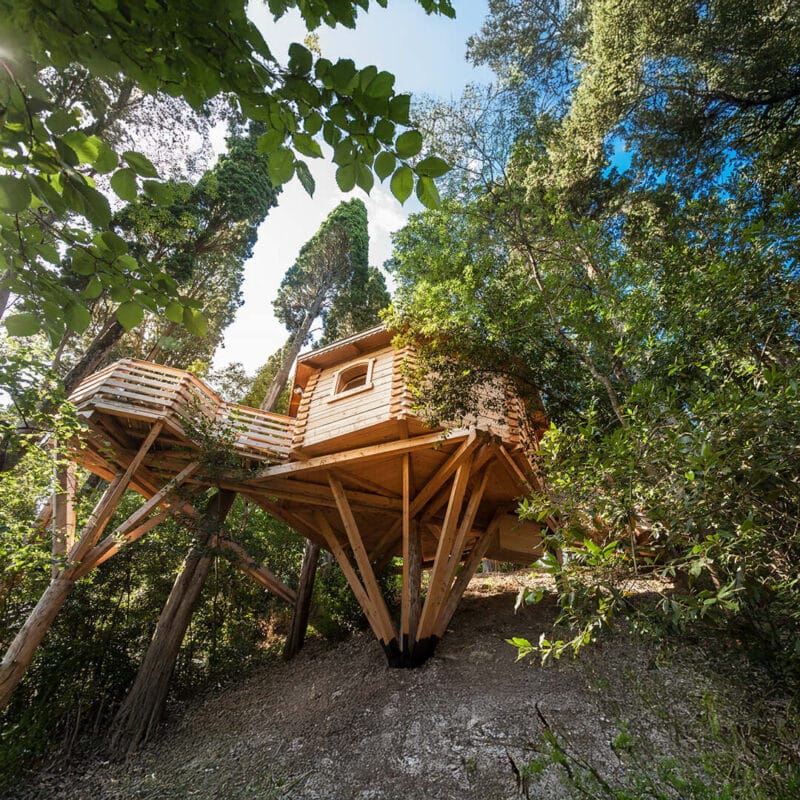
3. Design Elements to Maximize Tree House Space
Maximizing space is about design of the interior and choice of materials, not only about layout. Appropriate design features can improve the sense of space and offer comfort as well as utility.
3.1. Interior Lighting and Airiness
A tree home feels bigger and more open only with natural light and ventilation. Large windows, skylights, or glass walls will help you to let in as much light as you can and bring the outdoors within.
Light Interiors: Design Elements
- Incorporate floor-to-ceiling windows or glass doors opening onto terraces or decks to create a smooth indoor-outdoor flow.
- Skylights let you appreciate the canopy or heavens above in addition to provide light. They create transparency, which helps the area seem to be more vast.
- To give walls, flooring, and furnishings a more open and breezy impression, use light, neutral hues. Lighter tones mirror light, so the area seems bigger and more brilliant.
Making any tree house design appear more spacious mostly depends on maximizing natural light and preserving an open feel.
3.2. Artistic Material Use
A tree house design depends on selecting appropriate materials for both appearance and use. Lightweight and robust materials help to maximize space and stability without sacrificing design integrity.
Components for Maximizing Space:
- Use light-colored woods like bamboo or pine to evoke a natural, warm, and airy impression. These materials have sustainability and strength as well.
- Metal accents—such as steel rails, supports, or shelves—can provide an industrial or modern touch without sacrificing any unneeded room.
- Incorporate natural textures to create visual interest without overwhelming the space—stone, wicker, or fabric. Natural materials let the tree house fit quite well in its surroundings.
The materials chosen in the tree house should accentuate the visual attractiveness by generating an open, welcoming environment while also reflecting the use of the space.
3.3. Clever, Multifunctional Furniture
Maximizing available space in a tree house depends on furniture with several uses. From fold-out dining tables to convertible couch beds to built-in seating with storage, clever furniture choices help maintain the area clutter-free and flexible.
Ideas for Multi-functional Furniture:
- Under-bed storage, built-in shelving, and secret spaces help to clear clutter and maximize everyday activity space.
- Foldable or stackable furniture that can be employed in multiple configurations will help the tree home fulfill several purposes all through the day.
- If your tree house features a kitchen, include small, multipurpose gadgets like a combo microwave and oven or concealed sink and stovetop hidden when not in use.
Smart furniture not only saves space but also provides functionality, so enabling the tree house to be utilized for a range of functions without compromising comfort or convenience.
4. Verdict
Designing a tree home that maximizes space calls for imaginative thinking, a concentration on utility, and a careful balancing between beauty and practicality. Whether your project calls for a little backyard, a commercial site, or a large landscape, there are several creative tree house designs that will maximize your area.
There are several ways to make sure your tree home is both space-efficient and comfy from open-concept designs that foster openness to multi-level layouts using vertical space. Incorporating smart design features including durable materials, multi-functional furniture, and natural light will help you to construct a visually beautiful tree house that is also quite functional.
Your tree home can become a refuge that feels vast, useful, and really connected to nature with the proper design. Maximizing space by creative design can guarantee that your tree house is a long-lasting and fun investment whether it is for personal use or for a business.
5. Frequently Asked Questions
1. In a small tree home, how can I utilize available space?
Make use of multipurpose furniture such as foldable tables and storage beds; also take into account vertical storage options including hanging baskets or tall shelves. Furthermore maximizing space are open layouts and light color palettes.
2. How best to maximize space in a tree house using the materials?
Maximizing space calls for lightweight, durable materials including bamboo, pine wood, and metal accents. These materials give openness as well as strength.
3. To best use space, might I create a multi-level tree house?
Indeed, multi-level tree houses are a great approach to optimize available area. Without adding more footprint, adding lofts, mezzanine levels, and hanging platforms can generate more useful spaces.
4. How might I use natural light to make the tree house seem larger?
Draw in natural light using glass walls, skylights, and big windows. A well-lit tree home will seem more open and roomy and offer lovely views of the surroundings.
5. Are little treehouses cozy?
Indeed, well-made small tree houses can be quite cozy. Use smart layouts, built-in storage, and adaptable furniture to make sure even a small area seems large and useful.
Following these creative design ideas will help you to use every inch of space by building a tree house that seems large, useful, and connected to nature.
