


From the basic childhood play areas we remembered, tree homes have evolved a great distance. By 2025, tree home designs will be pushing the edge with modern practicality, sustainability, and looks. Close your eyes and picture yourself looking out from a comfortable perch high above the ground, where daily music comes from the rustling of leaves and sunshine beams miraculously pass through the trees. A tree home reminds many of us of a childhood hideout or a quirky addition to a family vacation venue. Curious how these styles developed? Read how treehouse design has changed over the decades.
The top 10 tree house design trends for 2025 will be discussed in this article together with ideas on architectural styles, materials, and popularly used features. These ideas will inspire you whether your ideal vacation is a family-friendly one, a solitary retreat, or an environmentally responsible getaway.
And remember, if at any point you’re ready to transform your own tree house vision into reality, TreeLofts is your go-to resource. Their experienced team takes pride in blending design creativity with technical expertise to help you craft the perfect aerial haven. Let’s get started!
Futuristic Meets Natural: Architectural Structures That Turn Heads
1. Suspended Platforms: A Dash of Sci-Fi in the Canopy
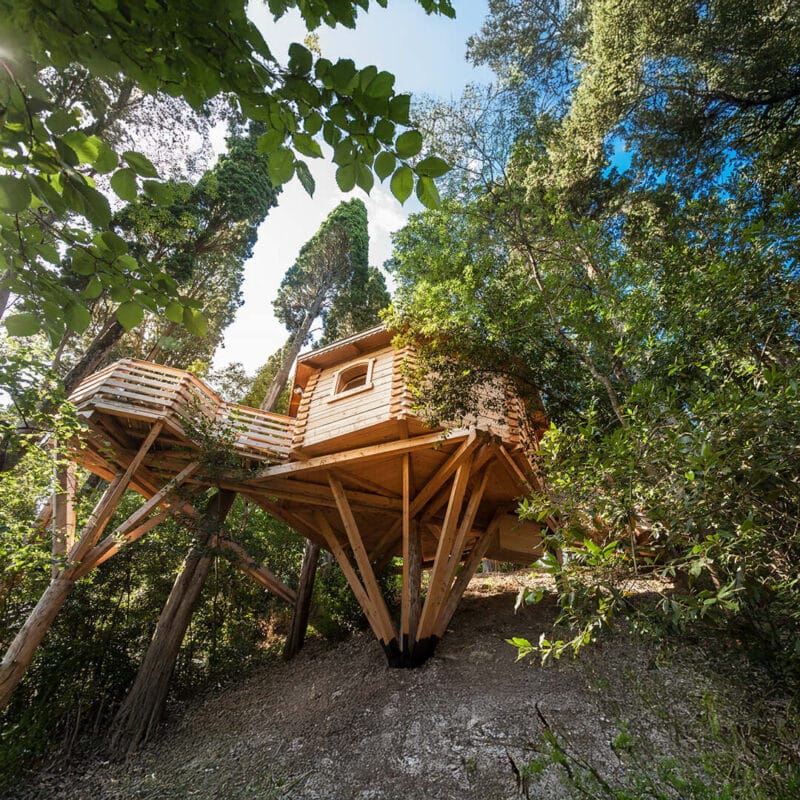
Picture stepping onto a tree house that appears to levitate off the trunk—relying on ingenious support systems, hidden framework, or tension cables anchored in carefully chosen locations. The year 2025 promises a wave of designs that emphasize sleek, almost gravity-defying silhouettes. Imagine a circular platform ringed by glass balustrades, or a multi-level deck that juts out in free-form shapes. These suspended concepts aren’t just about aesthetics; they also optimize airflow, minimize the ecological footprint on the tree itself, and offer mesmerizing skyward views.
- Why It’s Hot: Suspended structures channel that futuristic vibe while preserving the tree’s integrity. Plus, they make for jaw-dropping photos—ideal if you’re operating a tree house rental.
- Potential Challenges: Rigorous engineering calculations are needed. Safety remains paramount, so professional builders like TreeLofts are essential partners in ensuring your “floating” tree house is as secure as it is stunning.
2. Embracing Curves and Asymmetry
The days of having to have a basic rectangle attached to a trunk define a tree house. Designers are adopting nature-inspired forms—think flowing curves, twisting paths, or naturally curved roofs echoing the canopy above. These uneven patterns harmonize brilliantly with their surroundings by reflecting the lines and contours seen in leaves and tree branches.
- Design Tip: Asymmetric tree houses demand careful planning of weight distribution. Curved structural beams, composite materials, or even flexible joints may be necessary to accommodate the natural sway of the tree.
3. Hybrid Materials: Steel Bones, Timber Soul
One of the most striking architecture trends for 2025 is the hybrid approach: combining steel or engineered metal with warm wood finishes. Steel frames can offer robust stability in windy conditions, while timber cladding imparts that cozy, organic aura we all associate with tree-house living. The end result? A rock-solid structure that still exudes natural warmth.
- Pro Tip: If you’re worried about losing that all-wood charm, try using steel only where it’s needed for safety—like support columns or crossbeams—and then envelop the rest of the house in gorgeous reclaimed timber or bamboo.
Expansive Glass Walls: Bringing the Forest Inside
1. Panoramic Windows for Ultimate Immersion
Love waking up to see morning sunbeams and a 360-degree perspective of emerald foliage? You are not on your alone. Tree houses with wide floor-to—ceiling windows that almost vanish the line separating interior from outdoor areas will abound by 2025. Modern insulation technologies and tempered glass guarantee your comfort even on cold evenings or scorching days.
- Wow Factor: The actual star is nature herself. The large glass invites the beauty of the forest inside, therefore transforming every moment—morning or evening—into a movie event.
2. Seamless Transition to Outdoor Decks
Many times, glass walls complement open-air terraces or decks such that indoor to outdoor movement is seamless. Installing sliding or folding glass doors will quickly open out your living space. Savour an outdoor breakfast or a starry dinner without ever stepping beyond the cosiness of your tree-top home.
- Design Consideration: Make sure the panoramic view is unhindered by deck rails or barriers. Excellent choices that both preserve safety and highlight the view are transparent materials like plexiglass or tempered glass and cable railings.
3. Balancing Privacy and Transparency
One concern about large windows is privacy. After all, you might not want every passing hiker or forest critter peering into your domain. Enter strategic placement, tinted or reflective glass, and louvered shutters. Modern designers can incorporate subtle blinds or layered glass solutions to ensure that when you need solitude, you can achieve it without losing the sense of openness.
- Pro Tip: If your property faces a busy trail or neighboring residences, place solid walls (like a reclaimed wood accent) on those sides. Reserve the sweeping glass panels for the angles that overlook quieter woodland areas.
Going Green: Sustainable and Eco-Friendly Materials
1. Bamboo and Composite Innovations
Sustainability is the central design concept for 2025; it is not a passing fad. Leading the race in environmentally friendly building materials, bamboo is fast-growing, shockingly robust, and low in carbon footprint. Composite boards, meantime, combine recycled polymers with wood pulp or bamboo fiber to produce strong, weather-resistant planks that slow down deforestation.
- Eco Advantage: Less environmental impact without compromising durability or attractiveness. Particularly bamboo grows in a fraction of the time hardwoods do to mature.
2. Reclaimed Treasures: Turning Trash into Treasure
Searching for reused goods is like a treasure hunt that could provide unusual materials: ancient barn wood, salvaged doors, or recycled metal sheets previously covering a farmhouse ceiling. Any tree home building gains character, narrative, and authenticity from these historical components. Your design will be rich in history and not merely environmentally conscious.
- Budget Tip: Although reclaimed goods can occasionally be less expensive, be sure they are correctly renovated or treated to satisfy safety criteria.
3. Non-Toxic Finishes and Low-VOC Paints
When daydreaming about your perfect tree-top hideaway, it’s easy to forget the effect of paint fumes or wood treatments. However, the goal is to employ environmentally friendly coatings limited in dangerous compounds by 2025. Low-VOC (Volatile Organic Compounds) paints, water-based stains, and natural oils maintain the interior air clean—and the surrounding biosphere happier.
- Health Bonus:Low-VOC coatings also discourage indoor air pollution. Smaller living environments like tree homes depend especially on this since inadequate ventilation can rapidly build pollutants.
Learn More: https://treelofts.com/the-canopy-escape/
Indoor-Outdoor Integration: Multi-Functional Living Spaces
1. Fluid Floor Plans with Collapsible Walls
Contemporary tree house designs are based mostly on adaptation. Imagine movable panels or foldable walls that let you rearrange a room anyway you choose. Want a bigger living area for a family gathering? Fold back the partition between the bedroom and lounge. Craving a more intimate workspace? Slide the wall back in place to carve out a cozy nook. It’s the ultimate expression of “small space, big possibilities.”
- Implementation: Pocket doors and accordion walls are classic solutions. Lightweight materials such as bamboo or composite can help prevent overloading the tree’s capacity.
2. Outdoor Platforms for Yoga or Stargazing
Tree houses naturally encourage an outdoor lifestyle. By 2025, we expect to see specialized platforms that serve as mini yoga decks, open-air dining rooms, or stargazing terraces. A cleverly positioned platform can catch morning sun for your daily yoga flow or embrace the full magic of a star-filled sky without light pollution.
- Optional Extra: Install overhead netting or partial canopies to protect against falling leaves or light rain. These small touches keep your deck usable in a range of weather conditions.
3. Bringing Nature Indoors
Living walls, indoor plants, even little herb gardens can help to blur the boundaries between inside and outside. Imagine lounging in a loft bed surrounded by trailing vines or making dinner in a kitchen with a built-in herb garden rising up a vertical panel. This method not only looks great but also enhances air quality, so supporting a better quality of living.
- Maintenance Tip: Choose hardy, low-maintenance plant species as pothos, ferns, or spider plants for partial shade locations. Self-watering systems or drip irrigation can automate the care, especially if you plan to rent out the tree house and can’t be there daily.
Minimalism with a Twist: Reimagining the Rustic Aesthetic
1. Stripping Down to Essentials
Minimalist design has a bad rap for sometimes feeling cold or sterile. But in a tree house, minimalism often takes a warmer approach. Think exposed wooden beams, subdued color palleties, and earthy textures honoring the surrounds. The show’s headliner should remain nature—the vast canopy, the way sunlight plays, the rustle of leaves in the breeze.
- Why It Works: Clearing clutter gives a tiny area more impression of size. It also catches the eye outside, emphasizing the enormous views instead of stressing ornate inside design.

2. Adding Cozy Accents
Minimalism doesn’t mean you have to rule out accent items for enjoyment. Center points without overwhelming the space may be a handcrafted braided lamp, a colorful throw blanket, or a distinctive piece of driftwood sculpture. Choosing a small collection of unique items will help you to keep a neat arrangement that yet exudes originality.
- Designer Trick: Stay with a logical color palette. If your floor and walls are natural wood tones, accent with earthy colors (clay, terracotta, moss green) or a subdued metallic highlight (copper, brushed gold).
3. Elevating Simple Materials
If you are embracing simplicity, quality materials become even more important. For flooring, choose strong woods like cedar or teak; for a contemporary edge, think of polished concrete. For textiles, organic cotton or linen provide softness without drawing attention to prints.
- Pro Tip: Your materials’ workmanship is on full show when you reduce ornamental accents. From your door hinges to your window frames, make sure every item displays quality and endurance.
Smart Home Systems: Tech in the Treetops
1. Yes, You Can Have a High-Tech Tree House
Given everything is “smart” in this day of technologies, why should tree houses be any exception? Tech integrations are growing from voice-activated lighting to automatic thermostats reacting to outside temps. This strategy combines the ease of modern life with the peace of a forest retreat.
- Energy Management: By changing climate control or lighting while nobody is home, smart devices can maximize energy use. Smaller environmental impact and reduced utility costs follow from this, ideal for an off-grid or partially off-grid construction.
2. Remote Monitoring and Security
If you are concerned about inquisitive wildlife, picture being able to check on via a live surveillance camera or lock your tree house from miles away. Particularly if you are renting your tree home or keeping it empty for extended periods of time, smart surveillance cameras, motion detectors, and encrypted door locks provide piece of mind.
- Added Benefit: If you run a short-term rental, you can give and revoke digital access to visitors without dealing with actual keys. It’s a flawless system that could increase the apparent value of your house.
3. Seamless Integration and Minimal Clutter
Of course, no one wants to see wires dangling from branches or bulky routers perched in corners. Many 2025 designs place routers in concealed panels, use battery or solar-powered smart devices, and rely on discreet mesh Wi-Fi systems.
- User Experience: Aim for a single, intuitive control hub—like a tablet docked in the living area. That way, visitors or renters can easily manage lighting, temperature, and sound systems in one place.
Thematic Tree Houses: Making a Statement with Storytelling
1. Fairy-Tale Fantasies
Some people long for a total break from reality. Here is where fairy-tale designs—complete with quirky castles, spiral staircases, and vivid stained-glass windows—do their magic. Inspired by vintage storybooks, these tree houses transport you to a world of enchantment ideal for families with small children or young people at heart who yearn for a creative escape.
- Design Element: Twining vines and natural rope bridges add to the fantasy vibe. Faux stone arches or wooden “castle gates” can be integrated for a final medieval flourish.
2. Cultural and Regional Flavors
Do Moroccan riad patterns, Japanese tea-house simplicity appeal to you, or Southwestern adobe’s earthy textures? 2025 designers routinely include far-flung ideas or local culture. This turns a generic tree house into a live homage to a specific legacy or worldwide trend.
- Construction Insight: Pair these cultural elements with appropriate materials. A Moroccan-themed retreat would draw on intricate lanterns, vibrant tiles, and soft lounging spaces; a Japanese-inspired tree home might have sliding shoji screens and tatami mats.
3. Eclectic Mix-and-Match
Mix it up if following one theme bugs you! Install a boho lounge area in an otherwise simple design or mix modern glass pods with rustic oak frames. This collage technique may transform your tree house into a personalized fantasy as long as you keep a feeling of cohesiveness—often via color palettes or repeating elements.
- Caution: Eclectic can quickly slip into disorganized if there’s no unifying thread. Select two or three primary design ideas, and weave them consistently across your space.

Vertical Gardens and Living Walls: Embracing Green Exteriors
1. The Living Facade
The living wall—panels covered with soil and seedlings that finally blossom into rich, vertical gardens—is a developing trend in modern architecture, pun meant. On a tree house, this idea almost combines the building with the forest backdrop. Imagine walking onto a path and seeing immediately flora rising from the outside walls.
- Eco Benefits: Living facades improve insulation and filter the air, so controlling temperature. They can also draw useful insects, therefore increasing the area biodiversity.
2. Maintaining a Mini Ecosystem
Should you be diving in and building a vertical garden, you will have to arrange fertilizing and irrigation systems. Common choice is drip irrigation, a straightforward, efficient, low maintenance method with little water waste.
- Pro Tip: Select robust plants fit for the temperature of your area. Usually needing less upkeep, native plants are more resistant to local pests and illnesses.
3. Enhancing Habitat for Wildlife
A fully grown living exterior can eventually become a microhabitat—birds may nest, butterflies may rest on petals, and pollinators swarm around. This synergy not only accentuates the inherent beauty but also encourages visitors’ and residents’ increased feeling of environmental responsibility.
- Added Fun: Keep a small camera or smartphone handy, as you’ll likely witness fascinating wildlife interactions right outside your windows.
Mobile and Modular Concepts: Flexibility at Its Finest
1. Build It Like LEGO: The Power of Modules
The modular approach—where every “room,” or “function,” is a plug-and-play module—is one fascinating development for tree homes in 2025. Your main living module might, for example, easily link to an office module or a sleeping module. Do you need more guest sleeping quarters? Just add still another module instead of starting from nothing.
- Why It Matters: This method provides future-proof adaptation, cuts building time, and decreases costs. You can quickly change, remove, or add modules depending on how your family or way of life develops.
2. Relocating with Minimal Impact
Modular or mobile tree houses can also be dismantled and relocated if your land situation changes or if you’re temporarily leasing a wooded plot. This reduces the permanent footprint on the landscape. When done responsibly, it’s a “Leave No Trace” philosophy that allows you to enjoy nature without significantly altering it.
- Eco Cred: Reducing irreversible structural changes helps to protect the integrity of the forest therefore enabling the tree and its environment to flourish for next generations.
3. Customizable Interiors
Because each module has a defined purpose, you can easily tailor the interiors with built-in storage, collapsible seating, or specialized equipment. An office module might boast a fold-out desk and integrated Wi-Fi boosters. A mini-library module could feature custom bookshelves and an attached reading nook.
- Design Freedom: The beauty of modular systems is that each pod or module can have its own theme, color palette, or architectural twist, all while connecting to a main “spine” or walkway.
Immersive Experiences: Beyond the Four Walls
1. Designing an Enchanted Journey
A tree house is about the environment you create from the time someone walks on the property, not only about the structure itself. Entire site plans that tell a story by 2025 are showing meandering forest paths lit by fairy lights, secret signposts with whimsical hints, or interactive QR codes revealing local history or natural data.
- Pro Tip: If you own a vacation rental, think about a consistent theme—such as a woodland fantasy—and keep it flowing across. This strategy creates a whole, immersive experience that people will brag about online.
2. Tech-Savvy Adventures: AR and VR
Virtual reality (VR) and augmented reality (AR) are not only tools for games anymore. Imagine presenting guests a guided AR tour of the nearby flora and fauna. To find the species name, medicinal applications, or animated 3D model of a plant, point a smartphone at it. Alternatively use VR goggles to replicate the seasonal fluctuations in the forest’s time-lapse.
- Engagement Factor: Tech-savvy travelers crave memorable experiences. Integrating AR/VR features into your tree house ecosystem can give you a unique competitive edge.
3. Wellness and Relaxation Focus
Tree houses have long been associated with serene getaways, so it’s no surprise that 2025 designs are leaning into wellness elements. Think built-in mini saunas, meditation alcoves overlooking the treetops, or even an open-air spa tub. Complement it all with natural scents, sound therapy, and gentle lighting to help occupants truly unplug.
- Holistic Approach: Enhanced well-being can encompass everything from healthy indoor air (thanks to living walls) to carefully chosen color palettes that reduce stress. The result is a total mind-body refresh you can’t replicate in a typical city apartment.

Ultimately
2025 tree house trends center on merging modernism with nature, sustainability with luxury, and utility with style. There’s a trend that will enable you to design the ideal tree home regardless of your desired simple refuge or opulent vacation spot. The secret is to pay special attention to environmentally friendly materials, contemporary architecture, and creative elements improving the quality of living in harmony with surroundings.
Maintaining current with these trends is crucial for both clients and tree house builders to create a unique tree home in both form and use. Embracing these 10 fascinating design trends will help you build a tree house that presents a serene haven for years to come as well as environmental sustainability.
Questions and Answers
Q1: A tree house built in 2025 will cost what?
A tree house’s constructing cost will vary based on size, design, and materials utilized. While deluxe models can cost upwards of $50,000 or more, a simple tree home might start at about $10,000.
Q2: Is it possible to create several storey tree house?
Sure! Rising in popularity in 2025, multi-level tree homes provide a range of useful areas with breathtaking vistas. Just be sure the selected trees are strong enough to sustain several tiers.
Q3: Are greener materials costly?
Although they may cost more initially, eco-friendly materials offer long-term savings via sustainability, energy economy, and durability. They also improve the surroundings.
Q4: How might my tree house include smart technology?
A lot of smart home technologies—including smart lighting, climate control, security systems, and entertainment—can be included into your tree house. See a professionals to guarantee correct installation.
Q5: Are home offices able to be housed in tree homes?
Certainly! Tree homes provide a tranquil and motivating setting that can make great home offices. Just make sure your workstation is comfortable and you have consistent internet for output.
