


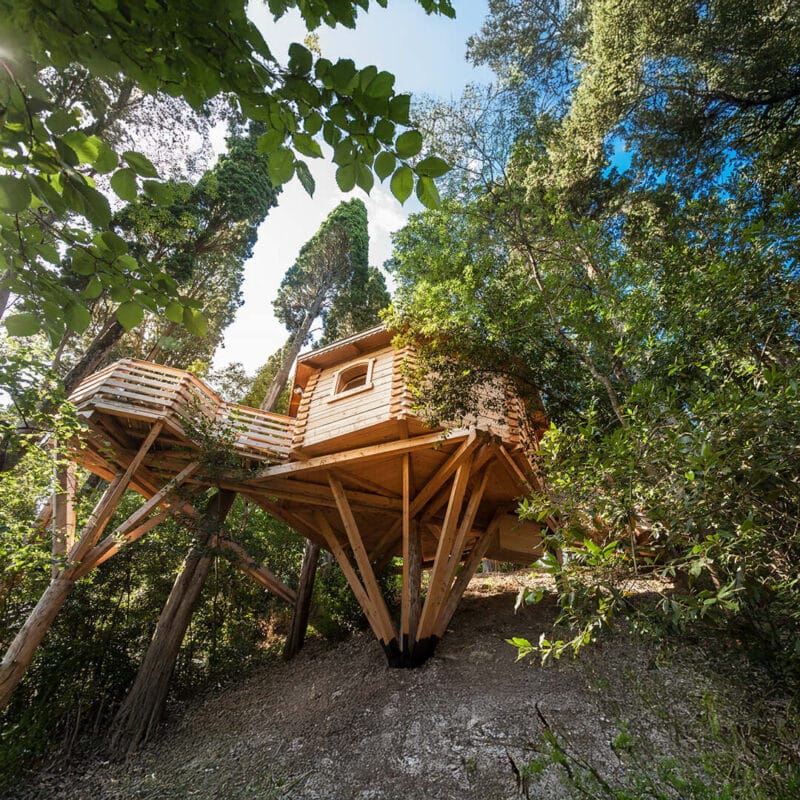
Beyond their nostalgic, youthful connections, tree homes have developed into opulent getaways, private sanctuaries, and useful areas for those yearning a connection to nature without compromising luxury. Design Solutions for Exclusive Tree Houses. Privacy is one of the main issues, though, while building a unique tree house. Whether the tree house is a retreat, a home office, or a place for introspection, maintaining seclusion is absolutely essential to building a safe and comfortable space. In a tree house design, maximizing seclusion calls for careful planning, appropriate materials, and deliberate placement to exclude outside view, noise, and distractions.
For Treelofts tree house distributors and end users, knowing the value of seclusion and using sensible design ideas is crucial. From architectural concerns to natural factors that assist create secluded, private places, we will investigate several design ideas and solutions in this article that improve privacy in unique tree houses.

Location and Site Selection: Essential for Privacy
Choosing the site of a tree house that gives privacy first importance requires much thought. The location you decide upon will greatly affect the degree of privacy your tree house will provide. Approach site choice such that maximum privacy is achieved:
- Location of the Tree House: It is imperative to pick a place that is isolated and naturally sheltered from other houses or public areas. Choose a spot surrounded by other natural barriers, plants, or thick trees. A spot hidden from view and public access will help to guarantee that the tree home stays private and quiet.
- Elevation and Height: Think about the height the tree home will be erected from. Higher tree houses can provide better solitude since they put the construction above eye level, therefore lowering the possibility of being missed. But take careful to balance the height of the tree home with accessibility and tree stability. Sometimes just as much privacy as higher buildings can come from somewhat lower tree houses strategically placed within thick vegetation.
- Using the Surroundings: Use the surroundings to organically provide seclusion by means of landscape and natural barriers. Block views using topography, trees, and vegetation’ natural growth. Arrange the tree home such that neighboring hills, thick vegetation, or big limbs help to cover the area. A more secluded setting can also be created by including fast-growing, privacy-boosting plants as ivy, bamboo, or tall grasses.
Key Advantages:
- Well-chosen sites guarantee natural privacy.
- Posture and elevation lessen visibility from nearby regions.
- Using the natural surroundings offers more seclusion.
2. Architectural Elements Improving Privacy
Maintaining privacy depends much on the way the tree home is designed. Key is including architectural elements that reduce view and improve solitude. These design details will greatly increase privacy:
- Window Placement: Windows are necessary for bringing in natural light and providing vistas, but if not well organized they can also threaten privacy. Choose smaller, well-placed windows to let you appreciate the surroundings without drawing attention to your room from without. Think about putting windows at angles or higher that provide ground level seclusion.
- Opaque or Tinted Glass: Using opaque or tinted glass might be a great fix for places where windows are required but you wish to block view. This keeps prying eyes from viewing inside and lets light pass through. Privacy without compromising the link to the outdoors can come via glass blocks, frosted glass, or tinted windows.
- Curtains and Blinds: Simple options include curtains, blinds, or shades will help you create privacy on demand. When open, they let one see the surroundings naturally; closed, they provide a private, secluded space. For a more unified appearance, choose natural textiles or materials that complement the style of the tree home.
- Organic Shapes: Sharp angles and flat surfaces in design can give a structure a boxy, exposed impression using curves and organic shapes. Round corners, organic forms, and curved walls help to accentuate the tree house’s visual appeal while simultaneously lessening the sense of exposure. Furthermore, more natural and aesthetically pleasing privacy is offered by soft, flowing lines and asymmetrical forms than by stiff, angular ones.
Important Advantages:
- Careful window placement stops view from the ground or adjacent areas.
- Although they let light in, opaque glass or tinted windows exclude unwelcome views.
- Blinds and curtains provide versatility in seclusion.
- Curved, organic patterns lessen the sense of exposure.

3. Exterior and Landscape Solutions for Privacy
Apart from architectural features, landscaping and outside design decisions help to improve the privacy of a tree home. Including sensible plantings and natural barriers will help to create an outdoor area that seems more isolated and sheltered.
- Privacy Walls with Plants: Building an efficient privacy wall with plants means surrounding the base of the tree house with tall, dense trees or shrubs. These natural barriers enhance the visual appeal of the area in addition to blocking sightlines from adjacent residences. If you want year-round coverage, use evergreen plants; if you need rapid results, think about fast-growing varieties.
- Living Fences: Living fences created from climbing plants, such wisteria or ivy, can offer privacy without looking unduly artificial or stiff. These kinds of fences go very well with the surroundings and provide a natural and pleasing means of cover from outside views for the tree house.
- Bamboo: Choosing bamboo can help you to create privacy in a tree house. It spreads dense coverage ideal for solitude and grows fast. Either naturally occurring as a fence or deliberately placed around the tree house’s perimeter to create a more private surroundings bamboo can be employed.
- Outdoor Privacy Systems: Should your tree house contain balconies, terraces, or decks, be sure to incorporate privacy elements as outside screens, curtains, or bamboo fence. These components can assist design comfortable outdoor spaces where one may unwind and appreciate the surroundings free from exposure.
Main Advantage:
- Natural barriers and dense vegetation improve privacy without compromising appearance.
- Natural, organic sense of the room comes from bamboo and living fences.
- Outdoor privacy systems guarantee isolated spaces of outdoor life.
4. Soundproofing and Noise Reduction Help to Provide Privacy
Although visual privacy is usually the main worry, noise can also be a problem, particularly if the tree house is near public areas, busy highways, or noisy neighbors. Designing with noise suppression will help your tree house to seem even more isolated.
- Soundproofing Products: Soundproofing products will help to greatly lower outside noise levels during tree home building. Along with double-glazed windows to block outside noise, think about including soundproof insulation in the floor, ceiling, and walls. To help to further silence noise, acoustic panels or soundproof drapes can also be placed.
- Landscape Buffers: Apart from creating visual barriers, landscaping can also help to buffer sounds. One natural sound barrier is planting thick, evergreen bushes or trees all around the tree home. Water elements like ponds or fountains can also soften the surroundings and aid to conceal outside noise.
- Elevation for Noise Control: Building the tree home higher up or in a distance from busy areas or roads will help to naturally lower noise. Higher altitudes usually signify that the construction is more detached from the ground-level noises that may otherwise disturb your tranquillity.
Important Advantages:
- Soundproof materials enable to suppress outside noise so upsetting the tree house.
- Landscape buffers outside noise, so establishing a peaceful surroundings.
- Location choice and elevation naturally help to lower noise level.
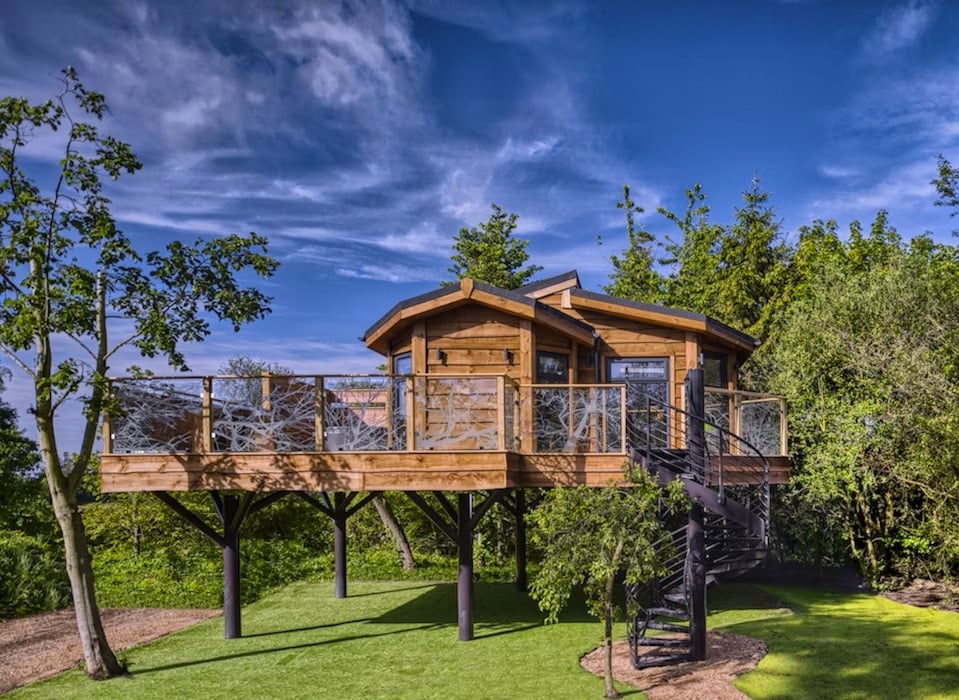
5. Protection of Privacy Using Smart Technology
Modern tree house designs depend much on technology to preserve privacy and improve the sense of seclusion. These are some ways an exclusive tree house’s seclusion could be enhanced using technology:
- Smart Windows and Shading Systems: Smart windows and shading systems are a creative approach to improve privacy since they change their transparency depending on the time of day or the state of the weather. These windows provide seclusion without conventional curtains or blinds by automatically darkening or becoming opaque in the evening or when outside light levels vary.
- Motion Sensors and Privacy Cameras: Install unobtrusive cameras and motion sensors around the tree home for extra security and privacy. Maintaining your privacy and peace of mind, these systems can notify you to any intruders or unwelcome guests.
- Automated Blinds and Curtains: Automated solutions for blinds and curtains let you change the degree of privacy at merely a button. The best freedom and convenience come from programming these systems to open or close depending on your calendar or requirements.
Main Advantages:
- Smart windows give automatic privacy free from physical constraints.
- Motion sensors and privacy cameras improve security and peace of mind.
- Automated methods give simple control over aspects related to privacy.
At Last
Creating a comfortable and quiet environment free from outside disturbance depends on maximizing seclusion in a tree house so you may unwind and appreciate the surroundings. You can create a tree house with the best in seclusion and comfort by carefully choosing the site, applying clever architectural design, including natural landscape features, and integrating contemporary technology.
Knowing how to include privacy measures into the design process guarantees that every tree house, for Treelofts tree house distributors and end consumers, is a unique, practical haven. Maximizing privacy in a tree house will help to create a serene, pleasant space that improves the whole tree house experience whether your preferred style is more open, airy or completely isolated.
Often Asked Questions
Q1: How can I guarantee that my tree house is secluded from adjacent homes?
A: Select a quiet spot surrounded by thick vegetation or plants, then restrict view with design elements such opaque glass or smaller windows. Additionally beneficial is landscaping featuring big trees or a live fence.
Q2: Which materials might help a tree house’s noise be lessened?
Effective noise reducing materials are acoustic panels, double-glazed windows, and soundproof insulation. Water features and thick landscaping can also help to cover outside sounds.
Q3: Is there any way smart technology might enhance my tree house’s privacy?
A: Your tree house could have privacy enhanced by smart windows, motorized blinds, and privacy cameras. These technologies give flexibility, security, and ease.
Q4: For seclusion, what height ought my tree home to be?
A: Increasing the height of the tree house will help to naturally lower ground view. Higher locations usually offer better solitude; the height should be matched with the stability and accessibility of the tree.
Q5: How can I keep privacy without sacrificing the views naturally occurring?
A: Arrange windows deliberately to provide natural light in yet block view from outside regions. Including privacy screens or dense vegetation in the landscaping will help to provide solitude even as you enjoy the view.
