


High above the ground, where leaves sway and the breeze carries birdsong, is a realm that merges childlike wonder with modern innovation: the treetop hideaway. But what keeps that lofty sanctuary from tumbling down? Enter Treehouse TAB Bolts, the unsung heroes of treetop builds. If you’re envisioning a backyard retreat, an enchanting getaway, or a one-of-a-kind event space aloft, these specialized bolts are key to making it all possible – without damaging the tree you’re calling home.
In this comprehensive guide, we’ll show you why TAB bolts have become a go-to solution for safe, stable, and eco-friendly treehouses. We’ll also explain how Treelofts can help you design your sky-high dream space (though we don’t do the actual construction). Ready to unleash your imagination—and trust the hardware? Let’s climb up and see how it all comes together!
Why Are Treehouse TAB Bolts Suddenly the Talk of the Treetops?
Is It Magic, or Just Smart Engineering?
Picture this: you’re building a small deck or a full-blown treehouse in a big, healthy trunk. You could drive a few regular bolts, but that often ends up constricting the tree and harming its growth. That’s where Treehouse Attachment Bolts (TABs) step in. They’re specially designed to reduce damage, distribute weight properly, and keep your structure secure as the tree lives, breathes, and even sways in the wind.
Think of them as an engineering marvel that grants your “house in the sky” some serious staying power. With a standard screw, you’re effectively pinching the trunk’s layers—bad for the tree and risky for you. TABs, on the other hand, are proportioned and angled to let trunk thickness expand, ensuring that both the bark and the architecture thrive in harmony.
How TAB Bolts Bridge Dreams and the Canopy
Modern treehouse enthusiasts crave safety, sustainability, and an aesthetic that marries nature with human ingenuity. TAB bolts reflect that harmony, offering a solution that feels almost magical—but is grounded in solid engineering. They’re the reason your elevated escape can feel so sturdy it’s as if it grew right along with the trunk.
The Treelofts Vision
At Treelofts, our passion is helping you design imaginative treetop spaces through consultative magic. We don’t offer building or installation—but our design expertise ensures that your local contractor or DIY approach has the blueprint for success. Want more information? Head to Treelofts.com and let’s chat about how to incorporate TAB bolts into a show-stopping design that respects both your creativity and your tree’s integrity.
TAB 101: Are You Sure Your “Treehouse Bolts” Are Doing Enough?
What’s So Special About Treehouse Attachment Bolts, Anyway?
Regular hardware might work for small projects, but the moment you want to elevate a platform or a mini “home,” standard screws often fail to distribute load correctly. Treehouse TAB Bolts are thicker, sturdier, and designed to endure bigger loads while minimizing stress on the trunk. The result? A more reliable anchor that spares the tree from crippling internal damage.
The Innovative Systems That Turn a Wobbly Idea into a Rock-Solid Sky Loft
TAB setups rely on specialized brackets, washers, and occasionally cable suspensions to keep your platform level even as the tree moves. It’s not just about drilling a big hole; it’s about aligning hardware in a way that the trunk can still expand with age or flex in strong winds. Rather than a chaotic “pin-and-hope” approach, you’ve got a well-engineered system that, once installed, feels surprisingly natural and integrated.
Traditional vs. TAB: Aren’t All Bolts the Same?
Would You Hang a Chandelier with a Thumbtack?
If you wouldn’t trust cheap hardware to suspend a heavy light fixture in your living room, why settle for less in a treehouse build? Traditional bolts—even large ones—often concentrate stress on one small area of the trunk. As the wood grows around it, you might see “girdling,” internal decay, or strange trunk deformities.
TAB bolts, by contrast, come with a more extensive surface area where they meet the tree. Think a wide “shoulder” that keeps the trunk from being cut off at a single point. This design spreads the load so your trunk can continue living healthfully around the hardware for years to come.
Discover Why TAB Bolts Make Other Fasteners Look Pale in Comparison
- Longevity: They typically outlast other bolt types because they’re designed for external conditions and tree movement.
- Tree-Friendly: Minimizing bark damage and letting nutrient layers remain unblocked.
- Reduced Maintenance: Fewer re-tightening sessions, less checking for cracks.
At Treelofts, we factor in these dynamics when crafting a design blueprint, ensuring that the recommended bolt placements truly suit your tree’s species, health, and your sky-high ambitions.
Ready for TAB? Start with a Healthy Tree and a Solid Plan!
Should You Really Bolt Into Just Any Old Trunk?
Before you even think about screwing in a single bracket, consider whether your tree can handle the job. Healthy trees with robust root systems are ideal—like a well-established oak, maple, beech, or similar hardwood. If the trunk is riddled with cavities, fungus, or is severely tilted, you might want to reconsider or consult an arborist to confirm load-bearing capacity.
Terrain, Climate, and the Tree’s Well-Being—Everything Matters
Picture building a treehouse in a windy coastal area or a hillside with uneven ground. The loading angles change drastically, and so do the demands on each TAB bolt. Factoring in these variables ensures the final design can handle local weather and topographical quirks. If you’re not confident in your ability to assess these elements, let Treelofts step in to craft a design that merges technical stability with nature’s unpredictability.

Installation Insights: How (and Why) TAB Bolts Get the Job Done (No Snoozing, Promise!)
Is Hammering Enough, or Do You Need Next-Level Precision?
Building a treehouse is more than just climbing up with a drill. TAB bolts require precise measurements—height from the ground, trunk diameter, angles of approach—to function effectively. Often, people who assume they can “wing it” risk messing up tree growth patterns or creating stress points that lead to an unstable platform.
Balancing Protection for the Tree and Stability for Your Platforms
Yes, you can have it all: a treehouse that’s stable and doesn’t harm the trunk. TAB bolts excel at letting the trunk expand around them. They often include specialized washers or sleeves that keep the wood from binding too tightly around the bolt as it thickens over time. In other words, you get a “living fit” that remains snug but not suffocating.
Common Mistakes: Could You Be Using TAB Bolts the Wrong Way?
More Bolts = More Strength? Think Again!
It’s tempting to think “the more attachments, the merrier,” but too many holes can actually stress or weaken the tree. The key is strategic placement, spreading the load across a few well-distributed anchors rather than peppering the trunk with a dozen unnecessary bolts. This less-is-more approach fosters long-term health for the tree and reduces the risk of bark damage.
Going Green: Why Choosing the Right Bolt Protects Both Nature and Your Dream Escape
Ever Thought About the Tree’s Perspective?
Your trunk isn’t just passive wood—it’s a living system. Harsh chemicals, ill-fitting bolts, and reckless drilling can disrupt everything from sap flow to bark regeneration. TAB bolts aim to reduce trunk penetration and create a stable anchor point without cutting off layers of growth.
Minimize Bark Damage, Support Eco-Friendliness—Win-Win!
You want a treehouse that merges with nature, right? TAB bolts help accomplish this. They reduce the overall “footprint” of your treehouse by eliminating the need for multiple invasive anchor points. Plus, many are made from rust-resistant alloys that withstand the elements for years, reducing wasteful replacements.
The Treelofts Green Mindset
At Treelofts, we’re all about respecting the environment. Our design recommendations incorporate sustainable material choices, minimalist footings, and mindful load calculation. That way, your final plan meets your forest-based fantasy without dooming the trunk or local wildlife habitats.
Learn More: https://treelofts.com/the-canopy-escape/

Beyond Bolts: Ready to Expand Your Treehouse Fantasies?
Is a Single Platform Boring You Already?
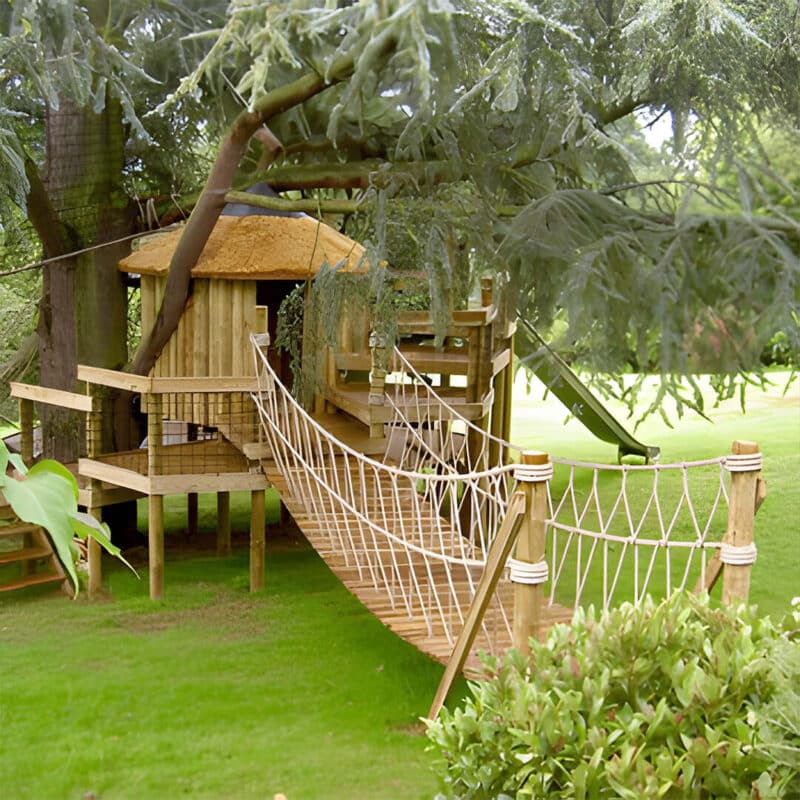
One sturdy platform can be magical—but what about multiple decks, rope bridges, or adventurous walkways? Quality TAB bolts let you dream bigger. The more secure your anchor points, the more you can expand horizontally or even vertically, creating a labyrinth of fun for kids, friends, or your own personal nature retreat.
From Multi-Level Decks to Rope Bridges, TAP into TAB’s Full Potential
- Multi-Level Platforms: Imagine a reading nook up top, a hammock lounge below, and a tiny observation post one trunk over.
- Suspension Add-Ons: Secure walkways or zip-lines become safer when the main anchor point is absolutely rock-solid.
- Themes Galore: Want a mini Zen garden in the sky or a treetop tiki bar? The design flourishes are endless once you trust your platform’s stability.
Biz Potential: What If Your Treehouse Could Pay for Itself?
High-Flying Venue or Cozy Rental—Why Not Both?
“Instagrammable” treehouses are a hot commodity. If you outfit your platform correctly—complete with high-quality TAB bolts and a stylish design—it can double as a short-term rental for wanderlust-fueled travelers. People crave unique experiences, and few come close to an eco-friendly, elevated hideaway among the leaves.
Leverage Safe, Solid Bolts to Boost Audience Appeal
A well-crafted treehouse that rests securely on a handful of TAB bolts can hold small events, from intimate weddings to corporate retreats. The more your structure can reliably handle, the greater your potential for hosting profitable gatherings. Market it as an “elevated mini-resort” or “forest lounge,” and watch the inquiries roll in.
The Treelofts Connection
Treelofts doesn’t handle construction, but we do create design proposals that factor in load capacities, guest circulation, and visual flair. By combining robust engineering with curated aesthetics, we help you stand out among typical lodging options. You’ll be free to pass our blueprint to a local building crew or go the DIY route, confident your vision is fundamentally sound.
Conclusion: Eager to Nail Down Those TAB Bolts? Let Treelofts Guide Your Vision!
Why Live on the Ground When You Could Go Skyward?
From the first time we climb a backyard tree, we’re reminded of how exciting it feels to see the world from a different angle. A treehouse can bring back that spark of wonder—only bigger, better, and more sophisticated. But none of that matters if your project lacks the safety and durability that Treehouse TAB Bolts provide.
Design Magic Is Our Specialty—You Handle the Build, We Provide the Blueprints
At Treelofts, we love mapping out how to place each TAB bolt for maximum trunk respect and structural integrity. Our job is to ensure you get a design plan that local contractors—or you, if you’re brave enough!—can follow. We help you dream big while staying true to engineering realities and ecological obligations.
A Final Invitation
Whether you’re planning a personal oasis or a venture that could transform your property into a revenue-generating hotspot, we’re here to guide the creative process. Head over to Treelofts.com to explore how we can shape your blueprint. Because in the grand scheme of treehouse building, the right bolt is more than hardware—it’s the symbol of an entire lifestyle, one that blends nature, innovation, and pure sky-high excitement.
FAQ
FAQ 1: Do all trees benefit from using TAB bolts, or only certain species?
Most mature hardwoods (like oak, maple, or beech) and some softwoods can handle treehouse loads if they’re healthy, but species suitability varies. An arborist’s assessment helps confirm if your chosen trunk is strong enough for TAB bolts. It’s not about one perfect tree, but about the tree’s diameter, vitality, and root stability combined with the right bolt placement.
FAQ 2: Won’t drilling large holes for TAB bolts damage my tree in the long run?
When installed correctly, TAB bolts cause less harm than multiple smaller fasteners, because they distribute weight across a broader surface area. They’re specifically designed to allow tree growth around them while minimizing sap disruption. Regular tree check-ups ensure the trunk remains healthy around each bolt’s entry point.
FAQ 3: How many TAB bolts do I actually need for my project?
That relies on the diameter of the tree, the planned platform area, and the general weight. Usually, less bolts positioned deliberately perform better than a lot of tiny fasteners. Like those presented by Treelofts, a design plan considers trunk spacing, weight distribution, and potential growth to help you decide the best quantity and placement.
FAQ 4: Can I DIY the installation, or should I hire a specialist?
If you have the proper tools, safety gear, and feel comfortable working at heights, you could install TAB bolts on your own. But a specialist or contractor knowledgeable in treehouses can guarantee the bolts are positioned at the proper depths and angles, thereby maintaining the health of the tree. Treelofts offers design and consultation assistance; but, you will handle the actual construction or contract it out locally.
FAQ 5: Are TAB bolts just for large treehouses, or can smaller builds benefit too?
They’re beneficial for any treehouse size. Even a modest deck can profit from the added stability and reduced tree stress that TAB bolts provide. Whether you’re building a mini-platform for a child’s play area or an expansive multi-level retreat, well-planned TAB bolt usage ensures safety and longevity for both the structure and the tree.
