


Close your eyes for a moment and remember the first time you ever saw a tree house—maybe it was perched dangerously on a branch in a neighbor’s backyard, or maybe you dreamed of building one for your own secret retreat. A tree home would have seemed in those days as a whimsical haven just for children. Still, wonder what? Tree houses are not only for playfulness fancies in the field of architecture and design nowadays! Exploring the Versatility of Tree Houses in Modern Architecture. Among builders, developers, and architects yearning a creative approach in spatial design, they have become increasingly popular.
Why suddenly would one be fascinated? Many individuals yearn for fresh approaches to interact with nature as concrete jungles develop and cities flourish. After all, the concept of trading in the hustle of daily life for a few hours in a small wooden house raised above verdant treetops would captivate anyone? Often combining innovative technology with environmentally friendly materials, modern tree houses have become show-stopping architectural wonders. They reflect a vibrant movement toward sustainable, inventive, and community-centric living, not only sentimental call-backs to childhood.
From environmentally friendly building materials and design ideas to community-building techniques and commercial potential, this essay will explore the range of possibilities that tree houses provide for modern architecture. So get ready for a vibrant, leaf-rustling trip that will make you eager to ascend the ladder to the closest tree home visible!
Can One Small Tree House Really Make Your Environment More Exciting?
The emphatic yes is the response if you have ever questioned whether one tree house can really transform a place. Modern tree houses are more than just trapdoor-equipped timber hideaways. These adaptable, multifunctional areas can be anything from calm mindfulness areas to hip hang-outs.
- Work Studios and Creative Nooks
Imagine leaving your regular workplace and walking to a tree house with ergonomic furniture, Wi-Fi, and maybe even a skylight overhead. Working in a natural setting can reduce stress and inspire invention. As so? More creative concepts and better work-life balance. - Social ‘Hot Spots’
Wanting a unique venue for your next event? Micro-weddings, birthday celebrations, or informal get-togethers can take place in a tree home fit for Instagram. Guests will mark their calendars and charge their phone cameras in expectation when they first notice a gathering housed in a tree house. - Kids’ Nature Classes
Tree houses also excel at capturing children’s imaginations. They can be a fantastic place for nature-based learning experiences, from science experiments to environmental awareness sessions. And the best part is that kids hardly realize they’re in an “educational” environment. They’re simply having fun.
What’s the overarching takeaway? A versatile tree house can be adapted to nearly any function you envision—office, retreat, party spot, or even a classroom. It brings a vibe of excitement and originality that’s hard to replicate in standard ground-level structures. By bridging your surroundings with nature’s canopy, tree houses manage to stand out as both novel and timeless.
Use Nature to Transform Cityscapes: Could Tree Houses Completely Overhaul Urban Environments?
Imagine a packed downtown with towers, constant traffic, and people running everywhere. Add now a vivid green canopy peppered with fanciful tree dwellings providing panoramic vistas, fresh air, and a much-needed contrast to the concrete. Surely that would be a remarkable change.
- Green Pockets in the Concrete Jungle
Incorporating tree houses into urban planning can introduce micro-oases of greenery. Even if they’re small, these “pockets of nature” break up the monotony of steel and glass, offering residents a refreshing change of scenery. - Instant Landmarks
A well crafted tree house can become a local landmark drawing both visitors and residents. For city dwellers yearning an off-peak coffee break or a little escape from urban turmoil, it may become a regular spot. - Aesthetic-Function Fusion
Tree homes must complement city infrastructure, not only look good. By means of careful building, these homes can have vertical gardens, rainwater collecting systems, or solar panels, thereby acting as living monuments to environmental design. The interaction between the created and the natural can produce amazing synergy that transforms a whole area.
The final line is that tree houses can occupy a unique niche highlighting vegetation and artistic expression, even if skyscrapers may predominate on a skyline. This is where someone like TreeLofts comes in—armed with creative ideas and a firm conviction that modern building and nature can coexist together. About to change the scene of your city? It may surprise you how one well-placed tree house can set off a series of urban rejuvenation projects.
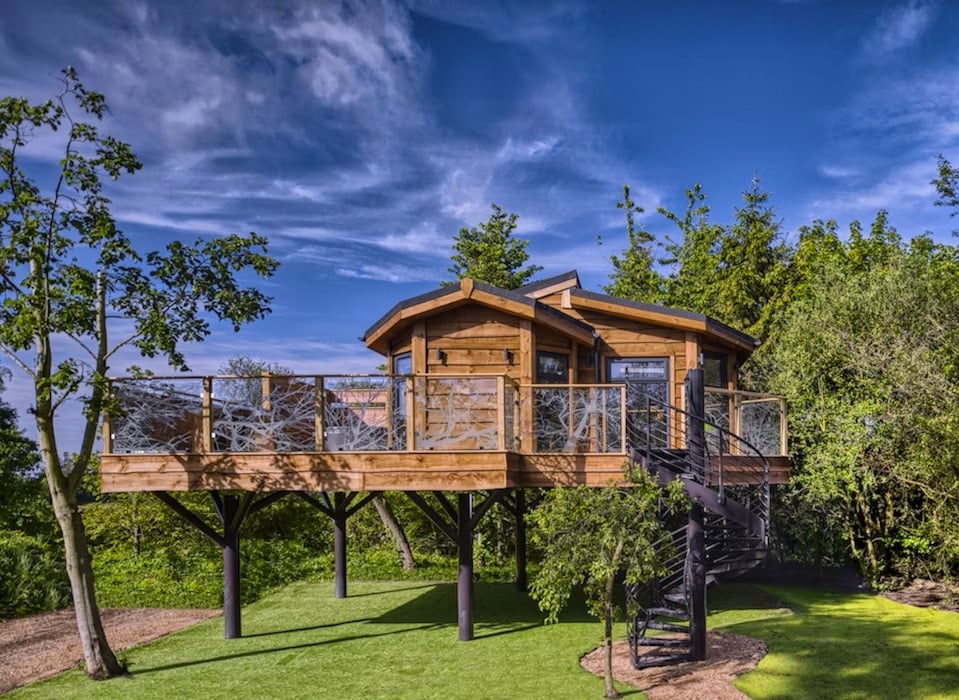
Eco-Friendly or Romantic Getaway? Tree Houses Prove You Can Have Both!
Think again if you believe tree houses are solely meant to appeal on social media in terms of hearts! One spectacular example of environmentally friendly ideas carried out brilliantly is tree house building.
- Green Materials & Designs
Reclaimed wood, bamboo, or other ecological materials are common in many contemporary tree houses. These decisions help protect old-growth forests and lower carbon footprints. Moreover, these elements can feature exquisite patterns and textures that accentuate the appeal of the house. - Energy and Waste Management
Ever heard of a tree house with composting toilets or solar-powered equipment? It’s more than imaginable; it’s getting really popular.Some tree houses also integrate rainwater catchment systems and greywater recycling, setting them up as mini models for self-sufficient living. - Educational Value
A tree house can serve as a real-world example of how to blend indulgence with responsibility toward the planet. For instance, couples on a romantic getaway can literally watch the sun rise over the forest canopy while being mindful that their accommodations respect the ecosystem.
In short, tree houses prove that environmental stewardship and luxurious appeal can go hand in hand. Whether you’re stepping into a cozy love nest for two or exploring a large-scale communal design, these elevated abodes stand as living testimonies that we can live lightly and joyfully on this planet. Want to see how it’s done? TreeLofts has an impressive portfolio of designs that seamlessly integrate these principles, ensuring you never have to sacrifice comfort for a clear conscience.
From Concept to Execution: How Do Tree Houses Wave Goodbye to Dull Design?
In the rapidly evolving realm of architecture, “dull” is a dreaded adjective. We crave novelty, personality, and excitement in our spaces. So, how do tree houses keep defying convention?
- Bold Design Options
Tree houses aren’t cookie-cutter creations. You’ll find sphere-like pods, geometric cabins with faceted exteriors, or even futuristic bubble designs. The shape, size, and style can be stretched to fit any vision—even those that seem straight out of a sci-fi movie. - Material Innovation
The use of composite lumber, cross-laminated timber, and even metal frames is on the rise, ensuring that tree houses can be both lightweight and structurally sound. Additionally, tech-savvy solutions like AI-driven modeling help architects gauge wind loads, weight distribution, and the living tree’s growth patterns. - Putting People First
A human-built tree home has to take real-world considerations including disability access to ventilation. One can easily mix handrails, broad walkways, non-slip flooring. Neither are the people that interact with trees nor are they one-size-fits-all. Done correctly, a tree house may be an inclusive space embracing guests of all ages and ability.
Tree houses excel at busting architectural boredom because they instinctively demand creativity. There’s no “standard blueprint” for a structure that sits high in a tree. This sense of experimentation encourages designers to push boundaries and create something truly memorable.
Who Says Tree Houses Are Only for Vacation? Get Ready for Their Shocking Commercial Potential!
Many still associate tree houses primarily with relaxing holidays or short-stay getaways, but these aerial marvels can generate serious buzz—and income—across a range of commercial endeavors.
- Boutique Resorts & Unique Stays
The hospitality industry has seen a shift from typical hotel rooms to unique lodging experiences. Tree houses stand as top-tier offerings on travel platforms, boasting high occupancy rates and premium pricing. Guests seeking an “Instagram moment” or a spiritual retreat are usually willing to pay extra to sleep among the branches. - Corporate and Retail Spaces
Ever considered including a shopping mall or maybe a tree house lounge section into your co-working space? Talk of a game-changer! Such an unusual feature can draw guests, inspire them to stay around, and maybe increase sales in nearby companies. - Brand Collaborations & Pop-Ups
Globally, marketing organizations are constantly looking for innovative approaches to include possible customers. Product introductions, pop-up stores, or special VIP events can all take place in a great location offered by tree homes. Imagine presenting a new electronic device in a contemporary tree home bursting with creative design—fast headline material!
These examples merely scratch the surface of what’s possible. The commercial potential is clear: turning heads with something that merges entertainment, sustainability, and novelty. Curious about how to bring this idea into reality? TreeLofts has partnered with entrepreneurs and property owners, helping them seize commercial opportunities through tailor-made tree house projects. If you’re ready to stand out in your market, it might be time to go airborne.
Want to Build Your Own Tree House? Pitfalls and Practical Tips You Can’t Afford to Miss!
You are therefore pumped up to create your own tree house—great! But stop before you reach for a hammer and nails. Breathe. Some important factors will help you keep your tree home project under control.
- Legal and Regulatory Hurdles
Rules vary widely from one locale to another. Some areas treat tree houses like sheds, while others impose the same regulations as a multi-story building. First step: check local zoning laws, structural codes, and any environmental protection requirements. - Budgeting and Cost Control
Building a tree house can be more budget-friendly compared to standard construction—if you plan wisely. Material costs, labor (if you’re not DIY-ing), and specialized features like solar panels or rope bridges all add up. The trick is to decide upfront which elements are must-haves and which are “nice to haves.” - Long-Term Maintenance
Even the sturdiest tree house needs routine upkeep. Wood can rot if not treated properly. Bolts and anchors might need tightening over time. And don’t forget that a tree is a living organism—it will keep growing! To maintain safety and preserve the structure, schedule regular inspections and small repairs as needed.

When Tradition Meets Modern Creativity, How Many Sparks of Inspiration Can One Tree House Ignite?
Blending old and new isn’t always easy, but tree houses pull it off with gusto. After all, they’re a centuries-old concept updated with state-of-the-art design. The sky (literally) is the limit when it comes to merging cultural heritage and contemporary flair.
- Cultural Resonance
Tree homes are firmly ingrained in many areas in local custom. Using indigenous building techniques and materials honors ancestral workmanship in addition to adding authenticity. For example, bamboo walls and thatched roofs could honor the legacy of a place while nevertheless satisfying contemporary safety criteria. - Art Installations & Interactive Exhibits
Tree houses can also be outdoor galleries. Turn sculptures, murals, or even digital projections into living art venues. Interactive displays covering local culture, animals, or environmental issues let visitors learn. Consequently On a signboard, a multi-sensory experience resonates significantly more vividly than just facts. - Connecting Community Memories
Picture a photo wall or a mini-museum documenting the local area’s history inside the tree house. Residents can contribute stories, pictures, or artifacts. This transforms the structure into a hub of shared identity, strengthening community bonds.
In essence, a tree house can transcend being “just another building” when it’s infused with cultural elements and artistic layers. This dimension of meaning keeps drawing people back, fueling ongoing engagement. Partnerships with cultural institutions and artists can take these spaces to new heights, making them a beacon of tradition and innovation intertwined.
Step into the World’s Most Jaw-Dropping Tree Houses: See How ‘Sky-High Havens’ Inspire Everyone!
By now, you might be thinking: “Sure, this all sounds fantastic, but does it work globally?” Absolutely! Tree houses have gained traction worldwide, as creative souls and nature enthusiasts continue to push the envelope.
- Northern Europe’s Minimalist Hideaways
In Sweden or Norway, you’ll find sleek wooden pods that appear to float among pine trees. Designers there emphasize minimal impact on the forest floor while showcasing Scandinavian simplicity. These structures often feature large windows for expansive views, turning each tree house into a cozy observation deck. - North American Thrill-Seekers
The US and Canada boast adventurous tree houses where rope bridges and zip lines deliver adrenaline-pumping experiences. Some structures integrate multiple levels, spiral staircases, and even mini bungee jumps. Talk about an unforgettable weekend getaway! - Asia’s Harmony of Past and Future
Japan creates peaceful havens amid bamboo groves by combining Zen-inspired design with contemporary engineering. To accentuate a vivid, tropical flair, nations like Thailand or Indonesia include locally made craftsmanship—like woven bamboo walls. Every area has its unique twist that reflects forward-looking design as well as cultural legacy.
These global examples prove that tree houses have no fixed mold. Instead, they serve as a universal canvas for imaginative exploration and environmental synergy. If you’re feeling inspired, it might be time to channel these international sparks into a custom project with TreeLofts, thereby weaving global creativity into your own local environment.
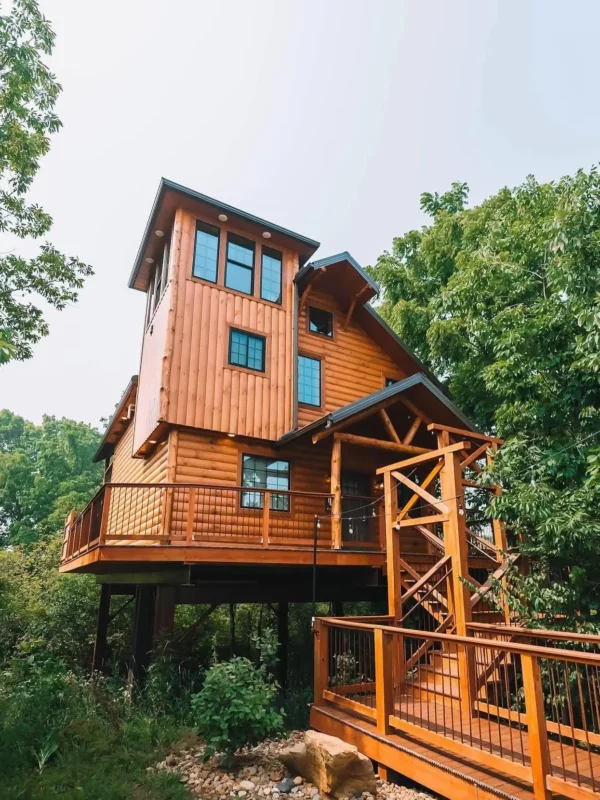
Team Up with TreeLofts: Let the ‘Tree House Living’ Dream Become Your Everyday Reality
We’ve covered a lot of ground—urban transformations, eco-conscious luxury, mind-blowing designs, and community upliftment. The consistent thread here is that tree houses are not just dreamy, far-off fantasies; they’re entirely doable, incredibly flexible, and full of untapped possibilities. So why wait?
- Our Expertise and Commitment
At TreeLofts, we’re not just about hammering some planks together in a tree. Our goal is to create living spaces that stand for creativity, sustainability, and the human-nature connection. Every design we draft aims to respect the environment and reflect the unique spirit of the community or client we’re working with. - Real Success Stories
From helping a small eco-resort triple its booking rate with three new treetop suites, to collaborating on public park projects that draw families in droves, TreeLofts has consistently proven that well-crafted tree houses are more than a novelty—they’re catalysts for change. - Invitation to Innovate
Whether you’re a property developer, a local government official, or a private individual with big dreams, we can help you pinpoint the perfect approach. Looking for a mesmerizing coffee shop in the canopy? Or a children’s reading nook that fosters a lifelong love for nature? The possibilities are endless, and the best part is, we handle the tough parts, from permits to structural engineering.
It is now the moment to grab this expanding movement. Working with TreeLofts could be your pass to create something that significantly affects the earth as well as humans. One plank, one leaf, and one inspiration spark at a time can help you to bring your tree home fantasy to life.
Conclusion: Tree Houses—The Infinite Possibilities of Modern Architecture and Nature Living
If you’ve made it to the end of this blog, you’re likely brimming with new ideas. Maybe you never guessed that tree houses could serve as city landmarks, romantic eco-retreats, or commercial hotspots. Perhaps your mind is racing with ways to incorporate cultural heritage, cutting-edge tech, and community engagement into a single structure perched high among the branches.
Tree homes have exactly this magic. They resist being reduced to any one label—childhood escape, elegant Airbnb, or corporate marketing gimmick. Rather, they are evidence that we may live, work, and play in harmony with nature and inspire unbounded creativity. Companies like TreeLofts enable your vision—be it small or grand—to become a reality supported by professional advice, sustainable materials, and exciting design advances.
So what are you waiting for? Share this blog with friends, neighbors, or anyone who could use a dash of “tree-spiration.” Reach out to TreeLofts if you’re ready to start planning. And most importantly, keep dreaming big. In the field of modern architecture, few things match the excitement of straying from the path and entering a tree house—a venue where the line separating wild fantasy from reality appears wonderfully hazy.
Accept the cry of the trees and allow us to literally change our surroundings from the bottom up. Tree houses are a vivid celebration of all that is possible when nature and human creativity meet, not only the future of architecture. Together, let’s ascend that ladder to see exactly how high our ideas may propel us!

FAQ
Are contemporary tree houses secure for households including children?
Indeed, modern tree houses can be totally safe for families with enough engineering and safety precautions. Stable support systems, safe handrails, non-slip flooring and childproof locks are among the basic elements. See a specialist in elevated buildings to make sure every element—including load-bearing capability and anchor points—meets rigorous safety criteria.
Is it possible to construct a modern tree home in a colder, heavily snow-fall environment?
Indeed. To shed snow, builders can combine inclined roofs, double- or triple-glazed windows, and strong insulation. While utilizing pressure-treated wood or composites reduces damage from moisture, reinforced beams and brackets help the structure manage additional snow weight. Many contemporary tree houses in colder climates also include effective heating systems, therefore guaranteeing year-round living.
Should my property lack big, healthy trees, what would happen?
Post-and-beam supports or numerous smaller trees to distribute the weight will still allow one to create a tree house. Sometimes you can also stabilize a larger platform by combining ground-based supports with living trunks. For homes without a single strong anchor tree, consulting an arborist and an engineer can offer best answers.
Usually, do building regulations enable tree house building?
Rules change depending on where you live. While some towns follow the same guidelines as for traditional buildings, others view tree houses as auxiliary constructions. Early engagement of local authorities, clear the scope of your project, and offer thorough drawings showing structural safety and low environmental effect is absolutely vital. Where codes are vague, careful documentation usually helps to guarantee the required licenses.
A modern tree house’s cost relative to a standard house extension is what?
Design intricacy, materials, and site conditions can all affect the cost somewhat differently. Although smaller, basic buildings could be less expensive than many conventional extensions, larger or more opulent tree houses can compete in cost with conventional building techniques. Still, the exceptional attraction can yield more profits, particularly for hospitality projects or commercial rents. Sometimes looking at modular designs or recycled materials helps to cut costs.
