


Outdoor travel has evolved. Today travelers find elevated wooden treehouse retreats redefining spaces that were once occupied by tents and campfires. Treehouse glamping has achieved swift popularity through its fusion of natural adventure and domestic comforts.
Traditional camping continues to provide nostalgic and rugged experiences but the emergence of treehouse glamping has reshaped guest expectations for outdoor adventures.
Distributors, procurement managers and project investors need to understand how treehouse glamping differs from traditional camping to connect with appropriate markets and maximize occupancy rates while future-proofing their business.
The article conducts a thorough comparison between treehouse glamping and traditional camping across multiple dimensions such as experience quality and revenue potential along with customer demand and sustainability together with investment returns.
What Is Treehouse Glamping?
Treehouse glamping delivers an upscale outdoor experience which merges peace found in nature with:
- Solid architectural structures
- Real mattresses and beds
- Climate control options (fans, heaters, or insulation)
- Modern bathroom facilities
- Elegant designs feature decks and skylights that open up to breathtaking forest views
Guests experience the excitement of staying within the trees while having access to shower facilities, gourmet meals, and optional Wi-Fi depending on the treehouse design.
What Is Traditional Camping?
Traditional camping typically involves:
- Tents, sleeping bags, and minimal gear
- Traditional campsites either offer shared bathroom facilities or lack bathroom facilities entirely.
- Cooking over a fire or portable stove
- Exposure to weather, bugs, and wildlife
- A greater degree of self-sufficiency and ruggedness
This camping style remains cost-effective and maintains a direct connection to wilderness survival but targets only specific groups of consumers.

Experience Comparison: Comfort, Safety, and Appeal
| Feature | Treehouse Glamping | Traditional Camping |
|---|---|---|
| Comfort | High – real beds, electricity, climate control | Low – sleeping bags, no temperature control |
| Weather Protection | Strong – roofed, insulated, raised off ground | Weak – tents are vulnerable to rain/wind |
| Safety | Secure structures, often locked, pest-proof | Vulnerable to animals and weather |
| Aesthetic Appeal | Instagrammable, curated, and elevated | Rustic, minimal, not always photogenic |
| Target Audience | Families, couples, luxury travelers | Backpackers, outdoor enthusiasts, budget travelers |
Treehouse glamping connects with a broader range of people who desire a special experience while still maintaining convenience.
Market Demand and Booking Behavior
Treehouse Glamping
- Many treehouse glamping listings appear on Airbnb as well as Hipcamp and GlampingHub.
- Often rented at $200–$600+ per night
- High demand among:
- Millennials and Gen Z
- Urban couples
- Families with young children
- Remote workers or digital nomads
- Gets attention for social media marketing
- Longer average stay (2–4 nights)
Traditional Camping
- Most bookings occur through state park systems and outdoor reservation platforms.
- Typically $10–$50 per night
- Primarily attracts:
- Experienced campers
- Budget-conscious adventurers
- Solo travelers or hiking groups
- Shorter stays (1–2 nights), weather-dependent
Revenue Potential and ROI
Treehouse Glamping Investment
- The initial construction expense for each treehouse glamping unit ranges from $35,000 to $150,000.
- Scenic locations generate substantial revenue through high occupancy rates and premium nightly charges.
- Payback period: typically 12–36 months
- Ideal for:
- Eco-resorts
- Boutique glamping properties
- Hospitality developers seeking sustainable luxury
Traditional Campsite Investment
- Low cost to establish ($1,000–$10,000 per plot)
- Limited by pricing and guest capacity
- ROI relies on volume, not premium pricing
- Ideal for:
- Public/private campgrounds
- Adventure parks
- Entry-level outdoor operations
Conclusion: Treehouse glamping provides greater potential for sustained income and unique branding when expanded to multiple locations.
Operational & Maintenance Differences
| Factor | Treehouse Glamping | Traditional Camping |
|---|---|---|
| Cleaning Needs | Moderate – structured units, indoor access | Low – mostly open sites |
| Utilities | Electricity, plumbing, solar possible | Usually off-grid or shared facilities |
| Seasonal Use | Multi-season with insulation or heating | Often weather-restricted |
| Longevity | 10–25+ years with quality construction | Variable; minimal infrastructure |
Well-maintained treehouse glamping units function as long-term assets while traditional sites need constant visitor numbers to generate profits.
Sustainability and Eco-Impact
Treehouse Glamping
- Often designed to have minimal land impact
- Built around trees, not clearing them
- Allows for:
- Off-grid energy systems (solar panels, composting toilets)
- Rainwater harvesting and greywater systems
- Eco-conscious travelers who desire comfortable accommodations without environmental remorse will find this approach appealing.
Traditional Camping
- Low infrastructure means less carbon footprint
- Traditional camping poses threats from both improper disposal of waste and fire damage from campfires.
- The facility has minimal ability to enforce guest conduct and protect the environment.
Treehouse glamping meets eco-certification standards and sustainability branding requirements better than traditional camping.
Which Model Is Better for Commercial Buyers?
| Category | Winner (Why) |
|---|---|
| Guest Comfort | Treehouse Glamping – real beds, heating |
| Booking Price | Treehouse Glamping – higher nightly rates |
| Marketing Value | Treehouse Glamping – visual and social appeal |
| Initial Cost | Traditional Camping – lower setup cost |
| ROI Timeline | Treehouse Glamping – faster with demand |
| Scalability | Treehouse Glamping – premium per unit |
Traditional camping provides easier initial access yet treehouse glamping delivers stronger market alignment with greater financial returns and consistent yearly income.
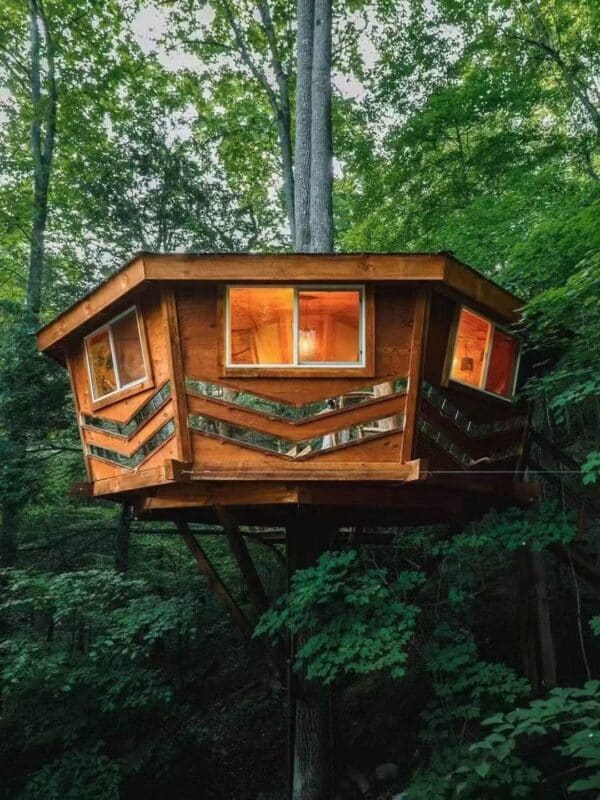
Design Tips to Maximize Treehouse Glamping Appeal
- Floor-to-ceiling windows for nature immersion
- Private decks with hammocks or soaking tubs
- Solar lighting and heating elements
- Luxury bedding and rustic interiors
- Experience-driven design can incorporate rope bridges or spiral stairs to enhance guest appeal.
- Rain-proof roofing and insect-screened windows
Attract high-value guests by combining design elements with eco-stories.
Conclusion
Treehouse glamping and traditional camping provide valuable outdoor experiences that cater to different audiences and yield distinct financial outcomes. Treehouse glamping presents a more robust investment opportunity for commercial buyers and developers targeting growth in outdoor hospitality markets.
Treehouse glamping achieves higher nightly rates while reaching wider audiences and functions year-round proving that it represents the future of luxury outdoor accommodations.
Your business needs high-quality treehouse kits with customization options for outdoor hospitality? Contact us today to get started. **
???? info@treelofts.com
???? [+14582724313]()
???? https://treelofts.com/
FAQ
Which is more profitable: treehouse glamping or traditional camping?
Treehouse glamping accommodations produce between four to ten times more revenue each night and appeal to a wider range of guests.
Treehouses don’t always require more maintenance than tent camps because they are designed to resist weather and pests while needing basic cleaning and maintenance work.
Not necessarily. Despite needing regular maintenance treehouses remain weather-resistant and pest-proof while also proving to be long-lasting.
The cost of building a glamping-ready treehouse averages between $35,000 and $150,000 based on size and features.
The cost to build a glamping-ready treehouse ranges between $35,000 and $150,000 based on the size, features, and site complexity.
Can treehouse glamping be operated off-grid?
Yes. Solar power systems and rainwater collection with composting toilets feature in many builds to reduce utility consumption.
Do you provide complete package kits designed for glamping projects?
Yes. Our team delivers modular treehouse systems which are prepped for commercial glamping operations and include design adjustments tailored to specific regional market demands.
Contact Us
Let’s turn backyard dreams into stunning realities—together.
???? Email: info@treelofts.com
???? WhatsApp: +14582724313
???? Website: https://treelofts.com/
