


Regions experiencing more frequent and intense wildfires now require fireproofing to become a mandatory feature for outdoor structures. Treehouses constructed from burnable materials within forested areas face significant risks during drought periods. Fireproofing Your Treehouse: Tips for Safety in Dry Seasons.
When developers and hospitality operators build treehouses with fire safety measures they safeguard their investments while boosting their market appeal and showing commitment to environmental stewardship.
This guide presents key fireproofing methods that help maintain treehouses as secure and functional properties during both dry spells and periods with high wildfire risks.
1. Understanding the Fire Risks for Treehouses
Environmental Factors
- Proximity to dry vegetation and forest undergrowth
- High wind zones that accelerate flame spread
- Drought-affected regions with frequent fire alerts
Structural Vulnerabilities
- Wood-framed construction
- Open decks and flammable furnishings
- Poor defensible space and cluttered perimeters
Guest-Related Hazards
- Campfires or outdoor cooking
- Smoking near vegetation
- Poor evacuation planning
2. Fire-Resistant Building Materials
Framing and Siding
- Fire-retardant-treated wood (FRTW): Treated to resist ignition
- Fiber cement siding: Highly fire-resistant and durable
- Reclaimed metal cladding provides rustic appeal while offering fire-resistant protection.
Roofing
- Fire-resistant Class A shingles come in asphalt, metal and clay varieties.
- Metal roofing: Non-combustible and heat-reflective
- Ember-resistant eaves and vents block firebrands from reaching attic spaces.
Insulation
- Rock wool and mineral wool insulation materials provide both fireproof protection and mold resistance.
- Cellulose insulation mixed with fire retardant additives remains sustainable and safe when it is correctly enclosed.
Decking and Railings
- Composite fire-rated decking boards
- Metal or cable railings over wood balusters
3. Landscaping for Defensible Space
Perimeter Zoning (0–100 feet)
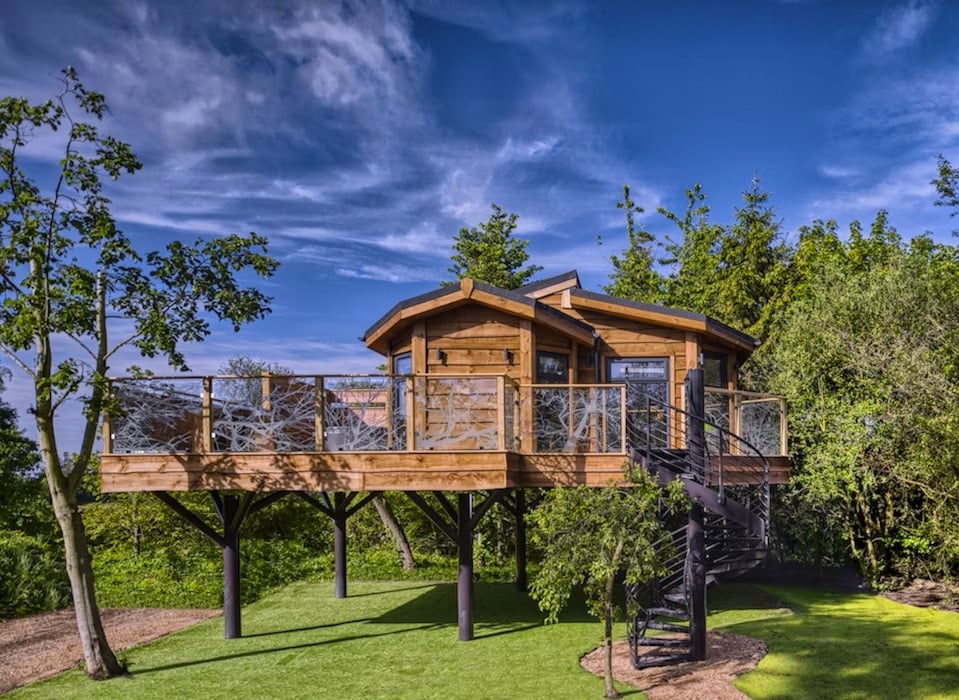
- Ensure that no flammable materials are present in Zone 1 which spans from 0 to 5 feet. Use gravel, pavers, or non-organic ground cover.
- Maintain vegetation at a proper height and remove dead branches while spacing trees correctly in Zone 2 which spans from 5 to 30 feet.
- In the area between 30 and 100 feet remove dense shrubbery to eliminate vertical fuel sources.
Fire-Resistant Plants
- Succulents, lavender, red monkeyflower, and California lilac
- Plant native species that tolerate drought well and contain high moisture levels
Hardscaping Elements
- Gravel paths, stone patios, and metal furniture
- Acts as firebreaks and reduces fuel load
4. Structural Design Tips for Fire Safety
Elevation and Spacing
- Position treehouses a minimum of 6 feet off the ground to minimize exposure to heat.
- Use metal supports when possible
Ember Barriers
- Enclose understructures with fire-rated skirting
- Install 1/8-inch mesh screens across all vents and soffits as well as other openings.
Exterior Layout
- Avoid overhanging limbs near roofs or decks
- Keep the area beneath and surrounding the treehouse free from clutter and decorative plantings.
Fire-Rated Paints and Coatings
- Apply intumescent coatings to wood surfaces
- Applying Class A-rated exterior paints will decrease the chances of surface ignition.
5. On-Site Fire Prevention Systems
Water Access
- Install rainwater storage tanks with hose attachments
- Install rooftop sprinkler systems which can be operated manually or with solar power.
Fire Extinguishers and Equipment
- Place ABC-rated fire extinguishers in areas where they can be easily seen and reached
- Include emergency fire blankets in sleeping areas
Smoke and Heat Detection
- Battery-powered or solar-powered detectors with loud alarms
- Integrate mobile alerts for remote management
Evacuation Plans
- Post easy-to-read signage to show emergency escape paths and gathering locations
- Ensure staff members and guests understand local fire warning systems through training sessions
6. Guest Education and Operational Protocols
Pre-Arrival Communication
- Provide digital welcome materials that detail essential fire safety regulations
- Discuss how defensible landscaping reduces fire risk and why campfire use should remain limited.
Signage and Instructions
- Post visual, multilingual fire safety signage
- Emergency procedures and contact numbers should be accessible through QR codes.
Fire-Free Amenities
- Provide guests with solar lanterns alongside electric grills and LED ambient lighting options.
- Encourage “low-flame” experiences with curated alternatives
7. B2B Fireproofing Solutions and Opportunities
Modular Fire-Safe Kits
- Pre-designed wall/roof systems with Class A-rated materials
- Ideal for wildfire zones and insurance-conscious buyers
Treehouse Packages with Defensible Space Plans
- The package contains landscaping guides along with plant lists and detailed layout diagrams.
- Pack sales kits for glamping operators and resort builders with treehouse packages.
Safety Certification Add-Ons
- Partner with third-party fire safety inspectors
- Offer promotional value through “Fire-Safe Verified” branding
Consulting and Upgrade Services
- Provide retrofitting guidance for older treehouses
- Expand sales opportunities by offering fire-resistant paint, protective mesh kits and exterior improvement options.

Conclusion
Treehouse fireproofing exceeds basic safety requirements to offer a distinct market advantage in the contemporary eco-aware travel and construction sector. Travelers demand beauty and comfort in treehouses along with resilience against fire threats and responsible safety measures.
Business clients will find success in high-risk fire zones by supplying fire-resistant treehouse designs and consulting services. Creating retreats in wildfire-prone regions like California and Australia requires thorough preparation to ensure both protection and long-term success.
Frequently Asked Questions (FAQ)
Treehouse projects in dry areas require fire permits as a safety measure.
Yes. In certain locations you will require fire clearance along with inspection and operational permits.
Metal roofing and Class A asphalt shingles stand out as the best materials for fire resistance.
Class A asphalt shingles and metal roofing deliver top protection against fires.
Existing treehouses can receive fireproofing through the application of various coatings and systems.
Absolutely. Various coating types alongside skirtings and mesh systems can undergo retrofitting.
How much does fireproofing increase build costs?
The cost to build will rise by 10–25% based on material selections and systems yet the investment enhances both safety standards and durability.
Does Treelofts offer fire-safe treehouse kits?
Yes. Our product lineup includes B2B fire-rated kits and fire-retardant material upgrades along with defensible landscape packages.
Contact Us
Let’s turn backyard dreams into stunning realities—together.
???? Email: info@treelofts.com
???? WhatsApp: +14582724313
???? Website: https://treelofts.com/
