


Have you ever stood on a steep slope, looked about at the rough landscape, and thought, “There’s no way anyone could build a tree house here”? If so, you could be passing on one of the most exciting and gratifying building excursions available. Contrary to popular opinion, difficult terrain—such as steep slopes, jagged boulders, or moist wetlands—Building Tree Houses in Challenging Terrains. Can be exactly what makes a tree home so unique.
When you can create something amazing in the harshest playground in nature, why settle for the ordinary? Imagine walking onto your tree home deck, above ground. A breeze sends the leaves whirling about you while soft sunlight pours through the thick canopy. Dramatic cliffs, meandering rivers, or a rich forest floor lie below.Every creak of the wood and every whisper of the wind reminds you that you dared to dream beyond the ordinary.
This blog will guide you through the essential considerations—from surveying your site to nailing the perfect materials—so you can build that “impossible” tree house with confidence. Along the way, we’ll highlight expert tips and safety measures that will help you navigate these daunting terrains without missing a beat. And if at any point you feel you want personalized advice or professional assistance, TreeLofts is always ready to help you transform your lofty ideas into a sky-high reality. Let’s dive in and discover why building on a steep or uneven surface might just be the most rewarding decision you ever make.
“So Steep a Terrain—Why Would I Choose It?” Three Surprising Reasons You’ll Fall in Love
You might be asking yourself: Why would anyone deliberately pick a terrain that’s full of obstacles? The question is fair. After all, most of us associate building with flat, even ground where labor is simpler and costs are more predictable. But when it comes to tree houses, those wilder, steeper, and more unusual locations often yield the greatest payoffs.
1. High-Impact Views and Ultimate Privacy
Ever dream about waking up to a jaw-dropping vista that few others can experience? Usually, difficult terrain equals less neighbors, less foot traffic, and less noise pollution. The outcome is… Nothing else will provide the amazing, panoramic views you find here. The impression of calm and seclusion may be transforming whether your view is of a beautiful lake below or a vast valley.
2. Electrifying Sense of Accomplishment
It’s not just a building project—it’s an epic mission that tests your imagination, perseverance, and ingenuity. Every step, from attaching support beams on uneven rocks to dragging goods up a steep slope, presents both a challenge and a possibility. You will celebrate a heart-stopping sense of success after your fantasy tree house stands up and you observe what you have accomplished despite hardship.
3. A Canvas for Out-of-the-Box Creativity
In an environment that doesn’t follow the usual rules, you’re free to break out of the standard cookie-cutter designs. Maybe you incorporate a cliff face into your living room wall. Perhaps you suspend a rope bridge between two towering trunks. Steep or “difficult” landscapes invite you to reimagine what a tree house can look like—and the end result is bound to be uniquely yours.
Not Sure About the location? Three Must-Knows Before You Start
Moving forward with any tree house build in a rugged location requires knowledge and planning. While it might seem daunting at first, a solid approach will keep you safe and guarantee your project’s success.
1. Terrain Assessment: The Secrets Beneath Your Feet
Setting out the gradient, soil type, and any possible drainage problems comes first. On steep hills or close to rocky outcroppings, the ground could be loose or erologically sensitive. By means of a comprehensive ground analysis, you can design an anchoring or foundation system that stops undesired shifting. Don’t overlook the terrain assessment whether you do this yourself or pay a professional; it is the foundation of a safe construction.
2. Tree Selection: Is Your Chosen Tree Tough Enough?
You are not looking for any old trunk to fasten your tree house. Emphasize mature, healthy trees with robust root systems capable of managing more stress, particularly under erratic conditions. Search for classic illness symptoms such hollow trunks, leaking sap, or extensive fungus. On steep or rocky ground, one often depends on several trees for balanced support. See an arborist whenever in question. Professional tree health assessments can save you future problems as well as significant safety concerns.
Climate and Environment: Are You Ready for Extreme Weather?
Fierce winds, heavy rainfall, or snowpack can become exacerbated in rugged settings. Research local climate data, especially if you’re dealing with places prone to monsoons, hurricanes, or snowstorms. Understanding the prevailing wind direction or the possibility of flash floods helps you orient your tree house correctly, add additional supports, and select weather-resistant materials. With the correct precautions, you’ll sleep soundly—even when the storm clouds sweep in.
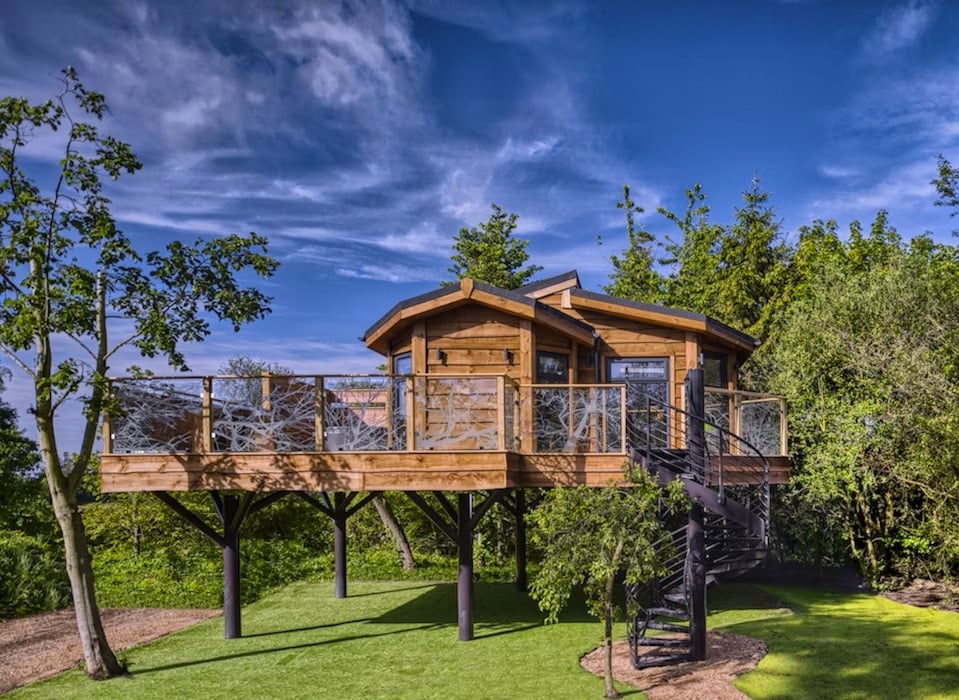
Go Wild or Go Safe? Designing a Tree House That Balances Creativity with Real-World Practicality
Building a tree house in an unpredictable environment requires a blend of imagination and grounded decision-making. You want it to spark envy on Instagram, sure—but it also has to stand strong for years to come.
1. Embrace Lightweight Structures for Maximum Flexibility
When the ground beneath you is anything but flat, heavier construction might strain both the tree and the terrain. Instead, consider lighter framing materials such as responsibly sourced wood, composite beams, or metal alloys. The goal is to distribute weight efficiently and avoid top-heavy builds that could destabilize easily on a slope or in soft soils.
2. Modular & Adaptable: Change It Up as You Go
Ever wish you could rearrange parts of your home on a whim? With a modular approach, you can. In a difficult build zone, splitting the tree house into smaller, pre-built segments allows you to tweak dimensions, add new platforms, or even replace worn parts down the road. This isn’t just convenient—it also keeps your construction timeline flexible. If you uncover unexpected cracks in bedrock or discover a better vantage point a few steps away, modular pieces make mid-project adjustments easier.
3. Integrate Natural Elements for a One-of-a-Kind Design
Cliffs, rocks, gnarled roots, or twisting creeks just asking to be featured in your final design abound in rugged settings. Imagine transforming a big boulder into a naturally occurring seating area or a ledge acting as a panoramic balcony. Far from “hiding,” underline the challenges of your site. By doing this, your tree house will be unique and impediments will become show-stopping architectural elements.
“Which Materials Are Best?”—Balancing Strength, Sustainability, and Style
Any construction can be made or broken by materials; but, in distant or erratic terrain especially more so. The secret is to choose goods that resist moisture, insects, temperature swings, and the test of time while yet maintaining the natural beauty of the site.
1. High-Quality Wood: Strong, Eco-Friendly, and Visually Stunning
Still a choice for outdoor construction is durable, rot-resistant wood like cedar, redwood, or teak. Search for lumber certified by the Forest Stewardship Council (FSC) to guarantee responsible harvest of the wood. This dedication to excellence will help your construction last far longer in demanding surroundings. Good wood selection is an investment in both lifetime and design from the supporting beams to the warm interior paneling.
2. Innovative Materials for an Extra Edge
Beyond conventional timber, lightweight steel beams or glass fiber reinforced polymer (GFRP) can help solve specific structural or environmental issues. These sophisticated composites shine in situations when local pests are an issue or moisture is really high. Apart from their remarkable strength-to—-weight ratios, they also promise reduced maintenance over time—a big benefit if your tree home is on a hill that is difficult to traverse often.
3. Protective Coatings: Your Tree House’s First Line of Defense
Rot and mold are actual threats whether you are building in a humid swamp, a damp woodland, or an area with heavy seasonal rain. Applying water-repellent and anti-fungal coatings to exposed surfaces helps fight these hazards. This covers paint, stains, or custom wood sealants. Early on extra care will help you to maintain the appearance and structural integrity of your tree home for many years.
Learn More: https://treelofts.com/the-laurel-creek-treehouse-ellijay-georgia/

Safety First: Why a Secure Build Is the Ticket to a Carefree Experience
Designing a tree house on level ground can already be challenging; add in steep inclines or rocky substrates, and the importance of robust safety measures jumps off the charts. One structural misstep in a precarious spot can jeopardize not just your investment, but also the well-being of anyone who steps foot in your elevated retreat.
1. Multiple Anchoring Points for Greater Stability
Relying on a single support system might not cut it when the ground is uneven or a single trunk isn’t robust enough. Distribute the load across multiple trees, rock anchors, or specialized steel support posts to keep your structure balanced. For particularly unstable slopes, professional engineers may suggest deep foundation piers that anchor into the bedrock itself, ensuring that your tree house remains upright despite erosion or shifting ground.
2. Specialist Connectors: Every Bolt Matters
Professional-grade Treehouse Attachment Bolts (TABs) or specialized hardware are essential for a secure connection between beams and tree trunks. Because these systems are designed not to harm the tree, they’re less likely to weaken over time. Investing in top-notch hardware is also a no-brainer when you’re fighting everything from strong gusts to possible slides. If the surroundings are moist or salted, make sure every bolt is treated or covered to prevent corrosion.
3. Ongoing Monitoring: Small Issues Can Grow Big Fast
Trees are living organisms that change with the seasons. Slopes can degrade with heavy rainfall. A rock that seemed solid last year might have developed a fissure. Incorporate inspection routines to catch these changes early. Electronic sensors or simple physical checks—like verifying the angle of your platforms—can alert you if something shifts. Proactive maintenance is far easier and cheaper than dealing with a compromised build after the fact.
“Construction Is Too Hard in Such Terrain!”—Smart Solutions to Keep Going
Yes, building on an angle can be physically and mentally demanding. Lugging beams uphill or balancing on ledges is not everyone’s idea of a good time. But fret not—savvy planning, proper tools, and a skilled team can drastically simplify the process.
1. Smoother Material Transport: Cable Systems and Temporary Rails
One of the toughest aspects of building in a mountainous or forested region is getting lumber, tools, and hardware in place. That’s where cable systems, ziplines, or even temporary rail tracks can shine. These not only save your back from strenuous hauling but also reduce soil disturbance. If you’re worried about scarring the landscape, these suspended solutions minimize impact compared to dragging heavy loads across delicate terrain.
2. Phased Construction: Build, Test, Adjust
Instead of erecting the entire structure in one go, break it down into specific phases. Construct the main platform, then pause for stability tests and structural inspections. If everything looks good, proceed with the walls and roofing. Should you spot a minor tilt or notice that a support feels spongy, it’s easier to correct at this stage than after a complete build. This systematic approach is especially reassuring when you’re navigating unknown terrain quirks.
3. Custom Equipment and a High-Caliber Crew
Sometimes, success on steep ground boils down to having the right set of eyes and the right set of tools. Hiring a construction team proficient in climbing or rope-access building can make all the difference. Portable generators and specialized scaffolding can also be lifesavers if the site lacks easy electrical hookups.
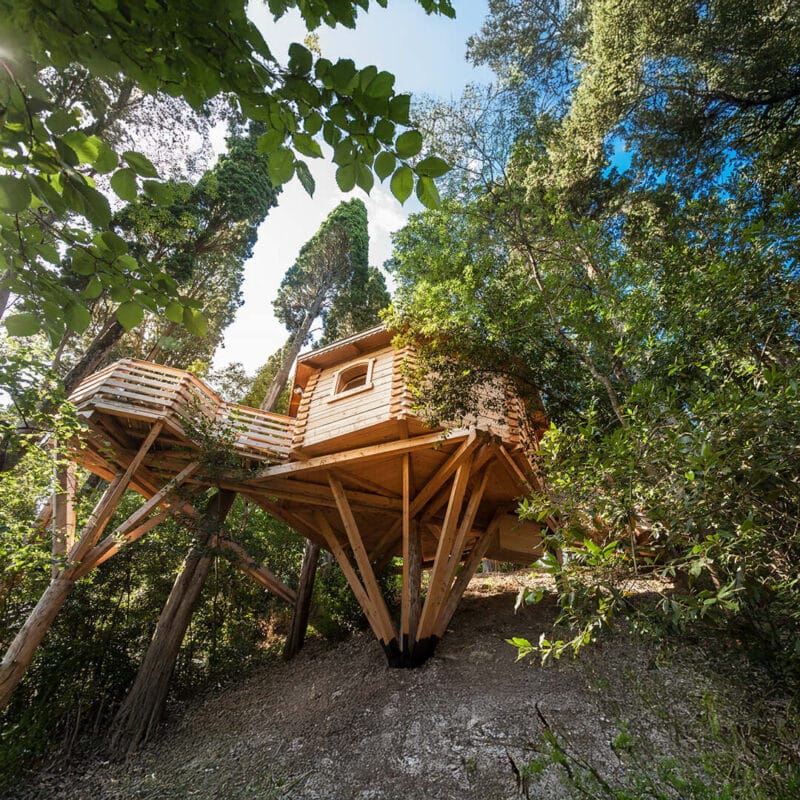
“How Long Will It Last?”—Maintenance and Upgrades to Keep Your Aerial Sanctuary Alive
You’ve poured your heart (and a good chunk of finances) into crafting a dreamlike retreat. Now comes the important part: ensuring it stands the test of time. Elevating your home above ground doesn’t free you from upkeep; in fact, it might demand a bit more vigilance.
1. Scheduled Inspections: Catching Problems Early
Plan a thorough inspection at least once every season or after major weather events. Look for loose fasteners, rotting wood, or signs of warping in beams and platforms. Because challenging terrains can be volatile—slopes erode, trees grow or weaken—small changes in the environment could compromise stability. A diligent maintenance schedule is your best defense against bigger expenses (and bigger risks) later on.
2. Upgrading for Modern Comforts: Solar Panels, HVAC, and More
Who said tree houses have to be primitive? If you’re using the space frequently, especially in areas with extreme heat or cold, adding modern conveniences can make life way more comfortable. If your construction is built to withstand weight and stress, solar panels, battery storage systems, or small HVAC units can be placed; over time, you may choose to add more decks or living quarters and a well-made foundation will make these add-ons easy.
3. Coexisting with Nature (Instead of Fighting It)
The tree home experience is about building with nature, not only about inhabiting in it. Choose biodegradable or environmentally friendly cleaners to prevent upsetting the local ecology. If local critters such as insects, birds, or squirrels visit your house, develop compassionate means of coexistence instead of turning to strong poisons or traps. People prefer tree houses mostly in order to live in harmony with the natural. Encourage that link by thoughtful maintenance.
Life in the Canopy: Three Reasons the Tree House Lifestyle Is Pure Magic
Still not convinced you should brave the challenges of building on a rugged plot? Let’s talk about what actually happens once your tree house is complete. Spoiler alert: It’s more than just a cool hangout spot. It’s a lifestyle that can refresh your spirit and deepen your appreciation for the natural world.
1. Rediscover Tranquility—and Yourself
A tree house is your pass to serenity in a society humming with digital noise and never-ending obligations. As you sip morning coffee, pay attention to the birds or the sound of leaves rustling. That peace will enable you to re-connect with what is important and release tension like an old coat you no longer need.
2. The Social and Adventurous Side
Tree dwellings serve more than only seclusion. Organize a romantic meal at sunset or a stargazing party among friends. If you enjoy outdoor sports—perhaps rock climbing, trail trekking, or even zip-lining—your tree house becomes the ideal base camp. Nothing compares to returning to a comfortable nest tucked in the treetops after a demanding climb so you may relax or laugh with friends.
3. Fueling Creativity and Environmental Stewardship
Artists, writers, and innovators often find that time spent above ground sparks fresh ideas. Maybe it’s the proximity to rustling leaves or the panoramic horizon that opens up creative channels. Equally important, living in the heart of nature fosters a stronger commitment to conservation. When you directly experience the wonders of your surroundings every day, it becomes second nature to protect what you love.

Conclusion: Accept the Challenge—Build Your “Impossible” Tree House and Start a New Chapter
You now understand why building a tree house in a difficult location is not only achievable but also among the most incredible adventures you will ever go on. From the pure thrill of waking up among the treetops to the victorious sense of overcoming difficult terrain, the trip is well worth every ounce of effort and preparation. Your raised house has no excuse not to be timeless given a well-researched site, premium materials, and safety-conscious design.
If you’re itching to start your own adventure but aren’t sure where to begin—or if you want the peace of mind that comes from working with top-tier professionals—look no further than TreeLofts. Our expertise in designing and constructing tree houses in all kinds of challenging terrains can save you from costly mistakes and speed up your timeline. We specialize in transforming daunting sites into jaw-dropping retreats, complete with all the stability, charm, and eco-friendliness you could dream of.
Why then wait? Now’s the moment to act if you’re ready to spin your ambitions and bravery into a stunning retreat in the heavens. Accept the challenging hills, honor the tall trunks, and take ownership of your slice of raised heaven. Welcome to the canopy; your life is about to get a great lot more interesting!
Frequencies of questions
For tree houses built on challenging terrain, is an engineer absolutely necessary?
Absolutely. Professional engineers’ input guarantees safe load distribution, strong foundation work, and secure trunk anchoring in steep or unstable circumstances. By including slope stability, wind pressures, and occupant loads, their estimates help to avoid expensive or deadly errors.
Are any particular tree species better suited for marshes or rocky slopes?
Indeed some species anchor firmly in rocky ground or flourish in damp soils. For instance, some oaks or conifers tolerate partial waterlogging really well, while maples or beeches would shine on stony hillsides. A local arborist can suggest which species can carry the required loads without sacrificing health.
On a hillside, how do I handle drainage around tree house footings?
Properly built retaining walls, terraced stairs, and drainage channels can direct runoff away from supports. Additionally preventing washouts or soil erosion at the downhill side is guttering off the roof channeling water into safe discharge zones.
What would happen if the trunk swung noticeably in strong winds?
Use flexible hardware designed to allow trunk movement—such as specific bolts or brackets. Adding ground-based posts or cross-bracing from several anchor points can also help to lower total swing and hence preserve occupant comfort.
Is a multi-level tree home on a difficult site doable?
Yes. By spreading load over several anchor points or partial footings, multi-level designs can actually adjust more to different terrain. Every level has varied viewpoint points and may line up with varying slope elevations. correct engineering guarantees stability.
