


The rising cost of housing combined with increasing urban population density has made Accessory Dwelling Units (ADUs) an attractive solution for people who need more living space. Accessory Dwelling Units function as secondary homes that share the same property with a primary residential building. These dwellings can function as guest accommodations or rental spaces and may also operate as home offices.
The distinctive appeal and natural elements of treehouses have generated interest for their potential use as ADUs. However, the question remains: Is it possible for a treehouse to meet the legal requirements to be considered an ADU? Distributors, resellers, and buyers must know the legal standards alongside structural and design prerequisites to classify treehouses as ADUs. This article analyzes how treehouses can become legal ADUs by examining potential solutions and required steps while addressing existing obstacles.
What Is an ADU (Accessory Dwelling Unit)?
An ADU represents a compact residential unit that exists independently on the same plot as the main residence. Common types of ADUs include:
- Detached units (separate structures).
- Attached units (extensions of the main house).
- Converted spaces (e.g., garages or basements).
ADUs attract homeowners because they offer flexible living solutions without requiring extensive construction projects.
Benefits of ADUs
- **Increased Property Value: The addition of ADUs to a property can raise its market value.
- **Rental Income: Homeowners can earn supplemental income through the rental of ADUs.
- **Multigenerational Living: ADUs create distinct living areas for different family members.
- **Flexible Use: ADUs offer flexible purposes by functioning as guest houses, home offices, or short-term rental properties.
A treehouse has the potential to be recognized as a legal ADU depending on local zoning regulations and building codes alongside its design and purpose.

Treehouses can qualify as ADUs but local zoning laws, building codes and the specific design and function of the treehouse will determine this. Let’s explore these factors in detail.
1. Zoning Laws
Zoning regulations manage land use and establish whether treehouses fall under the category of ADUs.
Key Considerations:
- Properties eligible for ADUs need to be within residential zones where such structures are permitted.
- Certain jurisdictions enforce minimum lot size requirements for ADUs before construction.
- Treehouses need to follow setback regulations that define the least distance required from property boundaries and nearby structures as well as trees.
- Treehouse designs may face limitations because numerous locations enforce height restrictions on ADUs.
Tips:
- Examine local zoning ordinances to find out if your area permits ADUs.
- Engage a zoning specialist or your local government office to confirm regulatory adherence.
2. Building Codes
Residential structures including ADUs are subject to safety and construction standards set by building codes.
Key Considerations:
- The design of a treehouse should allow it to hold its weight along with supporting people and their belongings.
- ADUs require essential utility connections which include electricity, plumbing services and sewage systems.
- In certain areas ADUs must incorporate accessibility features which include wheelchair ramps and wider doorways to comply with local standards.
- Treehouses must follow fire safety guidelines that require smoke detector installation and the use of fire-resistant materials.
Tips:
- Consult with a certified architect or contractor to make sure your treehouse adheres to building code standards.
- Obtain the necessary permits before starting construction.
3. Design and Functionality
A treehouse needs to serve as an independent living area to meet ADU requirements.
Key Features:
- The living area offers occupants a space designed for comfort and relaxation.
- The kitchen consists of either a compact kitchenette or a complete kitchen equipped with appliances.
- The bathroom features essential plumbing and ventilation systems.
- A sleeping area represents a specific space allocated for rest purposes which could be either a loft or bedroom type space.
Tips:
- Design the treehouse arrangement to utilize space efficiently while enhancing functional capabilities.
- Select sustainable materials and energy-efficient appliances to lessen your environmental footprint.
4. Tree Selection and Placement
The tree that helps support the treehouse ensures both its stability and safety.
Key Considerations:
- Select a mature tree with robust roots to ensure healthy tree health.
- Select hardwood tree species like oak and maple because they provide better support for heavy loads.
- The treehouse must be placed according to setback and height requirements.
Tips:
- Bring in an arborist to evaluate whether the chosen tree can support your construction project.
- Protect the tree from harm during construction to maintain its vitality over time.
5. Cost and Feasibility
The process of constructing a treehouse ADU involves greater complexity and expense compared to standard ADUs because treehouse building presents unique construction difficulties.
Key Cost Factors:
- Materials and labor.
- Utility connections.
- Permits and inspections.
- Tree maintenance and reinforcement.
Tips:
- Develop a comprehensive budget and schedule prior to launching your project.
- Evaluate future advantages like rental earnings and property appreciation to validate your investment decision.
Follow these steps to ensure your treehouse meets legal standards for an Accessory Dwelling Unit (ADU).
Step 1: Research Local Regulations
Research your local zoning regulations and building codes to find out if your treehouse can meet the requirements to become an ADU.
Step 2: Consult Professionals
Collaborate with architects and contractors as well as arborists to create a treehouse design which complies with all necessary legal and safety standards.
Step 3: Obtain Permits
You must acquire necessary permissions such as zoning permits plus building permits along with utility permits.
Step 4: Build the Treehouse
Build the treehouse by following all approved plans and specifications. Local authorities must inspect and approve all construction work.
Step 5: Add Utilities
Equip the treehouse with electrical systems and plumbing infrastructure along with sewage facilities to establish it as a suitable living area.
Step 6: Final Inspection
Verify that the treehouse complies with ADU standards by scheduling a final inspection.
Benefits of Treehouse ADUs
1. Unique Appeal
Treehouse ADUs deliver a distinctive housing solution that merges environmental beauty with contemporary conveniences.
2. Sustainability
Eco-friendly materials and renewable energy sources are essential components when constructing a treehouse.
3. Rental Income
A treehouse ADU can serve as a vacation home or short-term rental to create extra financial returns.
4. Increased Property Value
Constructing an ADU treehouse with good design principles increases a property’s market worth.
5. Connection to Nature
Treehouses offer serene sanctuaries which cultivate a stronger bond between people and nature.
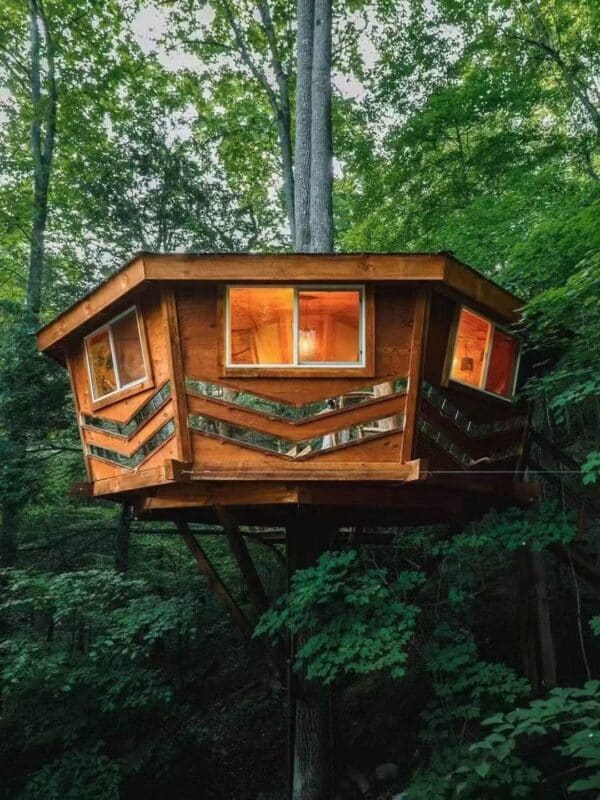
Challenges of Treehouse ADUs
Treehouse ADUs deliver numerous advantages along with distinct challenges to overcome.
- The intricate process of understanding zoning laws and building codes presents significant challenges.
- Specialized materials and labor are essential requirements for constructing a treehouse ADU.
- Ongoing maintenance is required to keep the tree healthy and stable.
- Treehouses require designs that can endure wind and rain along with other environmental conditions.
Conclusion
Treehouses can serve as legal ADUs when they are built according to proper planning and local regulations and feature thoughtful design. Distributors, resellers, and buyers need to grasp the requirements and challenges of treehouse ADUs to make knowledgeable decisions. This guide provides step-by-step instructions for constructing a treehouse ADU that meets safety standards while functioning properly and adhering to legal requirements.
Reach out to us today if you need more information about treehouse ADUs or require support with your project.
- Email: info@treelofts.com
- Phone: +1 503 793 2928
- Website: https://treelofts.com/
FAQ
Can any treehouse qualify as an ADU?
A treehouse cannot qualify as an ADU unless it satisfies the required zoning standards and building codes as well as design specifications.
Building a treehouse ADU presents challenges such as understanding regulations, maintaining structural stability and installing necessary utilities.
Building a treehouse ADU requires overcoming regulatory navigation challenges while ensuring structural stability and utility installation.
Do treehouse ADUs require permits?
Treehouse ADUs need permits to meet zoning standards as well as construction and utility requirements.
Building a treehouse ADU costs change based on material choices, labor expenses and utility installations.
Materials, labor expenses, and utility installation requirements determine the construction cost of a treehouse ADU.
Contact Us
Let’s turn backyard dreams into stunning realities—together.
???? Email: info@treelofts.com
???? Phone: +1 503 793 2928
???? Website: https://treelofts.com/
