


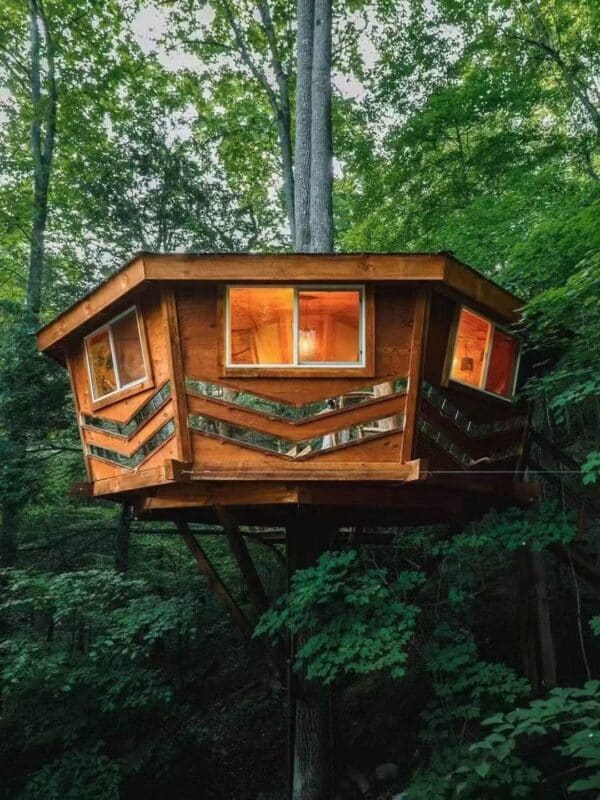
Commercial treehouse development requires strict attention to ensuring structural integrity during extreme weather conditions. The necessity of building treehouses emerges for every location that includes snowy mountainous areas, wind-exposed coastal regions and forests vulnerable to storms.
Will a treehouse withstand extreme weather conditions like snow and hurricanes? **
Treehouses can indeed withstand extreme weather conditions when they are constructed with proper engineering.
Our guide examines how structural approaches combined with materials and anchoring methods as well as regional modifications enable treehouses to succeed in adverse climates. Developers, procurement managers and architectural planners who need to build treehouses gain valuable insights for making informed choices and ensuring safer construction.
Snow Load: Can Treehouses Handle Heavy Accumulation?
Snow Load Design Principles
Treehouses in snowy climates must:
- Treehouses must surpass local snow load guidelines (e.g. 30–100+ lb/sq ft in the U.S.). 30–100+ lb/sq ft in the U.S.)
- Feature pitched roofs to reduce accumulation
- Use heavy-duty framing for vertical support
Engineering Solutions
- Snow slides off metal roof panels more quickly compared to asphalt shingles.
- Reinforced trusses distribute load across beams
- Post-and-tree hybrid construction techniques function to lessen structural tension upon trees.
Treehouses require specialized construction methods to maintain stability during storms and high wind conditions.
How Wind Affects Treehouses
- Wind pushes laterally on walls and roofs
- Lift forces work against the base of the structure aiming to raise the treehouse off its mounting point
- If the frame lacks flexibility then sway movements will crack its joints.
Key Weather Threats to Treehouse Structures
| Weather Condition | Risks to Treehouse Structures |
|---|---|
| Heavy Snow | Roof collapse, added platform weight, ice damage |
| Strong Winds | Structural sway, uplift force, joint strain |
| Lightning Storms | Electrical hazards, fire risk, tree damage |
| Torrential Rain | Water pooling, wood rot, slippery decks |
| Hurricanes | Combined wind and debris impact, anchoring system stress |
Hurricane-Specific Strategies
- Use hurricane-rated TABs and anchoring bolts
- Anchor structures securely using buried helical piles or deadman footings.
- Structures in hurricane regions must withstand wind loads between 160 and 180 miles per hour.
- Use impact-resistant glass or avoid windows altogether

Water & Rainproofing Systems
Design treehouses as outdoor buildings before thinking of them as interior spaces.
Key strategies:
- Builders should choose wood that is treated with preservatives or naturally resistant wood species like cedar and redwood.
- Apply marine-grade sealants annually
- Design flat surfaces with a 2% slope to allow water runoff.
- Include gutter systems or water diversion channels
- Construct elevated foundations to prevent treehouse footings from waterlogged soil conditions.
Lightning and Fire Safety
When building a treehouse that stands on a living tree make sure to follow specific safety guidelines.
- Avoid running electrical wiring through the tree for grounding.
- Use lightning arresters and surge protectors
- Choose fire-retardant coatings for wooden surfaces
- Building treehouses on open land beneath tall solitary trees should be avoided
Select resistant trees and locations to withstand extreme weather events.
Tree Type
| Tree Type | Best For | Notes |
|---|---|---|
| Oak, Maple | Strength, slow growth | Ideal for snow and wind |
| Pine, Fir | Good vertical height | Require bracing for high winds |
| Beech | Dense and stable | Smooth bark; good load capacity |
Do not plant rapidly growing, brittle tree species like eucalyptus, willow and poplar in regions with frequent hurricanes.
Site Orientation Tips
- Build below the canopy when possible
- Avoid slopes that collect snow drifts
- Place away from prevailing wind exposure
- Make sure trees show no signs of existing damage or leaning positions.
Maintenance Protocols for Harsh Weather
| Task | Frequency |
|---|---|
| Inspect bolts and anchors | Every 6–12 months |
| Clear snow from roof/deck | After each storm |
| Re-seal wood surfaces | Annually |
| Check tree health | Annually (arborist) |
| Clean and test gutters | Pre- and post-storm |
Case Study: Hurricane-Ready Treehouse in Florida
The resort on the Florida Keys commissioned the construction of 10 treehouses designed for hurricane resistance.
- Triple-layer TAB systems
- Wind-tested roofing and walls
- Removable wall panels for storm season
- Ground anchors sunk 6 feet below grade
The treehouses endured two hurricane seasons without any structural damage which demonstrates that engineered systems can withstand the most difficult weather conditions.

Conclusion
A treehouse will withstand snow, storms, and hurricanes if its construction and maintenance meet the necessary standards. Commercial buyers must obtain products from manufacturers that deliver code-compliant designs and structural calculations along with engineered fasteners.
Building in mountain camps, coastal glamping sites or suburban forests requires weather-resistant features that protect your investment by ensuring both safety and long-term durability as well as insurability.
FAQ
Is it necessary to use different treehouse designs for areas that experience snow compared to those prone to hurricanes?
Yes. Treehouses in snowy regions prioritize vertical load capacity while those in hurricane areas demand resistance to lateral and uplift forces.
Can treehouses be insured against storm damage?
Treehouses qualify for insurance coverage more easily when they adhere to local construction standards. Request stamped engineering documents from your supplier every time.
It is essential to shut down the treehouse whenever heavy storms occur.
Absolutely. To ensure guest safety treehouses must be vacated when severe weather strikes.
In a storm if the supporting tree becomes damaged the treehouse structure may be shifted to post-support or repaired.
The structural design of a treehouse permits its support to shift from the tree to posts or enables repairs when necessary. Regular arborist inspections help prevent this scenario.
Contact Us
Let’s turn backyard dreams into stunning realities—together.
???? Email: info@treelofts.com
???? Phone: +1 503 793 2928
???? Website: https://treelofts.com/
