


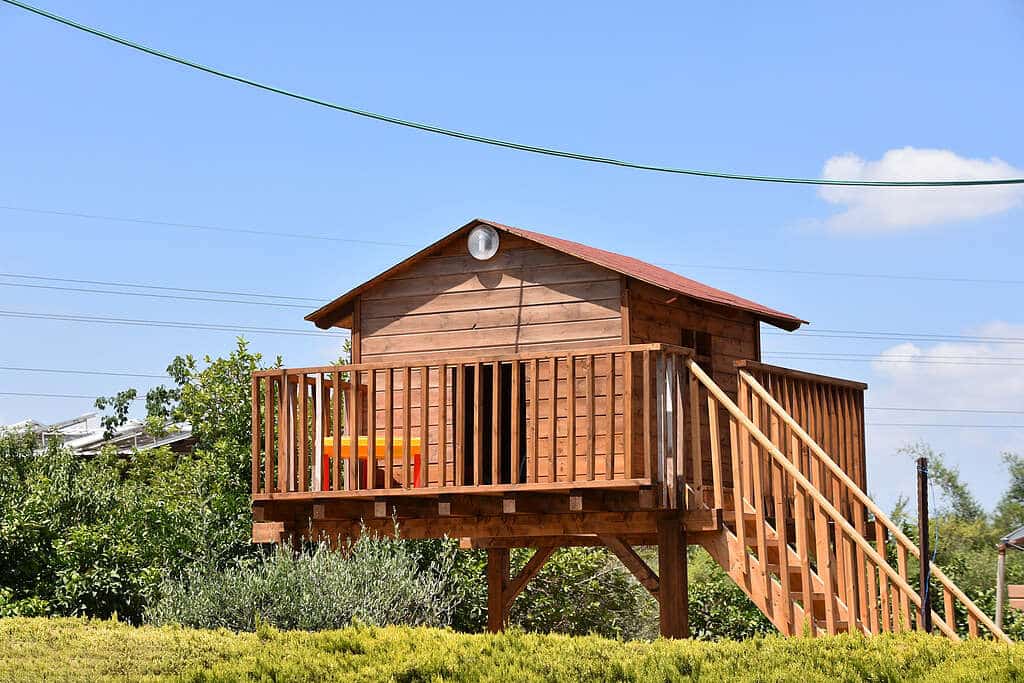
For many homeowners, building a treehouse represents a dream come true—perhaps for their children to have a fun getaway or for a quiet haven. One of the most crucial elements of building a treehouse is knowing How Do You Attach a Treehouse to a Tree. Correctly fastening the treehouse to a tree guarantees lifetime, stability and safety. It’s not only about getting the platform to the tree; it’s about building a framework that moves with the tree as it grows, therefore reducing the effect on its condition.
We will walk through the several ways and approaches utilized to fasten a treehouse to a tree in this all-around guide. Whether your intended construction is a basic, modest treehouse or something more complex, knowing these techniques will help to guarantee a successful and safe building. This page aims not only for homeowners but also for Tree Lofts distributors and builders of treehouses, so guiding you through the best practices and possible difficulties in attaching a treehouse to a tree.

How Do You Attach a Treehouse to a Tree?
Attaching a treehouse to a tree calls for careful thought on the health of the tree, the weight of the treehouse, and the construction’s materials. Each of the numerous ways used to fasten a treehouse to a tree has benefits and drawbacks.
1. Attaching Treehouses: An Analysis
Attaching a treehouse to a tree can be done in several ways; the method you use will rely on the size of the treehouse, the kind of tree, and the intended aesthetic. Here are many of the most often used techniques for fastening a treehouse to a tree:
The Bolt-and-Plate Approach
Attaching a treehouse to a tree is usually done using this approach among others. The platform is fastened to the tree with big bolts and steel plates.
Large steel plates are set on the tree, and bolts drilled through the tree and into the plates help to firmly hold the treehouse. The bolts are positioned at particular positions around the tree to fairly distribute the weight of the treehouse.
Benefits: Strong stability and great stability this approach provides make it popular for bigger treehouses. As the tree develops, it permits improved weight distribution and mobility range.
Challenges: Drilling into the tree is part of the approach, hence improper technique could endanger the tree. The secret is to steer clear of drilling into the important sections of the tree, including the cambium layer of the trunk.
The Tab-and-Joint Method
The tab-and-joint approach entails building a frame around the tree such that mobility as it develops is possible. While letting the tree grow, the joints and tabs maintain the stability of the treehouse.
Small steel or wooden connections link the tree to enable the treehouse to move as required. The treehouse’s frame rests inside these tabs, fastened to the tree without limiting its inherent movement.
Benefits: This approach’s ability to let the tree develop naturally over time and lower its danger of injury.
Challenges: The design calls for exact planning to provide stability and security; larger or heavier treehouses may not be appropriate for it.
The Floating Platform Approach
Those seeking a simple treehouse design find the floating platform approach to be really appealing. This technique entails building a platform supported by beams or posts that floats above the limbs of the tree.
How It Works: The floating platform is hung above the tree rather than the treehouse being attached to it. Postings or beams anchored into the ground or attached to surrounding trees support the platform.
Benefits: This approach avoids drilling straight into the trunk, therefore reducing the harm to the tree. It’s also fantastic for treehouses needing to be raised above the ground.
Challenges: Design and building can be more difficult, particularly for bigger systems requiring more thorough support.
The Bolt-and-Strap Approach
The bolt-and-strap approach can be a simpler and more reasonably priced fix for smaller treehouses. It employs bolts to fasten the platform to the tree from steel straps wrapped around its trunk.
How It Works: The treehouse platform is attached to steel straps wrapped around the tree trunk by bolts. The straps give flexibility for movement and fairly distribute the weight around the tree.
Benefits: Relative simplicity of installation and less need for drilling into the tree than other techniques. It can also be applied for smaller constructions and is more reasonably priced.
Challenges: If the straps are excessively tight, this approach could not be sturdy enough for bigger treehouses and runs the danger of destroying the tree.
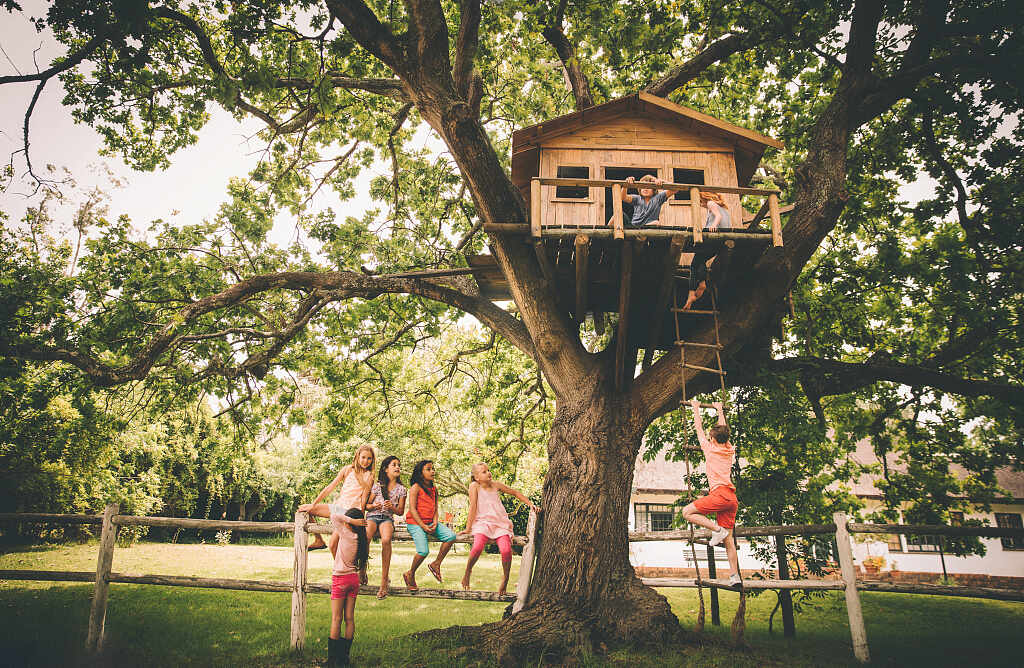
Considerations for Attaching a Treehouse to a Tree
Several aspects must be considered in determining How Do You Attach a Treehouse to a Tree to guarantee durability, tree health, and safety.
1. Tree Kind and Condition
Examining the tree’s condition comes first in any treehouse project. Trees with weak trunks, diseases, or structural flaws might not be fit for a treehouse supporting. Furthermore, different tree species will have different capacity to support weight; so, it is imperative to select the appropriate kind of tree for the particular need.
Commonly used for treehouses are oak, cedar, and maple trees since of their strength and resilience. Steer clear of utilizing softwood or pine type trees that might not offer enough support.
Tree Health Exams: Before beginning the project, always look for evidence of decay, pests, or instability on the tree. Having an arborist evaluate the tree can help to avoid possible problems down road.
2. Mass Distribution
Stability of the treehouse depends critically on appropriate weight distribution. Attaching a treehouse to a tree should make sure the weight is equally distributed across the tree so as to lower the possibility of injuring the tree or bringing the construction down.
Attach the treehouse at numerous spots around the tree to help to spread the weight fairly. This also lets the treehouse migrate and change organically as the tree develops.
Steer clear of overloading by never exceeding the weight the tree can handle. Remember that trees change with time; hence, an overly hefty construction could lead to problems down-stream.
3. Tree Movement
Living entities, trees evolve and move across time. Building a treehouse requires careful consideration of the movement of the tree and design of the connection points to fit this natural process.
Let the tree flourish; the trunk widens and the branches might migrate. Choose adaptable attachment techniques that let the tree flourish free from restriction.
Some techniques, including the tab-and-joint system, are meant to let the tree move naturally.
4. Safety Concerns
Building a treehouse calls for first priority on safety. Whether you are creating it for your kids or as part of a rental, making sure the construction is secure and stable is absolutely vital.
Only utilize premium materials that will be able to handle the weight and strain the treehouse bears. This covers robust, treated wood as well as robust bolts.
Add safety elements: Install rails, strong ladders or stairs, and other safety elements to make the treehouse fit for usage.
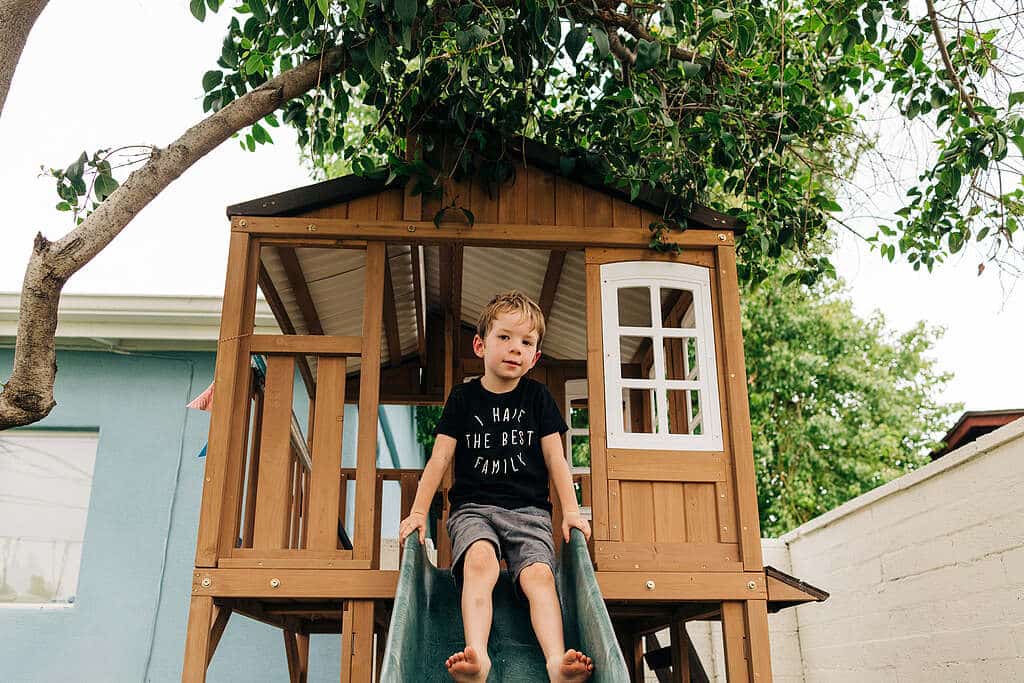
To Sum Up: How Do You Attach a Treehouse to a Tree?
Attaching a treehouse to a tree is a difficult task requiring careful design, suitable building materials, and thorough knowledge of tree stability and condition. The size, condition, and design of the treehouse as well as the size of the tree will determine the approach you decide upon. Whether you employ the bolt-and-plate approach, the floating platform method, or another methodology, it is imperative to make sure the construction is sustainable over time, safe, and sturdy.
Knowing the finest techniques for hanging a treehouse to a tree will enable Tree Lofts distributors and builders provide their customers with premium, long-lasting, and safe treehouses. Whether you are building treehouses for personal or business use, appropriate attachment techniques and meticulous attention to detail will guarantee a structure that will last.
FAQ
- How Do You Attach a Treehouse to a Tree without ruining it? Use flexible straps or the tab-and-joint technique to let the tree flourish and hence reduce damage to it. Steer clear of drilling sensitive places or too deeply.
- Best kind of tree for a treehouse? Treehouses would be best built from robust, steady hardwood trees including oak, maple, and cedar. These trees are less prone to be deteriorated over time and can carry more weight.
- How can one guarantee the stability of the treehouse? To equally disperse the weight around the tree, use several attachment sites. This guarantees stability and permits the movement of the tree. Before construction, always look for strength and health on the tree.
- A treehouse takes what length of time to create? The scope and degree of difficulty of the project determine the chronology. While more complex designs can take several weeks, a basic treehouse may be built in a weekend.
- Can I construct a treehouse on my own? Building a treehouse yourself is possible, particularly if your design is basic and tiny. Larger, more intricate treehouses, however, could need expert assistance to guarantee appropriate construction and safety.
For Tree Lofts distributors, this page offers a thorough instruction on responding to the question “How do you attach a treehouse to a tree?” therefore enabling them to grasp best practices, methods, and safety criteria while building treehouses.
