


Many people dream of building a tree house since it provides a special chance to live or play amid the woods. Nevertheless, one of the most crucial factors to take into account while building a tree home is its interaction with the surroundings. Building a Tree House: Methods A tree home that fits perfectly with its natural surroundings can offer a quiet haven, accentuate the landscape’s beauty, and help to protect the nearby ecology. Whether you’re building a tree home for a family vacation, for personal usage, or even for a business enterprise, it’s important to make sure your construction enhances rather than compromises the surroundings.
Making a tree house that fits with the local flora, fauna, and terrain means more for Treelofts tree house distributors and end users than merely choosing materials or developing a pleasing construction. Key design ideas, materials, and procedures will be discussed in this blog to enable you to build a tree house that fits with its natural environment. Let’s explore how to create a tree house that feels like it fits in the forest starting with the building materials to strategic placement and environmentally friendly elements.

1. Appreciating the Surroundings for Your Design
Approaching the project with an understanding for the surroundings helps you to start creating a tree house that fits with nature. A treehouse should enhance rather than overwhelm its surroundings. These few simple actions will help you to reach this:
- Site Selection: Choosing the correct site for your tree house can greatly affect how well it will fit with its surrounds. Select a location free of disturbance of the landscape’s natural flow. Your tree house should ideally be situated on a mature, healthy tree that will be able to support the construction without requiring any alterations. Choose a location also that provides a clear view of the surrounding landscape but does not unduly disturb the vegetation there.
- Designing with Minimal Impact: Designing with minimal impact should make a tree house seem more like an organic element of the surroundings than something that leaps out as an ugly feature. Your tree house should feature smooth lines and steer clear of boxy or stiff forms. Rounded walls, curving ceilings, and big windows allowing for natural light help the construction seem more in line with the surroundings. Steer clear of utilizing too much glass or metal since they would look harsh in a woodland area.
- Maximizing Views: One of the nicest aspects of a tree home is the chance to take in expansive vistas from above the tree line. Arrange big windows or glass walls facing the most beautiful vistas to provide a flawless encounter between the interior and outdoors. This will provide transparency and movement between the natural environment and the tree house. Furthermore ideal for enjoying the splendor of the surroundings is a balcony or terrace.
Important Advantages:
- Selecting a site carefully helps to avoid disturbance of natural environments.
- A soft, natural design fits the surroundings really perfectly.
- Maximizing views helps to establish the link between nature and the construction.
2. Selecting Environmentally Friendly Materials That Fit In
The materials you choose for your tree house will be very important in guaranteeing that it blends with the surroundings. Selecting environmentally friendly, sustainable materials that fit the surroundings can help you build a tree house that seems as though it naturally extends the forest.
- Wood: A Natural Decision: For good reason, wood is the most often utilized building component for tree homes. This is a natural, sustainable material that fits very well with the surrounding vegetation and trees. Choose locally grown wood that fits the tones of the trees in your area, including cedar, redwood, or oak. Another excellent choice is reclaimed wood since it accentuates features and helps cut waste.
- Natural Stone: Including natural stone into the base of your tree home, the path leading to it, or the surrounding terrain can help you to establish harmony with nature. Native stones will mix more readily with the ground and offer a strong basis for the construction. Moreover, using gravel or wood chips for walks will improve the natural feel and stop the usage of synthetic pavement materials.
- Eco-friendly Paints and Finishes: Should you intend to stain or paint the outside of your tree home, make sure you choose environmentally safe paints and finishes. Search for free of dangerous ingredients, non-toxic water-based paints. These will be safer for the surrounding area in addition to assist shield the tree home from the elements. To make your tree home fit rather than stick out, pick colors that reflect the natural hues of the trees, such earth tones or soft greens.
Important Advantage:
- Keeping the organic sense of the tree house by using natural materials like stone and wood helps to blend with the surroundings.
- Reclaimed, locally produced materials lessen environmental impact.
- Environmentally friendly paints and finishes are safer for the surroundings.
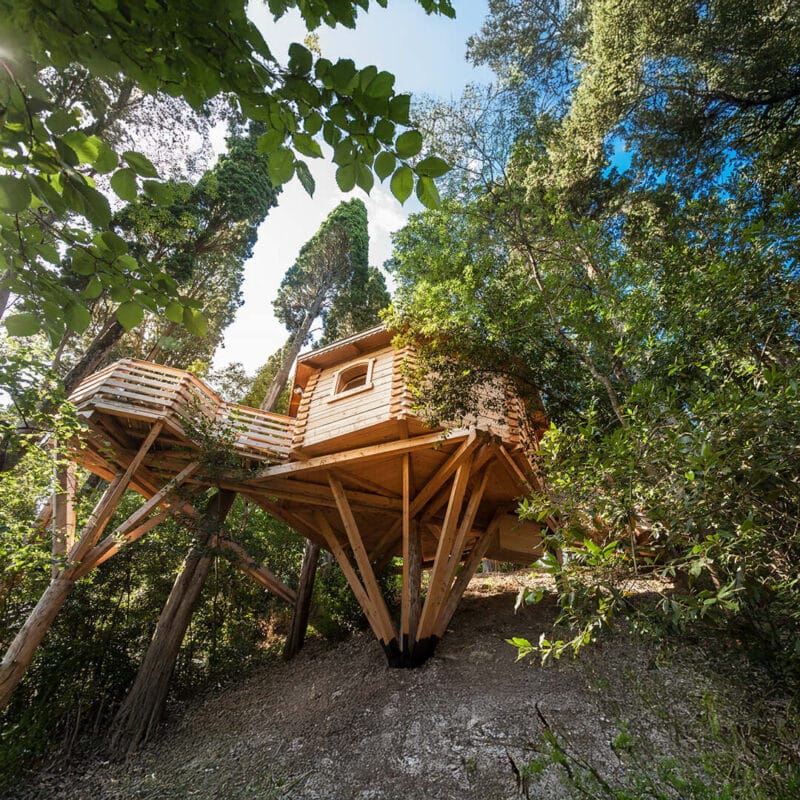
3. Designing with Mind of Protection from Nature
Designing a tree house requires careful consideration of how the construction will interact with the local ecology, particularly with regard to the trees supporting it. Considering the conservation of nature helps you to make sure your tree home is created in a way that maintains the environmental health.
- Tree Health Issues: Make sure the tree is robust and healthy enough to bear the weight of the tree house construction. Select a tree with a strong trunk and sturdy limbs; avoid positioning the tree house such that it damages the tree, say by girdling the trunk with fasteners. With flexible mounting systems and adjustable braces, let the tree develop and migrate naturally without stressing it too much.
- Minimizing Disturbance: Key is to build your tree house such that it least disturbs the surrounding flora and fauna. Steer clear of damaging delicate environments or felling trees. Use low impact methods, including pruning and making use of already existing clearings, while building paths or clearing spaces for the tree house to guarantee that the surrounding plant life stays intact.
- Water Control: Rainwater collecting systems could help to redirect water away from the tree house so preventing soil erosion or harm to the roots of the trees. Furthermore, including permeable surfaces around the tree house for patios or paths will let water naturally seep into the ground without damaging the surroundings.
Main Advantages:
- Maintaining tree health offers a solid basis for years to come.
- Reducing environmental disturbance maintains local ecosystems.
- Good water control stops root damage and soil erosion.
4. Blending and Hiding the Tree House Among Landscape Features
One approach to help a tree home to feel as though it fits its surroundings is to hide or mix it into the surroundings. One can accomplish this in numerous ways and still have a practical and pleasing construction.
- Green Roofs and Living Walls: Including a green roof or living wall to your tree home would be a great approach to let it fit its natural surroundings. Native plants on a green roof naturally hide the structure from view, allowing it to fit the canopy. Likewise, a living wall covered in vines or climbing plants gives the tree house more forest-like appearance.
- Natural Landscaping: Another approach to guarantee your tree home fits its surroundings is with natural landscaping around it. Plant native trees, shrubs, and flowers that accentuate the natural beauty and fit the tree house. Steer clear of utilizing invasive or strikingly vivid species that might highlight the structure. Rather, choose native flora to enable the tree home seem to be a seamless part of the scene.
- Subtle Paint Colors: Paint colors for the outside of your tree home should complement the nearby foliage. Soft neutrals, browns, and greens will let the structure fit perfectly in its surroundings. The tree house should seem to have grown organically from the ground up, not as a startling addition to the scene.
Main Advantages:
- Living walls and green rooftops combine the tree house with the surroundings.
- Native landscaping makes sure the tree house accentuates the surrounding vegetation.
- Small color decisions enable the tree house to blend with the surroundings.
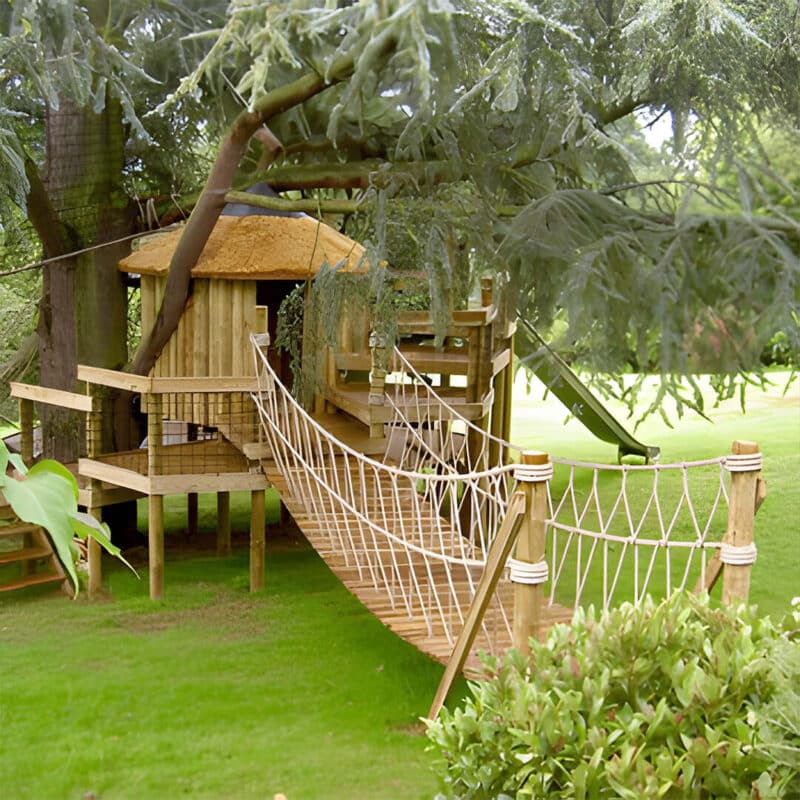
5. Keeping a Tree House Complementary for the Surroundings
Maintaining constant upkeep is crucial to make sure your tree home blends in with its natural environment even once it is finished. Furthermore helping to sustain the health of the tree and safeguard the nearby ecology is regular maintenance.
- Regular Inspections: Plan frequent visits to the tree home as well as to the tree sustaining it. Search for wear indicators including wood cracks, corrosion on fasteners, or weakening tree limbs. Early identification of these problems will enable timely fixes and help to avoid any significant damage.
- Repainting and Sealing: The elements’ inherent wear and tear over the years can cause the tree house’s outside to fade or degrade. Using environmentally friendly materials helps to repaint the building so that it blends with its surroundings and stays weatherproof.
- Pruning and Tree Care: Maintaining the health and strength of the tree supporting your house depends on continuous tree maintenance. To eliminate any dead or broken limbs, routinely prune the tree; furthermore, make sure the tree gets enough nutrients and water.
Important Advantages:
- Frequent maintenance and inspections help the tree home to last.
- Sealings and repainting assist the tree house to look as it should.
- Constant maintenance of trees guarantees stability and safety.
Final Thought
Building a tree home that fits its surroundings calls both great thinking and meticulous attention to detail. You may design a tree home that blends with the surroundings by choosing the correct site, building environmentally friendly materials, and designing the construction to reduce its effect on the surroundings. Including natural landscaping, living walls, and green roofs improves the tree house’s fit into the surroundings even further. Your tree home will remain a lovely, useful area that seems to have always been a part of the forest with continuous upkeep and care.
Designing and erecting a tree house that fits well with its surroundings not only makes sense but also helps Treelofts tree house distributors and end users be sustainable. Following these ideas will help you to make sure that your tree house is a beloved, timeless feature of the surroundings for many years to come.
FAQs
Q1: Where would be the best site for my tree house?
A: Select a strong branch-bearing mature, healthy tree. The site should provide lovely vistas without upsetting the nearby vegetation and wildlife.
Q2: How should I mix the tree house into its surroundings?
A: Choose locally based stone, timber, and environmentally friendly materials including recycled wood. Think of applying finishes in line with the surroundings from nature.
Q3: How can I least affect the tree’s condition by the tree house?
A: Make use of flexible mounting systems so the tree may flourish organically. Steer clear of cutting into the tree or fastening it with techniques likely to compromise its health.
Q4: How may I hide my tree house?
A: To hide your tree house and blend it with the surroundings, utilize green rooftops, living walls, and natural landscaping including native plants.
Q5: How can I keep my tree house merging with the surroundings and maintained?
A: Check the structure often; paint or reseal using environmentally friendly products; and keep the supporting tree in good health with correct pruning and care.
