


The growing interest in backyard treehouses makes more families search for options to involve their pets in outdoor activities. Pets including playful pups and curious cats along with other small furry friends have become recognized as essential family members in many households. Distributors and purchasing managers who source treehouse models need to prioritize understanding how to ensure pet safety within treehouse environments.
This guide offers an all-encompassing review of essential factors to evaluate during the selection or creation process for a pet-safe treehouse. Through thorough investigation of structural safety and animal behavioral patterns we aim to provide customer peace of mind and enhance your product’s marketability within the growing pet owner segment.
Why Pet Safety in Treehouses Matters
Pet Ownership Is Increasing Globally
The growing number of pet-owning households leads to client expectations for outdoor living solutions that accommodate both children and animals.
Liability and Brand Responsibility
Supplying treehouses without pet-safe features presents unnecessary risk exposure for both your brand and customers. Integrating pet-friendly treehouse models into your product portfolio enhances your business value and strengthens customer trust.
Enhancing Market Reach
Your product line will attract pet-loving families along with resorts and pet-inclusive parks when you offer treehouse options that welcome pets.
Common Pet Risks in Treehouses
1. Falling Hazards
The primary concern is falls. Pets especially dogs and cats may lose their footing when their treehouse lacks secure railings or enclosed spaces.
2. Narrow or Slippery Entryways
The steepness or slippery nature of steps, ladders, and smooth ramps can create dangers for pets’ paws.
3. Gaps in Decking or Railing
Pets can get their paws caught in gaps between planks or escape through openings under railings.
4. Sharp Edges or Protruding Nails
Pets run the risk of injury from unfinished wood surfaces and visible fasteners and metal edges.
5. Extreme Temperature Surfaces
Decking exposed to sunlight and metal slides reach dangerous temperatures that can burn paw pads during summer months.
What Makes a Treehouse Pet-Safe?
Enclosed Railings and Barriers
Choose either solid or mesh-filled railings that contain gaps no wider than 2 inches. Solid or mesh-filled railings should have no more than 2-inch gaps to prevent pets from squeezing through or falling off the edge.
Non-Slip Ramps and Stairs
Apply textured surfaces or carpeting and use built-in grooves on access ramps and steps. Ladders should not be used unless they have been fully secured to prevent access.
Pet-Friendly Materials
Choose pet-safe construction materials such as:
- Sealed, splinter-free wood
- BPA-free plastic slides
- UV-resistant roofing materials to reduce surface heat
Shaded Zones and Ventilation
Create shaded areas inside the treehouse to keep pets cool and prevent overheating. Ventilated roofing or mesh windows enhance airflow.
Soft Landing Zones Below
In case a pet jumps or falls from the treehouse base you should cover the area with soft ground materials.
- Mulch
- Rubber pads
- Artificial turf
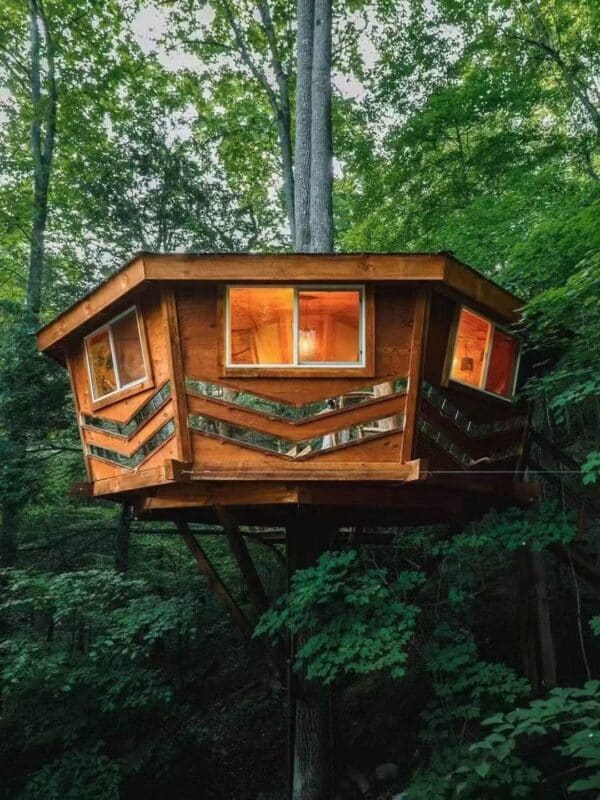
Treehouse Design Types Ideal for Pet Inclusion
1. Ground-Level Treehouses
Small pets and older animals will find these treehouses perfect. Pets benefit from ground-level treehouses because they do not require climbing steps or navigating dangerous heights. Open pet doors and shaded retreats are standard features of these treehouse models.
Use Cases:
- Residential homes with small dogs
- Cat enclosures
2. Ramp-Accessible Treehouses
Safe access is achieved through wide ramps that are long and provide traction. Create safe climbing paths with gentle slopes and protective railings to help pets feel safe.
Use Cases:
- Multi-pet households
- Resorts offering pet-inclusive outdoor activities
3. Treehouse + Kennel Combo
The design includes a built-in kennel or shaded pet den beneath the main platform for small pets.
Use Cases:
- Family-friendly parks
- Glamping businesses with pet services
4. Observation Decks for Cats
Cats love elevation and observation. Elevated platforms that include enclosed sides and scratching posts function as ideal observation points for pets.
Use Cases:
- Cat cafés with outdoor space
- Urban homes with feline companions
Recommended Features for Pet-Friendly Treehouses
| Feature | Purpose | Ideal For |
|---|---|---|
| Mesh railings | Prevents falls and paw entrapment | Small pets like cats or puppies |
| Wide non-slip ramps | Allows safe access without stairs | Older pets, large breeds |
| Built-in pet shelter/den | Offers shade, security, and comfort | All breeds |
| Detachable pet gate | Controls pet movement in/out | Playtime supervision |
| Ground-level door access | Provides independence | Well-trained pets |
Important Considerations for Wholesalers and Builders
Material Certification
Verify that all building materials meet non-toxic standards and hold safety certifications for both children and pets.
Modular Add-Ons for Customization
Offer pet modules as an add-on: Builders can provide pet modules that include miniature pet ramps alongside sunshade tents and enclosed lounging areas.
Clear Product Labeling
Assist buyers and resellers in identifying pet-approved models through visual icons or specific product categories.
Real-Use Testing
Pet owners should be invited to participate in field tests of products while providing their feedback. This creates trust and improves design iteration.
Maintenance and Inspection Tips
Regular Inspections
Advise end-users to check for:
- Loose boards or railings
- Accumulated pet fur blocking vents
- Chewed materials (especially by puppies)
Cleaning Procedures
Pet-safe cleaning solutions should be utilized while selecting easy-to-clean flooring options like composite panels.
Seasonal Adjustments
Provide winterization and summer-proofing guidelines to keep pets safe from extreme weather conditions in the treehouse.
Real-Life Application: Treehouse Resorts & Pet Zones
Case Study 1: Eco Lodge with Pet-Friendly Treehouses
The glamping business located in the Pacific Northwest provided pet-friendly treehouses featuring private shaded dog ramps and enclosed sleeping pods.
Results:
- Increased bookings from pet-owning travelers
- Positive online reviews mentioning pet inclusivity
Case Study 2: Suburban Family Treehouse
The builder constructed a low-level treehouse featuring mesh walls for visibility in a suburban backyard that included a special area for dogs. Both children and pets used the treehouse as their primary area for outdoor fun.

Conclusion
Pet owners can safely enjoy treehouses through mindful design and safety measures. You can design environments where both children and pets thrive by using quality materials and implementing safety-first features along with thoughtful design. Distributors who provide pet-friendly treehouses gain a marketing advantage in the current family-centric marketplace.
When you address pet owner concerns through your product offerings you not only boost customer satisfaction but also create a brand that demonstrates genuine care.
FAQ
Can all pets safely use a treehouse?
Elevated treehouses do not suit every pet. While cats and small dogs adjust readily to elevated treehouses older large-breed dogs perform better with treehouses on the ground that feature ramps.
A pet-friendly treehouse should not exceed 4 feet in height to ensure safety for pets.
Pet-friendly treehouses need to stay at or below 4 feet high unless safety features are added.
Are mesh railings necessary?
Yes. Enclosed paneling or mesh barriers effectively protect small pets from accidental falls.
Treehouses for pet owners can be personalized by adding features such as pet ramps, enclosed rest areas, and shade structures.
Design modular treehouses that feature pet ramps alongside enclosed rest areas and shade structures.
The majority of pet injuries in treehouses result from minor paw damage caused by splinters, slips, or sharp edges.
The majority of pet injuries reported in treehouses involve minor damage to paws caused by splinters and sharp edges. Ensure safety by selecting materials with non-slip surfaces and sealed properties.
Contact Us
Let’s turn backyard dreams into stunning realities—together.
???? Email: info@treelofts.com
???? Phone: +1 503 793 2928
???? Website: https://treelofts.com/
