


Though it’s not without difficulties, tree home building may be an interesting and fulfilling endeavor. Whether you’re an individual ready to build your ideal tree home or a resort owner wishing to include distinctive lodging, the process of building a safe, stable, and beautiful tree house calls for careful design, appropriate materials, and knowledge to handle possible challenges. These difficulties may be anything from choosing the correct tree to controlling structural integrity, guaranteeing safety, and even negotiating local building codes.
This article will go over some of the most often encountered difficulties during tree house building and offer workable fixes to guarantee the success of your project. These ideas will let you, regardless of experience level—first-time builders or professionals—overcome challenges and produce a safe and useful tree home. Understanding and getting ready for these problems will help you to realize your idea and guarantee a beautiful and durable construction that will last.

Selecting the Appropriate Tree for Your Tree House
Choosing the proper tree presents one of the first difficulties in building a tree home. Not all trees are fit for supporting a tree house; choosing the wrong tree could cause structural instability, safety issues, and unneeded expenses. Here’s how to approach the tree choosing method to guarantee you build your tree house in the proper area.
Evaluating Tree Strength and Condition
The most crucial considerations in choosing a tree for your tree home are its strength and general condition. You want a mature, robust tree devoid of illness. Search for trees featuring a sturdy trunk and big, robust limbs. Given their strength and stability, trees such oak, maple, and beech are great options. Steer clear of young, sick, or weakly branched trees since they might not be able to hold a tree house’s weight.
Guidelines for Evaluating Tree Health:
- Look for obvious damage such as dead limbs, fungal growth, or bark splits that can point to a damaged tree.
- Tree Size: To guarantee the trunk can support the weight of the tree house, it should have a minimum 12 to 18-inch diameter.
- See a certified arborist to evaluate the condition of the tree and fit for sustaining a construction if you are unsure.
1.2. Considering Tree Location
An additional important consideration is the tree’s position. You have to pick a tree that is easily reachable and placed so that building is possible. Steer clear of trees too far from other buildings or those that would need more than necessary branch or leaf trimming. Furthermore crucial is the tree’s proximity to other possible threats or electricity lines.
Determining the Perfect Location:
- Nearness of Other Trees: Trees too close together could not offer enough room for a tree house. Make sure the tree home can be constructed securely free from interference in enough area.
- Steer clear of overhead hazards such as close power lines, big tree limbs, or anything that can endanger your safety.
- Environmental Considerations: Contemplate on how the tree house will fit the surroundings. Choose somewhere that improves the tree house experience without compromising the surroundings.
2. Stability and Safety Design
Structural integrity as well as the well-being of persons using the area depend on a sturdy and safe tree home. Tree houses are frequently subjected to wind, rain, and temperature swings; so, the design has to be able to resist these elements.
2.1. Verifying Structural Integrity
Making sure the tree house is sturdy and stable is one of the most often difficult tasks in creating one. Tree houses depend on the host tree for support, thus the weight distribution and anchoring system has to be carefully designed to prevent harm to the tree and guarantee the house stays stable over time.
Important structural stability design considerations:
- Distribution of the weight of the tree house should be equal across the tree to avoid needless strain on any one section. Make several connection points and take into account using a floating platform design to reduce tree pressure.
- To strengthen the construction, use strong beams, tension wires, and brackets together. A great option is floating braces since they let the tree move freely and help to spread the weight.
- Materials: Select robust ones able to resist the surroundings. For robust, long-lasting tree houses, pressure-treated wood, stainless steel fasteners, and galvanized steel beams are all dependable materials.
2.2. Incorporating Safety Elements
Building a tree home calls for great safety, especially considering children will be utilizing it. Ensuring that the tree house is secure for all users should first concern you even if you are building it as a personal haven.
Necessary Safety Measures:
- Install strong handrails and guardrails around stairs and platforms to help to prevent falls.
- Make sure all walking surfaces—including stairs and decks—have non-slip materials to lower the possibility of slipping, particularly in damp environments.
- If you are climbing a ladder or stair to reach the tree home, ensure sure it is stable and properly fastened. Steer clear of lean or narrow ladders.
- Make sure the roof is built to resist heavy winds, snow, and rain. To guard against moisture damage, take into account including water-resistant materials.
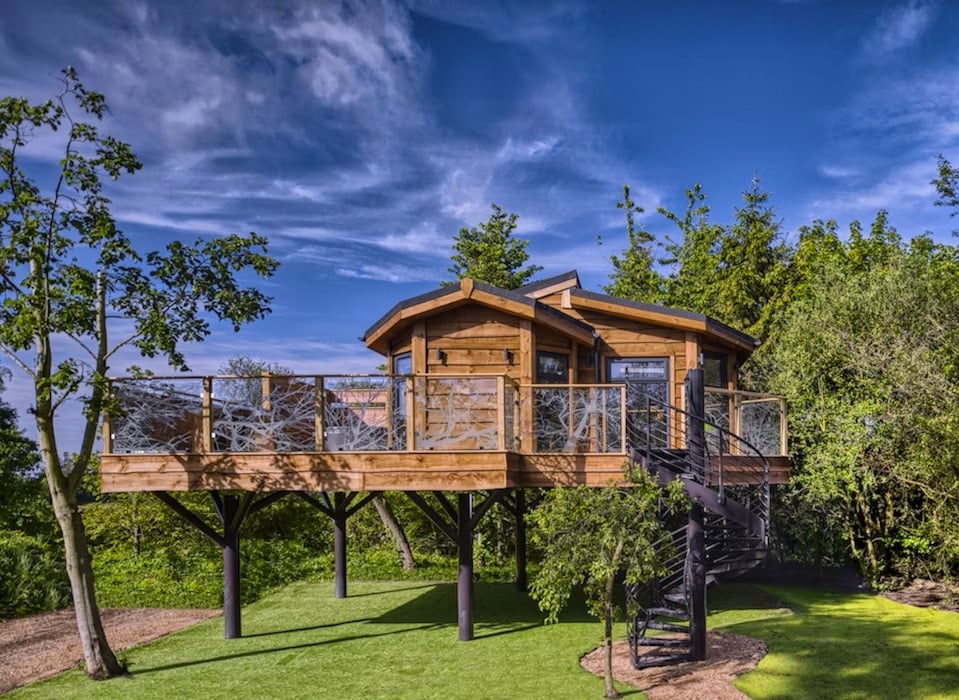
3. Navigating Local Building Codes and Guidelines
See your local authorities to find any building codes, zoning laws, or permissions that might apply before you start building your tree house. Ignoring these rules could cause penalties, forced destruction, or other problems later on.
3.1. Appreciating Permission Conditions
Many places need a building permit for tree house construction, particularly if it calls for plumbing, electrical wiring, or major property structural improvements. Check local rules to be sure you are in compliance even if your tree home is a tiny, private construction.
What should one investigate prior to starting construction?
- Find out whether your tree home calls for a building permit. Usually, the scale, height, and intended usage of the construction will determine whether a permit is required.
- Check to see whether the site of the tree home conforms to local zoning rules. Certain properties could have limitations on the kinds of constructions that can be erected.
- Make sure your tree house satisfies any local safety regulations, especially if it will be public—that is, in a resort environment.
3.2. Reducing Environmental Effect
Developing a tree home could call for an environmental impact study in some places, particularly if development will disrupt nearby ecosystems. Consider how your project might affect nearby flora and fauna.
Best Strategies for Reducing Environmental Effect:
- For the building of your tree house, utilize sustainably obtained, environmentally friendly products. Steer clear of products or dangerous chemicals that might harm the surroundings.
- Tree Preservation: Steer clear of damaging the tree excessively during building. Apply methods that maximize the health of the tree and reduce their effects on development.
- Disturbance of Wildlife: Think about how your building can affect nearby species. Try to reduce disturbance and make sure your tree house doesn’t compromise nearby environments.
4. Managing Site Conditions and Weather
Constructing a tree home calls for great attention to weather conditions since some elements could greatly affect the building process. Strong gusts, heavy rains, or freezing temperatures can all disrupt the building process and potentially damage components.
4.1. Adapting to Seasonal Changes
The timing of your tree home building is critical. Winter and spring can bring severe rains or snow, making construction difficult or risky. Furthermore, materials warping or expanding caused by the summer heat can affect the stability of the tree house.
Tree House Construction’s Weather Concerns:
- Plan for dry weather to minimize delays brought on by snow or rain by timing building during the driest season. Dry conditions lower the possibility of water damage and guarantee appropriate choice of materials.
- Extreme temperatures can shrink, swell, or split wood and other materials as well as impact their handling. Take care with material handling and storage to prevent damage.
- Particularly for the roof, decking, and outside walls, choose weather-resistant building materials. Treatments for waterproofing and coatings will help to guarantee lifetime.
4.2. Managing Site Obstacles
Some tree house sites provide particular difficulties, such as uneven ground, plenty of vegetation, or hard-to-reach spots. These difficulties call for original ideas to guarantee a good construction.
Tips for Site Preparation:
- Making sure the area around the tree is free of things like big branches or pebbles that might get in the way of building can help to clean the site.
- If the tree house site is far-off or difficult to reach, make sure construction plans allow for simple access. This could call for building scaffolding, heavy lifting using cranes, or specialist equipment use.
- Make sure the earth around the tree’s base is solid and level. Should the ground be overly soft or unstable, you could have to include reinforcement to stop shifting or settling over time.
5. Last Thought
Constructing a tree home is an exciting endeavor that lets you design a distinctive area in the natural surroundings. It does, however, present a set of difficulties that call for careful preparation, the appropriate tools, and meticulous attention to detail. Overcoming these obstacles is crucial to building a safe and long-lasting tree house from selecting the appropriate tree and guaranteeing structural stability to negotiating local building codes and managing weather conditions.
Knowing these shared difficulties and applying the ideas presented on this blog will help you to make sure your tree home project is successful. Spending time to address any challenges will result in a stronger, safer, and more fun construction whether your project is a luxury tree house for a resort, a family hideaway, or a private retreat.
Learn More: https://treelofts.com/the-maple-ridge-treehouse-asheville-north-carolina/

6. Frequently Asked Questions
1. For a tree home construction, which kind of tree is ideal?
Building a tree home would be best from strong, mature trees like oak, maple, and beech. These trees provide stability and strong limbs to help the construction.
2. How can I make sure young people can use the tree house safely?
Install strong railings and guardrails; utilize non-slip surfaces; make sure the construction is firmly secured. Always heed building safety recommendations.
3. Does building a tree home require a permit?
Location determines the permit criteria. To grasp zoning rules, building codes, and any required permissions, one needs to consult local officials.
4. When building a tree house, when would be the ideal time of year?
Usually in late spring or summer, building is best done under dry conditions. Steer clear of building during the rainy season since damp environments might compromise materials.
5. How might I guard the tree throughout building?
To prevent harming the tree,use non-invasive techniques like floating braces. Limit drilling into the tree trunk to guarantee natural growth of the tree.
Getting ready for these typical difficulties will help you to make sure your tree house is a solid, safe, and fun haven that will last for a lifetime.
