


From basic kid hideouts to complex buildings serving as workplaces, guesthouses, rental homes, and luxury getaways, tree houses have evolved. Tree house Installations and homeowners both are searching for quick and effective methods to create these elevated sanctuaries as increased interest in nature-oriented getaways and imaginative living environments calls for.
Effective and quick installations not only minimize disturbance to the surrounding area but also help lower labor expenses and possible building issues. Maximizing design for quick installation can be the difference between a difficult job and an easily accessible and reasonably priced effort for tree house distributors and end users.
This all-inclusive book will go over best practices, design ideas, and planning advice for simplifying the tree house construction. From site choice and modular building to lightweight materials and on-site logistics, these ideas will enable you to have a flawless, hassle-free experience—ultimately saving time, money, and energy. By the end of this blog, you will be ready to provide—or invest in—a tree home that is both physically sound and quick assembly ready, therefore benefiting all those engaged in the project.
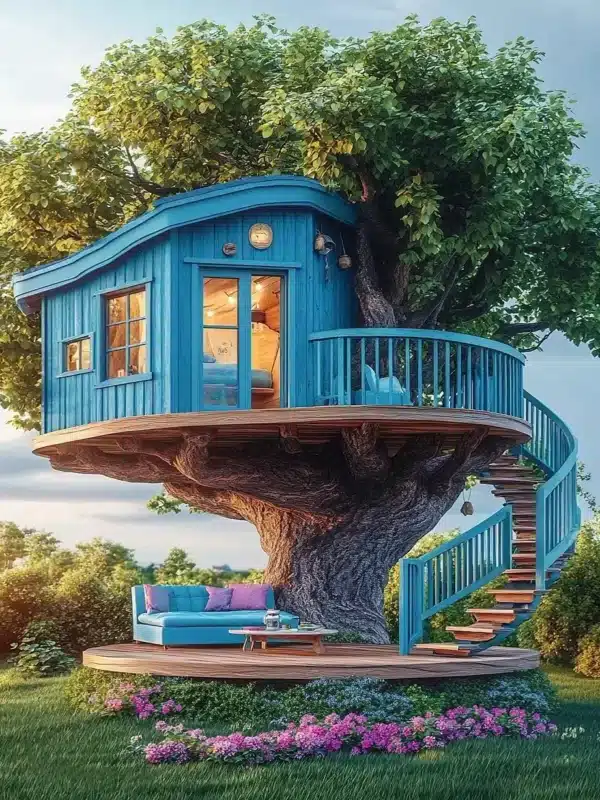
1. Adopting Effective Tree House Design: Reasons Behind It
Efficiency in building a tree home goes beyond just saving a few hours on the job site. A well-built and quickly placed tree house has many advantages:
- Quick installations help to lower labor costs, worker housing expenses, and possible budget overruns brought on by delays.
- Faster construction implies less disturbance of the surrounding ecosystem, so lowering noise pollution and maintaining tree health.
- Shorter building schedules reduce the possibility of weather-related interruptions and allow problems.
- Shorter waiting times between first deposit and enjoying their finished tree house help end consumers to be more satisfied.
These benefits highlight the need for careful design that gives speed and simplicity of construction top priority while preserving structural integrity, safety, and visual appeal.
2. Early Design for Fast and Effective Tree House Constructions
2.1 Site Review and Tree Choice
Every effective tree house begins with the correct tree, or trees. Making sure you choose a site that naturally supports quick construction and low engineering difficulty depends on a comprehensive site analysis.
Any sturdy tree house is based on a strong, healthy tree that provides the backbone. Look over the trunk, limbs, and root system with an arborist. A stable tree can help to extend the build by lowering the requirement for intricate bracing or other support systems.
Appropriate Tree Species: Some species—such as oak, maple, or some conifers—have robust branches and strong, broad trunks by nature. These can be more suited for weight-bearing projects, hence less work is needed reinforcing or modifying the design to fit a smaller tree.
If your tree house calls for internet access, water, or electricity, closeness to utility connections will help with installation. Longer distances to these resources usually call for more trenching or digging, which raises the complexity and length of the project.
Accessibility for Construction: The build process is more effective when a site fits workers, material deliveries, and construction trucks. Rough terrain, steep hills, or narrow paths can all cause logistical challenges slowing down advancement.
2.2 Guidelines and Permission
Tree houses can be subject to municipal construction laws, environmental restrictions, and homeowner association rules even though they are frequently smaller than traditional buildings. Early addressing of permits and permissions helps to avoid last-minute construction halts or changes:
- Every municipality may have particular rules on structural load requirements, maximum heights, or tree house location. Getting these specifics early on guarantees that your design complies with legal requirements.
- See experts when needed to save time and lower noncompliance risk by consulting engineers or contractors who have negotiated permit procedures before.
- If your project is close to property borders or vantage points, it helps to keep openness with neighbors or local community groups, thereby preventing conflicts that can cause delays to the construction.
2.3 Timelines and Budget Coordination
Even with a well-considered design, neglecting to match the budget and schedule might throw off an otherwise effectively running project:
- List important stages: design finalization, procurement of materials, site preparation, and installation. Every stakeholder is kept aware of their obligations and deadlines by a coordinated calendar.
- Consider uncertainty: Unexpected site circumstances, shipping delays, and changing weather could add days or weeks to the project. Including contingency time into the calendar helps to prevent aggravation of delays.
- Work with clients who are new to tree house installations; continuous cost, progress, and contingency communication builds confidence and prepares them for any possible future events.
3. Prefabricated and Modular Approaches to Speed Assembly
3.1 Definition of Modular Construction
Building components off-site in a controlled environment then shipping pre-manufactured modules to the site for final assembly is the basis of modular construction. Tree homes notably benefit from this method since limited workspace, uneven ground, and height restrictions can make on-site labor difficult.
Advantages of Modular Tree Houses:
- Larger portions are built in factories, which lowers on-site labor and lets several jobs (such as painting or installing electrical wiring) happen simultaneously.
- Factory settings provide regular conditions that help to reduce weather delays and guarantee uniform workmanship.
- Less materials are wasted and the local ecology suffers less damage from larger on-site construction.
- Prefabrication generally standardizes jobs, therefore improving the accuracy of budgeting and lowering the possibility of cost overruns.
3.2 Hybrid vs Full Prefabrication
Not every tree house has to be manufactured totally. Builders can use a hybrid approach whereby some modules—such as walls, floors, or ceilings—are partially built off-site:
- The project can call for on-site building of basic supports while major structural components are pre-cut or half constructed. Time is saved here without sacrificing design freedom.
- Completely Prefabricated Units: Sometimes whole pods or cabins can be moved undamaged. Although they are quite fast to install, these sometimes call for specific transportation and crane access, which can be difficult in rural or forested regions.
3.3 Working with Manufacturers and Suppliers
Strong alliances are what make a modular or prefabricated strategy successful:
- Choosing established prefab manufacturers can help you to match designs to your particular requirements since experienced suppliers grasp the structural subtleties of tree house modules.
- Clear communication on delivery dates, packaging, and assembly instructions helps ensure modules arrive in sequence, therefore lowering downtime.
- Inspections at the job site and the manufacturer verify that components satisfy design and safety criteria.
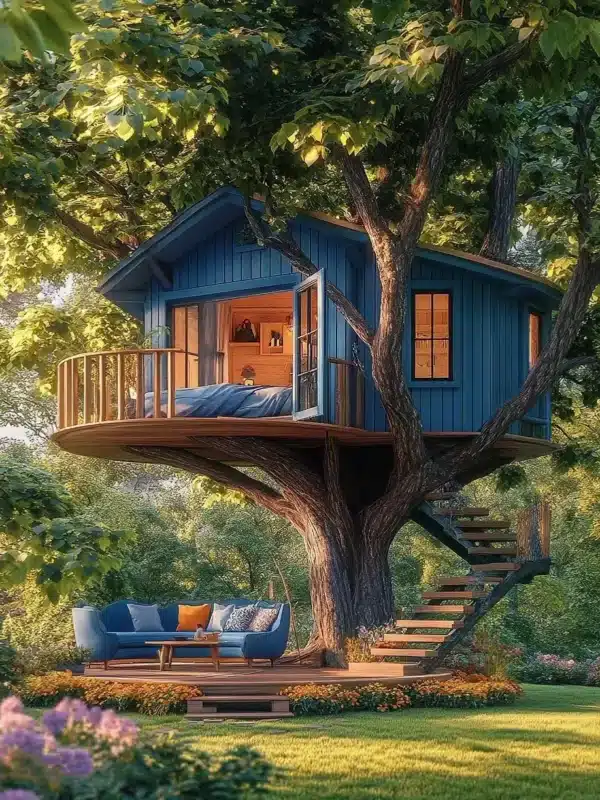
4. Modern Structural Systems and Lightweight Materials
4.1 Methodologies of Lightweight Framing
The speed with which a tree home can be built is much influenced by the structural materials chosen. Although dense hardwoods and steel beams offer great strength, they also make transportation more difficult and call for extra bracing.
Glued Laminated Timber (Glulam) or Structural Insulated Panels (SIPs) have a high strength-to-weight ratio, which speeds up installation by simplifying handling.
Aluminum or Metal Frames: Though more often used in businesses, light-weight metal frames can be customized for tree homes. Through bolted or riveted connections, they provide rapid assembly and corrosion resistance.
4.2 Quick Assembly Connectors and Fasteners
Selecting the correct connectors can make all the difference between an assembly lasting one week and a weekend project:
- Many specialized brackets and hardware solutions for tree houses enable you to fasten beams and posts, thereby saving you from custom-fabricated parts.
- Systems that reduce damage to the tree—such as tree-friendly attachment bolts—also speed installations by providing dependable anchor points that require few changes.
- Standardized Fasteners: By use of consistent bolt, screw, or nail sizes and kinds across the design, confusion can be avoided and assembly can be accelerated.
4.3 Thinking Through Temporary vs. Permanent Support Systems
For rapid installations, you may wish to consider whether any temporary fixes could be used instead of all permanent supports:
- Building a temporary scaffolding or platform will help walls and roofs to be assembled more easily. This scaffolding can be taken down once finished to leave the tree home braced by permanent attachments.
- Some bolt-in solutions allow you to install quickly and remove later without causing appreciable tree harm. This method might be helpful for temporary buildings or those in places with tight environmental laws.
5. Integrated Construction Management and On-Site Logistics
5.1 Handling Deliveries of Materials
Delays usually result from damaged or late arrival of important supplies. Short builds depend mostly on effective material management:
- Where possible, group delivery to reduce repeated visits that could hinder site activity.
- Prefabricated modules and delicate components should be tightly wrapped to avoid damage, which could set off re-orders and waste of time.
- Create a designated accessible area close to the tree house site for material storage and offloading. This enables the build team to acquire things fast as needed.
5.2 Scheduling and Labor Coordination
Without correct labor coordination, even the best design can fall short. Every phase transitions seamlessly when a well-synchronized team performs:
- To prevent uncertainty on-site, clearly outline certain tasks for every worker—including those involving mounting roof panels, electrical wiring, or finishing interiors.
- Short daily meetings can help the team be in line on development, spot possible roadblocks, and arrange activities to keep momentum.
- If the crew isn’t familiar with tree house building specifics—such as working at heights or tree attachment systems—onboarding them in these procedures saves time and reduces the chance of mistakes.
5.3 Choice of Tools and Equipment
Having appropriate tools on-site speeds the whole process:
- Freed from heavy wires or generators, lightweight, cordless power tools allow workers—especially at heights—to move around the site quickly.
- Renting a crane or lift for a brief period will greatly save work time for large-scale or multi-level tree structures.
- Simple backups like an additional generator or replacement drill might help to avoid protracted downtime should a piece of equipment fail.
6. Designing Interior and Finishes for Quick Completion
6.1 Simplified Floor Plans
Tree houses sometimes have less of a footprint than conventional residences. Focusing on a basic or open-concept interior architecture helps you cut down on partition walls, plumbing or electrical route complexity, and finishing work needed.
- Open-plan layouts help to create space and lessen the need for long finishing jobs or internal load-bearing walls.
- Furniture designed for dual purposes—that of storage or seating—helps to save time by reducing separate installs.
6.2 Pre-finished Surfaces and Panels
Like modular exteriors, interior surfaces can be pre-finished to speed assembly:
- Using pre-stained or pre-painted panels reduces on-site finishing work for cladding and ceilings.
- Flooring Systems: Click-through panels or floating floor solutions install faster than standard hardwood that could call for sanding, staining, and nails.
6.3 Perfect Utility Installations
Installing and testing plumbing, electrical, and HVAC systems takes up a lot of build time. Simplifying these can cut days off from the project schedule:
- In modular systems, electrical cables can be combined into wall panels off-site, so requiring only final hook-ups on-site.
- Choosing a self-contained HVAC system or mini-split AC will install faster than duct-based configurations.
- Simple Plumbing Schemes: Grouping bathroom or kitchenette fixtures close together helps to simplify pipe running in your tree house.
7. Harmonizing Aesthetics with Speed and Quality
7.1 Stressing Structural Integrity
Although a rapid build is ideal, it is imperative not to compromise lifespan or safety:
- Following conventional building codes guarantees occupant safety even if local governments do not strongly control tree dwellings.
- Engaging a structural expert for load calculations may help you prevent misjudgments that might cause instability or regular repairs.
- Pre-installation, mid-installation, and final inspections guarantee that every phase satisfies quality criteria.
7.2 Maintenance of the Tree and Surrounding Area
Additionally respectful of the living tree and surroundings are quick installations:
- Using poorly selected attachment techniques or overdrilling can damage the health of the tree. Specialized attachment bolts are one of quick fixes that can maintain the tree strong and speed the operation.
- Effective planning covers how you dispose of or recycle building trash, so leaving the site cleaner.
- Ground protection around the base of the tree will help to prevent soil compaction, so preserving the long-term viability of the tree and lowering the likelihood of future maintenance required.
7.3 Aesthetic Harmony
A tree home that customers will treasure depends on aesthetics, hence even with time restrictions they are really essential.
- Natural hues, wood textures, and organic shapes let the tree house fit its surroundings. In places worried about visual impact, this method can help simplify municipal permission.
- While a standard design accelerates construction and offers certain individual touches—a particular window form, a beautiful railing—a customized element lets end users believe they have a really distinctive place.
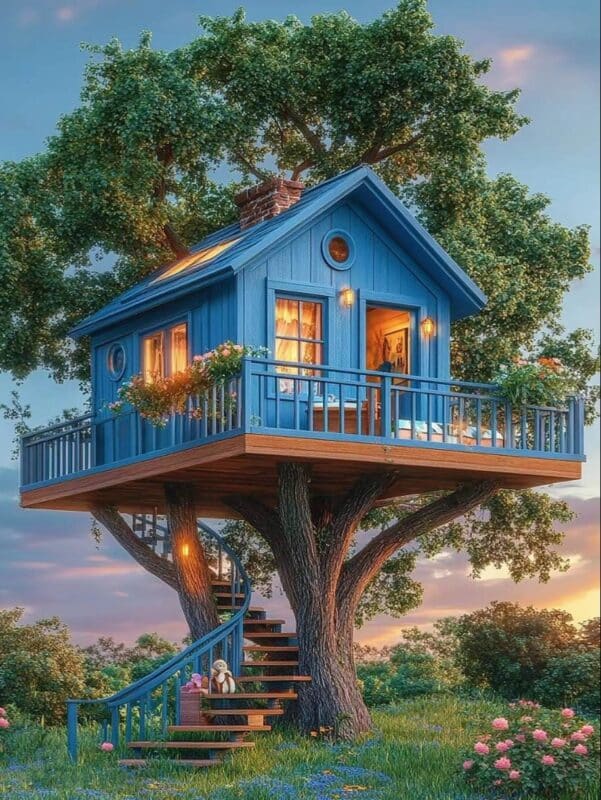
8. After Installation Issues for Extended Success
8.1 Maintenance Plans and Inspections
Regular check-ups determine the lifetime of the construction once the fast build is finished:
- Working with an arborist guarantees the trunk, branches, and roots remain healthy annually.
- Tree house fasteners might loosen with the growth or movement of the tree over time. Short routine inspections help to avoid significant problems.
- Re-sealing or repainting outside surfaces every few years will help to prevent water damage and increase the lifetime of the tree house.
8.2 Possible Variations or Expansion
A well-designed, fast-constructed tree house may become so popular that owners wish to enlarge or change it:
- Including modular components today will help to future-proof the design and make extensions (such as a second room or extra deck) far easier.
- Running utility conduits or extra anchor points during the first construction can help to minimize labor and disturbance during expansion.
8.3 Client Review and Instruction
Giving distributors dealing with end consumers a comprehensive hand-over guarantees they know how to maintain their new elevated retreat:
- Provide best practices for weight restrictions, advised use, or how to manage small repairs.
- Maintenance Manuals: Either a digital or paper handbook can provide suggested service providers, finishing products, and inspection intervals.
- Advice on proper ladder use, weather concerns, and occupant load should be part of your safety briefing to help preserve occupant safety over years.
In Essence
Optimizing design for rapid and effective tree house installations is about building a well-organized, appealing, and safe environment that thrills owners and guests both, not merely about meeting deadlines and lowering costs. Builders can transform how quickly and effortlessly tree houses come to life by including modular building methods, choosing lightweight and durable materials, carefully planning for site logistics, and giving the welfare of the tree top priority. Occupant comfort is also very important.
From the first planning stages—site selection, permitting, and budgeting—through to careful interior design and responsible post-installation maintenance, an effective approach is both realistic and advantageous. The outcome is a top-notch tree home that harmonizes with the surroundings, is evidence of contemporary building methods, and offers a unique living or workspace in a fraction of the time many would have expected.
Emphasizing quick and effective design will help distributors and end users anxious to realize the vision of a tree home come to pass speed the entire process. Quick installations let you enjoy the benefits of this amazing construction sooner, all while conserving the long-term health of the tree and delighting visitors who walk into this elevated retreat—personal leisure, a unique rental, or an inventive business.
Questions of Frequencies
Q1: Structurally sound compared to conventional builds are modular tree houses?
A: Exactly. When modular tree houses are built properly and using premium materials, they can be equally strong as traditional ones. Many times, prefabrication guarantees each module satisfies safety and durability criteria, thereby enhancing quality control.
Q2: How may I minimize environmental impact during a rapid installation?
A: Choose lightweight materials that call for less support systems; use specialist tree connection bolts to reduce harm to the tree; and apply sensible waste management techniques. Additionally helps preserve nearby ecosystems by means of minimum site disturbance planning.
Q3: What are the primary causes of a tree house installation’s delay?
Key reasons for delays are permit problems, bad site accessibility, weather-related setbacks, and supply chain interruptions for goods. Strong scheduling, modular building, and thorough design help to reduce these elements.
Q4: Are distinctive, personal designs still possible for efficient tree homes?
A: Surely. Although standardized modules speed assembly, designers can include unique windows, bespoke interiors, or specialty deck features. This harmony lets one be efficient without losing uniqueness.
Q5: Should I want to grow my tree house later, how can I keep structural integrity?
A: Add spare anchor points, think through future load in your design, and choose materials that will allow extra weight during the first build. This forward-looking design guarantees that possible growth won’t call for significant compromise to tree health or remodeling.
