


Imagine living up among the branches and surrounded by the soft rustle of leaves and the calming stillness of the forest? Offering an opportunity to re-connect with nature in its most unspoiled form, tree huts have evolved into famous icons of retreat from the frenetic rush of modern life. One persistent worry, though, often nags at potential tree house residents: Can I really enjoy modern conveniences without losing that back-to- nature vibe? The Role of Renewable Energy in Tree House Living?
Enter renewable energy. Solar panels, wind turbines, and other clean-energy solutions are now reasonable, practical choices for everyone wishing to lower their carbon footprint and preserve daily conveniences, not only for avant-garde eco-entrepreneurs. These technologies promise both independence from conventional utilities and a closer harmony with the environment by using solar rays to convert a consistent breeze into electrical power.
We will look at ways to include sustainable energy into your cherished tree house on this blog. We’ll look at practical installation tips, discuss which systems work best in certain climates, and share how teams like TreeLofts can help you craft an off-grid oasis that’s as thrilling as it is sustainable. Ready to discover what happens when green energy meets high-flying homes? Let’s climb up and see!
Why Does Tree House Living Urgently Need Renewable Energy?
Tree homes reflect simplicity and fit very well with their arboreal environment. But that image can unravel if you’re stringing noisy generators or piling up gas canisters around the trunk. For many tree house enthusiasts, renewable energy answers the call of staying true to nature while still enjoying the conveniences of modern living.
- Deep Integration with the Environment
Imagine a peaceful wooded scenario: If you depend on gas-powered generators, you bring noise and pollutants that disturb the peace. Like solar and wind energy sources, renewable ones fit the ecological philosophy. They respect the living canopy supporting your tree house and walk softly on the surroundings. - Sustainability and Carbon Reduction
A single, well-placed solar array or wind turbine can meet your power needs with almost zero emissions, so helping both your conscience and the earth. Embracing green energy drastically reduces greenhouse gas emissions compared to fossil fuel alternatives. This matters especially if your house is surrounded in delicate forest ecosystems. - Off-Grid Flexibility
Many prime tree house locations sit in remote areas that lack established utilities. Renewables grant the freedom to live off-grid, sidestepping high utility bills and uncertain power lines. Instead of wrestling with mountainous terrain to string cables, you leverage the energy nature freely provides—be it sunlight, wind, or even a gurgling creek.
All told, renewable energy turns an ordinary tree house into an inspirational green haven rather than only a fun weekend vacation; it becomes a live exhibition of what sustainable design can accomplish when it rises to meet the treetops.
Main Types of Renewable Energy: Solar, Wind, Micro Hydro—Which One Takes the Crown?
Your location, way of life, and personal tastes will determine the correct energy source. Each of the most often used renewable sources below has unique advantages for running a tree house.
- Solar Power: The Flexible Favorite
- Advantages: Almost anywhere the sun shines, photovoltaic (PV) panels are capable. They can be matched with battery storage for nighttime or cloud-based coverage and are rather easy to install.
- Considerations: Perfect placement is essential; overhanging branches block sunlight, thus you might need a rooftop panel or an adjacent clearing.
- Ideal For: Regions with consistent sunlight, owners who want a fuss-free installation and proven technology.
- Wind Energy: Transforming a Gentle Breeze into Electricity
- Advantages: Small wind turbines can create electricity even during a solar eclipse. In windy areas, they can be shockingly efficient and offer a second, supplementary source of electricity.
- Considerations: Noise and vibration must be managed, plus you need enough clearance between the turbine and the tree canopy to capture smooth airflow.
- Ideal For: Coastal regions, hilltops, or valleys with reliable wind currents.
- Micro Hydropower: Tapping Into Flowing Streams
- Advantages: If you’re lucky enough to have a steady stream or waterfall near your tree house, micro hydro can produce power around the clock. It’s often more stable than intermittent solar or wind.
- Considerations: Installation can be tricky; you’ll need consistent water flow and, often, regulatory approval. Maintenance also tends to be more intensive.
- Ideal For: Properties with reliable water sources, especially in mountainous or heavily forested areas rich in streams.
- Hybrid Systems: The Best of Multiple Worlds
- Why Choose?: Many tree house enthusiasts combine solar and wind, or even solar and micro hydro, for a more reliable power supply year-round.
- Result: If solar dips on a cloudy day, the wind picks up the slack—or a steady water flow keeps the lights on. It’s all about maximizing synergy.
Every one of these renewable energy sources has shown success in several off-grid environments. If you’re not sure which path to follow, professional guidance from authorities like TreeLofts can help you zero in on the perfect match for your unique location.

How to Evaluate Which Renewable Energy Source Suits Your Tree House?
Though it sounds like the ideal option, renewable energy is not without flaws; so, it is advisable to conduct some research before jumping in. Here are important elements to give thought:
- Geographic and Climatic Conditions
- Sun Hours: Does your region get 300 days of sunshine a year, or are you blanketed by clouds?
- Wind Zone: Are you in a naturally breezy spot, or is your tree house nestled in a wind-sheltered hollow?
- Water Flow: Is there a year-round stream or seasonal runoff?
- Power Demand of the Tree House
- Minimalist or Lavish?: Some folks are content with LED lights, device charging, and a small fan. Others want a fridge, entertainment system, or climate control.
- Full-Time or Occasional Use?: If you only visit on weekends, your power demands will be vastly different from someone living there year-round.
- Budget and Installation Constraints
- Upfront Costs: Solar panels, wind turbines, batteries, inverters, and all the wiring can add up. The payoff comes in lower (or zero) monthly bills, but you need the cash to start.
- Terrain and Access: If your tree house is perched on a rugged slope, transporting large panels or turbines might be complicated or expensive.
- Lean on the Pros
- Tailored Advice: They’ll examine your location’s unique climate and terrain, then suggest the best path forward—whether that’s a simple solar kit or a more complex hybrid system.
Spending time up front to thoroughly evaluate these factors ensures your renewable energy plan won’t just look good on paper—it will deliver dependable power for all those cozy nights in the canopy.
Building a Tree House Renewable Energy System from Scratch: Key Steps
Installing renewable energy in the treetops can be both exhilarating and a tad nerve-racking. Here’s a quick walkthrough of the critical steps:
- Draft a Power Consumption List and Budget
- Pinpoint all potential electrical needs, from lights to coffee makers, plus any seasonal or backup devices (like heating elements).
- Translate these into daily kilowatt-hour estimates so you can size your system properly.
- Equipment Selection: Generation + Storage
- Generation: Decide if you’ll go with solar panels (and if so, how many), wind turbines (choose the right size and type), or a hybrid approach.
- Storage: Battery systems are essential for off-grid independence. Options range from classic lead-acid to more modern (and lighter) lithium-ion solutions.
- System Integration and Installation
- Inverters, Charge Controllers, and Breakers: Off-grid systems require specialized electronics to convert raw solar or wind power into stable AC or DC output.
- Safety: Because you’re working at height, every step—drilling, wiring, panel placement—demands caution and possibly specialized rigging. Don’t rush it.
- Testing and Fine-Tuning
- Once everything is in place, monitor how your system performs under real-world conditions. Is your battery draining too quickly at night? Are the panels overshadowed by leaf canopy at certain times?
- Small adjustments, like shifting a solar panel’s angle or pruning a nearby branch, can boost efficiency significantly.
This process is ultimately about collaboration—between you, the environment, and any professionals you invite into the project. Done correctly, you’ll have a stable, self-sufficient power supply that feels like it was always part of the forest.
Storage and Backup Plans: Don’t Let Cloudy Days or Silent Nights Spoil the Fun
Even the best renewable setups face off-days: dark skies, wind lulls, or midwinter gloom. A savvy approach to energy storage and backup sources keeps your tree house humming under any condition.
- Battery Technology Varieties
- Lead-Acid: An older, less expensive technology with shorter lifespans and larger weights;
- LiFePO4 (Lithium Iron Phosphate) is a subtype particularly valued for off-grid applications.
- Supplementary Power: Small Generators or Biofuels
- A compact biodiesel generator or even a small propane unit can serve as an emergency fallback when the weather doesn’t cooperate.
- Using biomass or biofuels aligns more closely with a green ethos than relying on standard gas or diesel.
- Smart Monitoring and Automation
- Modern charge controllers offer real-time data on how much solar/wind you’re generating, how full your battery is, and when backup sources should kick in automatically.
- Remote monitoring apps let you see your system’s stats from afar, ensuring you’re never caught off-guard by a power dip.
Consider your backup plan as an insurance policy. You might not need it most days, but you’ll be thankful it’s there if conditions turn especially gloomy. With a reliable store of electricity, the forest nights stay bright and your daily routines remain uninterrupted—even when nature decides to take a breather.
Learn More: https://treelofts.com/the-sycamore-summit-treehouse-pasadena-california/
Weaving Renewable Energy into Tree House Design: Balancing Structure and Aesthetics
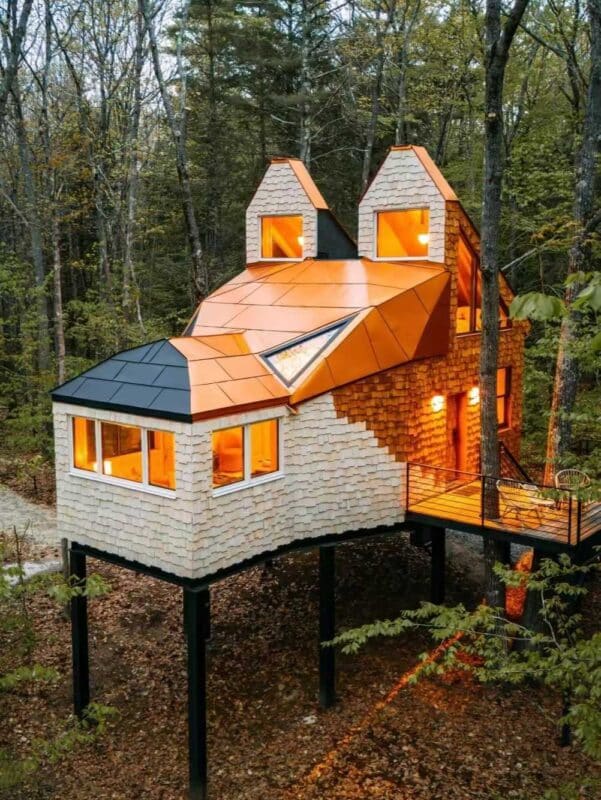
Opting for green power in your tree house doesn’t have to mean big, clunky panels or ugly turbine poles. Thoughtful design ensures your off-grid systems blend seamlessly with the woodsy charm you crave.
- Creative Use of Rooftops and Platforms
- Can your tree house’s upper deck double as a solar array? Placing panels where they also act as shade can reduce heat buildup while capturing energy.
- Wind turbines can sometimes be integrated into a crow’s nest or vantage tower, adding a unique silhouette that merges with branches.
- Innovative Wiring and Cabling
- Exposed wires can be both unsafe and an eyesore. Disguising them beneath wood trim or inside decorative channels preserves the rustic look.
- Rope or vine-inspired cable conduits can become a whimsical design feature, celebrating nature rather than clashing with it.
- Blending with the Surrounding Landscape
- Avoid clearing large swaths of forest for panels or turbines. Instead, place them strategically in existing light corridors or near the tree trunk where minimal groundcover is lost.
- If you do need a clearing, keep it modest and replant shade-loving species around the perimeter. That way, you maintain a balanced mini-ecosystem.
When you integrate renewables from the outset, your tree house remains a cohesive piece of art: functional, self-sustaining, and at one with the forest’s gentle rhythms.
Zero-Energy Dreams—Is “Net Zero” Possible in a Tree House?
For the truly eco-ambitious, the idea of a net-zero (or even positive) energy home is the ultimate goal. But can you achieve that while perched in a tree?
- Rainwater Harvesting
- Catching rain off your elevated roof is surprisingly straightforward. This water can be filtered for cleaning, gardening, or showering, slashing your reliance on external sources.
- Pair it with solar-heated water tanks for a bonus “zero-energy” hot shower experience.
- Eco-Friendly Waste Solutions
- A composting toilet or bio-digester system keeps your tree house from hooking into septic systems or municipal lines.
- Greywater (from sinks or showers) can be routed into a simple filtration bed and used to water surrounding vegetation, closing the loop.
- Passive Heating and Cooling
- Thoughtful window arrangement and well-insulated walls help to minimize mechanical heating or cooling required. Let the warmth of the sun in winter and prevent strong summer rays.
- Natural shade from a canopy can also help to maintain temperatures more reasonable, therefore reducing energy use.
Even if you don’t hit 100% net-zero, every step toward self-sustainability counts. By embracing these eco-forward features, you’ll craft a tree-bound refuge that’s both gentle on the environment and lavishly self-sufficient.

Ensuring Efficiency Under Extreme Conditions: Bad Weather, Big Challenges
Mother Nature can toss curveballs—deep cold, strong storms, extreme humidity, or blistering heat. Is your arrangement of renewable energy strong enough to manage the wild side of the weather?
- Handling Severe Cold or Snow
- Snow accumulation on solar panels reduces power output. Consider mounting panels at a steeper angle or purchasing specialized equipment that prevents buildup.
- Batteries can lose capacity in frigid temps; installing them inside a well-insulated compartment helps them stay cozy and efficient.
- High Winds and Storm Gusts
- While wind turbines love breezes, extreme gusts can strain the blades or tower. Look for a turbine with an automatic braking system or consider retractable models that let you lower the unit during violent storms.
- Secure solar panel frames with storm-rated fasteners to keep everything anchored.
- Moisture and Corrosion
- Elevated tree houses often see heavy dew and rainfall. Waterproof housings for inverters and charge controllers are non-negotiable.
- Conduct periodic checks for rust or corrosion, especially on turbine pivots or battery terminals, to catch small issues before they balloon.
With diligent planning and routine maintenance, your renewable energy array can thrive in virtually any climate—ensuring your high-altitude haven remains powered, come rain or shine.
Real-World Case Studies: How Do Others “Light Up” Their Tree House?
It’s one thing to skim bullet points and theoretical tips, but let’s spark your inspiration with real-world examples of tree house residents embracing renewable energy.
- Tropical Rainforest Retreat
- Location: A humid, sun-rich environment near the equator.
- System: A robust solar array combined with a small battery bank to ride out cloudy afternoons. Rainwater is harvested in big barrels for showers and dishwashing.
- Highlight: With near-constant sunlight, they rarely need backup power. The owners also rely on the forest canopy to keep temperatures comfortable.
- Mountain Forest Escape
- Location: A high-altitude area prone to strong, consistent winds but less sunlight.
- System: Two small wind turbines do the heavy lifting, while a compact solar array charges in sunnier months. The owners use a composting toilet and micro-hydro from a small waterfall during spring melt.
- Highlight: This hybrid approach maintains electricity even during long, cloudy winter stretches.
These stories underscore that renewable energy isn’t some untested fantasy. It’s alive and well in all sorts of treetop habitats, fueling everything from basic lighting to full-blown micro-lifestyles.
The Economic and Environmental Upside: Worth the Investment?
Renewable installations might carry a heftier price tag up front. But are they truly worth it in the long run?
- Comparative Cost Over Time
- Equipment costs—like panels or turbines—continue to drop as technology evolves. Meanwhile, grid electricity costs often rise annually.
- Over the lifespan of 10–20 years, a home solar or wind system can pay for itself many times over, especially when you’re off-grid.
- Planet-Friendly Impact
- Each kilowatt hour you generate from the sun, wind, or water displaces fossil-fuel emissions. In sensitive forests, keeping pollution and noise to a minimum becomes all the more crucial.
- Your environmentally conscientious design proves that living in connection with nature is not only possible but also quite fulfilling for next off-grid aficionados.
- Possible Rebates or Incentives
- Depending on where you live, municipal or federal utilities may provide feed-in tariffs, tax credits, or subsidies for adding solar energy.
- Although an off-grid tree home may not always be able to sell extra electricity back to the grid, in locations where a hybrid system makes sense it could provide additional cash.
Taken together, the financial and ecological rewards make renewables a compelling choice for any tree house dreamer. Instead of dreading monthly bills, you can watch your meter show you how much energy you’re harvesting from thin air—or bright sunshine.

Conclusion: Embrace Nature’s Power—Make Your Tree House Greener Than Ever
We’ve explored the boundless potential of merging renewable energy with tree house living—venturing from sun-soaked solar panels and breezy wind turbines to the hidden gems of micro-hydro and creative off-grid designs. Each solution underscores a simple truth: you don’t have to sacrifice modern conveniences to live in harmony with nature. In fact, the synergy of green power and treetop architecture often heightens the entire experience.
By harnessing the clean energy sources around you, your tree house transcends mere novelty to become a living symbol of environmental stewardship. The forest remains unspoiled by noisy generators or fossil-fuel footprints. You enjoy independence from far-flung power grids. Best of all, your dream home evolves into a hands-on statement about the future of eco-friendly living.
Feeling inspired to make the leap? Contact TreeLofts for tailored insights and professional guidance on building a sustainable, energy-efficient tree house. With the right mix of creativity, careful planning, and expert help, you can scale new heights—literally and figuratively—in the quest for a greener world.d the future.
FAQ
1. How do I decide which renewable energy source is best for my tree house?
That depends on your site’s specific conditions. Assess factors like average sunlight, wind patterns, water flow, and daily energy needs. If your location has ample sun but little wind, solar might be the primary choice. Conversely, consistent breezes could make a wind turbine viable. In some regions, a hybrid approach—mixing solar with wind or micro-hydro—delivers the most stable power supply.
2. Given the depth of a dense forest where my tree house is situated, are solar panels sensible?
Though you will have to make sure the panels get enough sunlight. This could call for ground-mounted array in a nearby clearing or selective pruning. If you can’t get enough light, you might look into a wind turbine, micro-hydro, or a partial grid connection if at all possible.
3. How do I handle the weight of batteries and panels in a tree house without compromising safety?
Begin with a structural assessment. Collaborate with an engineer experienced in elevated designs and an arborist who understands trunk load capacities. If rooftop mounting is risky, ground-based or separate tower mounts can take the strain off the main structure. For battery banks, a fortified platform or a ground-level storage shed is often safer.
4. What kind of upkeep wind turbines and solar panels require?
Usually, solar panels need regular cleaning to eliminate leaves, pollen, or dust—especially if surrounding vegetation covers your site. Inspections of blades, bearings, and connections are required of wind turbines. Every few months, looking the charge controllers, battery state, and wiring helps identify problems early on.
5. Do I need a backup generator, or can I rely solely on renewables?
Many times, a tiny backup generator guarantees you won’t be left helpless during protracted periods of bad weather or unplanned heavy demand. On the other hand, owners with strong battery reserves and a balanced system might effectively remain generator-free, particularly in areas with consistent sun or wind.
