


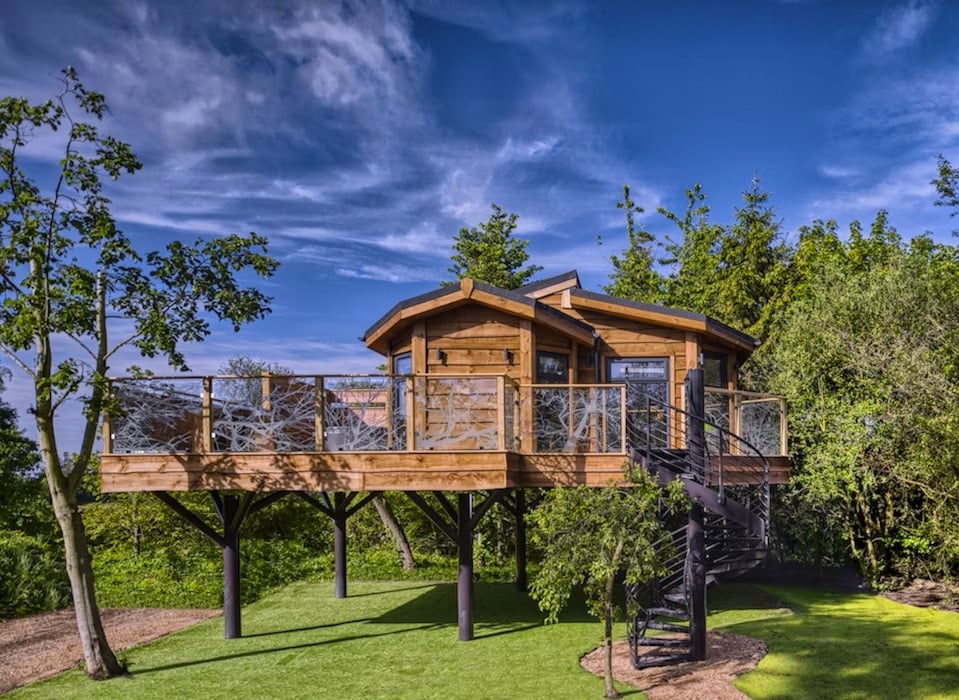
From salvaged wood to bamboo, steel constructions, and innovative composites—all with special advantages and drawbacks—today’s market is bursting with many Tree House building materials. Imagine the moment you walk onto a little terrace high amid the treetops, surrounded by dappled light and rippling foliage. Many of us have fanciful childhood recollections or the rustic appeal of a private forest getaway just thinking about a “tree house.” Modern tree houses, however, have exceeded the basic platform-and-ladder layout.
In this blog post, we’ll dissect these material choices to help you navigate the ins and outs of tree house construction. If you’re aiming to build your personal dream hideaway or a commercial getaway in the trees, the right materials can amplify your tree house with both structural integrity and aesthetic flair. Ready to explore how best to “level up” your tree house project? Let’s dive in, and remember that if you need professional assistance, TreeLofts is always here to lend a guiding hand!
Why Is Material Selection So Important? The Trio of Safety, Longevity, and Aesthetics
1 Safety Comes First—Don’t Let Your Tree House “Collapse Without Warning!”
When crafting a tree house, safety is the bedrock of your entire endeavor. Each material has distinct load-bearing properties and weather-resistance capabilities, both of which become crucial when the structure faces rain, strong winds, or even the gradual growth and movement of the host tree. A flimsy board might start cracking when the temperature drops, while poorly treated wood could succumb to rot or insect invasion before you even have time to admire the view.
- Structural Integrity: The materials you select must reliably shoulder the weight of the tree house, its occupants, and any additional installations such as furniture, railings, or even a glass floor.
- Weather Resistance: Rain, humidity, or extreme temperature swings can degrade certain materials faster than others.
- Expert Guidance: Teams like TreeLofts emphasize a thorough safety assessment to protect your tree and ensure your suspended home remains rock-solid for years to come.
2 Lifespan Matters—Long-Lasting Materials for Cherished Memories
Nobody wants a temporary system that will need for continual overhauls. Longer lifetime materials help you to focus on really enjoying your high-rise paradise rather than on constantly fixing it by lowering ongoing maintenance. Choosing strong materials also fits sustainable building techniques; Fewer replacements mean less waste and a lesser environmental impact.
- Durability: High-grade steel shielded against corrosion and wood treated for rot and insects will help to extend the useful life of a tree home by decades.
- Maintenance: Although no structure is entirely maintenance-free, some materials—such as modern composites—demand fewer regular touch-ups, therefore saving you money and trouble over time.
3 Merging Aesthetics with Nature—Blending Your Tree House into the Forest
Your material choice affects the appearance and feel of your project in addition to its practical value. Often a first concern is aesthetic harmony with the nearby woodland. Do you want your tree house to be a modern architectural wonder or fit quite naturally with the canopy? The way your tree house interacts with its natural surroundings will much rely on the colors, textures, and general attitude of every material.
- Visual Appeal: Your tree house’s atmosphere can be greatly changed with elements like the clean lines of steel or the wood texture in cedar.
- Environmental Cohesion: Organic shapes, rustic surfaces, or soft earth tones will assist your building gracefully fit the surroundings, thereby maintaining the tranquilly of the forest.
Natural Wood: A Classic Choice, but with Some Pitfalls?
1 Advantages: Warm Texture and Great Workability
Usually, the first thing that comes to me when we envision a tree home is natural wood. It radiates cosiness, friendliness, and that seductive “cabin in the woods” appeal. Whether it’s cedar, pine, or oak, wood provides a certain malleability that builders and do-it-yourselfers value. You can shape wood into fanciful window frames, lovely balconies, or spiral staircases, or carve it. Stain it.
- Timeless Appearance: Over time, wooden boards acquire character by means of minute color changes and textures that accentuate the rustic appeal of the tree house.
- Easy Customization: From a fairytale impression to a simple modern style, wood fits quite nicely with a range of treatments.
2 Drawbacks: Susceptible to Rot and Moisture—Needs Extra Care
Sadly, the most beautiful features of wood also make it susceptible to fungus development, insects, and wetness. Untreated wood may break down more quickly than you might think if your climate is especially moist or if you live in a high-humidity area. Maintaining mold, termites, and rot free depends on regular sealing, painting, or treatment.
- Maintenance Overhead: Expect to refinish and inspect wood elements periodically.
- Cost in the Long Run: While wood might seem budget-friendly initially, continuous upkeep can add up over time.
3 Suitable Scenarios: Embracing an Authentic Rustic Look with a Solid Maintenance Budget
If you adore the classic, homey feel of a “storybook” tree house and are prepared to invest in ongoing maintenance, natural wood remains a fantastic choice. For those not deterred by the need for frequent sealing, or who find satisfaction in the process of caring for real timber, wood’s authenticity simply can’t be matched.

Reclaimed Wood: Affordable, Eco-Friendly, and Full of Character!
1 Advantages: Low Carbon Footprint and Unique Vintage Appeal
For environmentally sensitive builders, reclaimed wood finds the ideal balance. Usually taken from abandoned factories, barns, or shipping containers, it uses lumber that would otherwise be thrown away. Every item reveals worn-out patinas, nail holes, or fading paint that might add appeal and character to your tree house construction. Choosing recycled wood gives existing resources a second life and helps to lower demand for freshly produced lumber.
- Sustainability Boost: Lower carbon footprint and reduced deforestation.
- Artisanal Appeal: Show-stopping focal point can be a vintage plank with unique knot and grain pattern.
2 Drawbacks: Inconsistent Quality Demanding Professional Vetting
The possibility of hidden harm is the opposite side of recycled wood’s speciality. Termites, rot, or past abuse could cause some of the structural problems in some sections. To guarantee the lumber you choose will safely carry loads and resist environmental conditions, you need a trained eye—or extensive testing.
- Additional Preparation: Often necessary to eliminate moisture and impurities is kiln-drying recovered wood, cleaning, and sanding.
- Potential Limited Supply: Scoring large quantities of consistent-quality reclaimed wood can be challenging.
3 Suitable Scenarios: Ideal for Eco-Minded Builders Seeking a Retro or Artsy Vibe
Reclaimed wood is your first choice if you wish a tree house bursting with soul and history. For individuals with an eye toward “upcycled” designs or a retro vibe, it’s especially appropriate. Using some elbow grease and knowledge, you can create a reasonably priced, environmentally responsible construction.
Bamboo: A Fast-Growing “Future Star,” but Environment Matters
1 Advantages: Rapid Growth, Excellent Elasticity, and High Renewability
For good reason, bamboo is sometimes hailed as one of the most environmentally friendly building materials available on Earth. It replenishes itself in a few years, growing shockingly rapidly. Some have even dubbed it “the plant-based steel,” based on its great tensile strength. Where bamboo grows naturally, it can be gathered locally, therefore reducing transportation emissions.
- Strength and Flexibility: Ideal for innovative, curved forms, bamboo poles can withstand great pressure and bending loads.
- Minimal Environmental Impact: The fast development cycle relieves you of concern about running out of old-growth woods.
2 Drawbacks: Climate Constraints and the Need for Anti-Pest Treatments
If untreated—especially in humid, wet climates—bamboo’s porous structure can unfortunately attract mold, insects, and rot. Its lifetime can be extended only by appropriate chemical or thermal treatments. Furthermore, bamboo might not be as good against significant temperature changes or frost in colder climates.
- Maintenance Requirements: Re-treatment of bamboo parts and routine checks guarantee lifetime.
- Regional Suitability: Bamboo grows in tropical and subtropical environments, hence before making a commitment, find out the climate of your site.
3 Suitable Scenarios: Ideal for Warm, Humid Regions or Specialized Bamboo Techniques
Tree homes stressing an earthy, Zen-like atmosphere will find great beauty in bamboo. You will value bamboo’s compatibility with the natural surroundings if you live in an area with suitable temperature or if you can control extensive bamboo treatments. For eco-friendly resorts or exotic vacation rentals, this is an interesting option that will give tourists one-of- a-kind flair they will remember.
Learn More: https://treelofts.com/the-autumn-haven/
Steel and Metal Structures: Rock-Solid, but Missing Wood’s Gentle Touch?
1 Advantages: Extraordinary Load-Bearing, Highly Durable for Large or Complex Designs
From towering skyscrapers to modern art sculptures, steel and metal frameworks have proven their unmatched strength. If you envision a multi-level tree house complete with spacious decks, tall windows, or futuristic design elements, metal might be your best bet. It remains steadfast under heavy loads and extreme weather, offering a sense of security unmatched by many traditional options.
- Engineering Freedom: Steel beams can span greater distances, opening up dramatic architectural possibilities.
- Long-Lasting: Properly protected, metal resists corrosion, insects, and rot for decades.
2 Drawbacks: Higher Costs and a Cooler, Less Cozy Look
All that strength and durability come at a price—literally. Metal structures can strain your budget, both in terms of material costs and labor. A purely metal finish may also clash with a serene woodland setting if not thoughtfully integrated. For many tree house enthusiasts, the warmth of wood is a key part of the dream.
- Thermal Conductivity: Because metal conducts heat rapidly, without insulation, interiors get hotter in summer and colder in winter.
- Aesthetic Contrast: Combining metal with a forest surroundings could call for extra cladding or artistic design decisions.
3 Suitable Scenarios: Ambitious Designs, Wide Platforms, or Exceptional Safety Needs
If your vision includes large glass floors for breathtaking views, an outdoor jacuzzi, or multiple interconnected pods, steel framing offers the structural backbone needed for such ambitious feats. Just consider using wooden or composite accents to soften the visual impact, creating a balanced interplay of natural and industrial elements.

Composite Materials: Tech-Enhanced, “Real Yet Plastic” Duality
1 Advantages: Outstanding Weather Resistance and Low Maintenance
Technological strides have given rise to an array of composite materials—blends of wood fibers or bamboo with recycled plastics or synthetic binders. These combos offer an attractive facade reminiscent of natural wood, but with significantly enhanced rot resistance and resilience against moisture. For owners who prefer minimal upkeep, composites can be a game-changer.
- Longevity: Many high-quality composite boards can resist fading, warping, and insect damage over the long haul.
- User-Friendly: Installation is often straightforward, and you won’t be dealing with splinters or frequent repainting.
2 Drawbacks: Less Authentic Feel Compared to Wood, with Varying Price Points
No matter how advanced the technology, composites rarely replicate the tactile warmth of real wood. Some products can look artificial or repetitive in pattern. Plus, the market is flooded with varying grades—lower-end composites may crack or discolor, undermining the investment you hoped to protect.
- Cost Spectrum: Premium composites can be pricey, while budget versions might not last as promised.
- Environmental Considerations: While some composites utilize recycled content, others rely on virgin plastics, which can be less eco-friendly.
3 Suitable Scenarios: Long-Lasting, Low-Upkeep Projects Seeking a Wood-Like Look
Composite boards are a top pick for property owners who love the idea of a “natural look” but can’t commit the time or resources to regular refinishing. They work exceptionally well for commercial tree houses or vacation rentals, where consistent appearance and minimal upkeep are especially valuable.
Mix-and-Match Styles: Combining Materials for the Perfect Balance
1 What Is “Mixing and Matching”? Smart Use of Multiple Materials for Maximum Benefits
Building something as unusual as a tree home allows you not to have to be monogamous with your material choices. Combining several components allows one to use their advantages while offsetting their shortcomings. For example, a strong steel support frame could be covered in salvaged timber paneling to create an arresting combination of industrial strength and rustic beauty.
- Hybrid Approach: Load-bearing beams’ structural steel; composite decking for the floor; natural wood for visible surfaces.
- Aesthetic Harmony: While merging in the natural surroundings, contrasting textures and colors can accentuate visual appeal.
2 The Key Is “Balance”
Mix-and-match isn’t a free pass to haphazard design. Successful execution involves careful planning so transitions—like where steel meets wood—are structurally sound and visually cohesive. Pay attention to how each material reacts to temperature changes, moisture, and mechanical stress to avoid cracks or misalignments.
- Expert Collaboration: Collaboration with an experienced builder, like TreeLofts, ensures your multi-material vision remains stable and cohesive.
- Smart Layering: Seal the junctions between different materials properly to prevent water infiltration or thermal bridging.
3 Suitable Scenarios: Personalized Solutions, Unique Terrain, or Eclectic Design Elements
If you’re longing for a versatile structure that’s both futuristic and homey, or your site demands specific engineering solutions, a mixed-material approach can deliver the best of all worlds. It’s perfect for bold architectural statements, especially in tree house complexes that must accommodate varying conditions or imaginative themes.
Eco-Friendliness and Sustainability: When Material Selection Meets a Green Future
1 Choosing Materials for Both You and the Planet
As global awareness of environmental issues grows, choosing low-impact materials becomes a moral and practical priority. Sustainably managed forests, certified bamboo farms, or recycled components help reduce deforestation and preserve ecosystems. Green building practices also resonate with many travelers or potential buyers, enhancing your tree house’s appeal.
- Eco-Certifications: Look for labels like FSC (Forest Stewardship Council) when purchasing wood or bamboo products.
- Carbon Footprint: Locally sourced materials reduce transportation emissions, further softening your project’s impact on the planet.
2 Minimize Tree Damage During Construction
A tree house that respects its host tree fosters a symbiotic relationship rather than a parasitic one. Minimal tree penetration techniques, adjustable supports that account for the trunk’s natural growth, and careful planning to avoid girdling branches are vital to keeping your tree healthy. After all, a living tree is the backbone of your entire endeavor.
- Gentle Installation: Use tension or bracket systems to cradle the trunk without impeding sap flow.
- Routine Check-Ins: Periodic evaluations by arborists ensure the tree’s ongoing vitality, preventing wood rot or structural weak points.
3 Treelofts’ Green Commitment and Services
If you’re feeling overwhelmed by choices, remember that TreeLofts is ready to guide you. Committed to eco-friendly building practices and preserving the beauty of the forest, TreeLofts can recommend the ideal mix of materials for your site, budget, and style. From sourcing reclaimed timber to installing steel supports discreetly, they bring a wealth of experience that ensures your tree house harmonizes with nature in both form and function.
Conclusion: Material Selection—The Soul of Your Tree House
Each material—be it the humble reclaimed plank or the gleaming steel beam—carries its own story, advantages, and limitations. While a hurried decision could result in expensive maintenance or environmental regrets, a well-considered option can transform your tree house into a lifetime haven or unforgettable escape. Examining load capacity, maintenance requirements, aesthetic goals, and environmental issues helps you design a space that really connects with the forest and your idea of a higher quality of living.
Where therefore ought one to start? Think about your priorities; do you find the daring invention of bamboo or the organic warmth of natural wood appealing? Maybe you want for the low maintenance of composites or the dependability of steel. It’s about finding the best fit for your ideal design and local environment; no one material is always better.
Whether your project is a whimsical personal hideout or an ambitious hospitality venture, the experts at TreeLofts stand ready to help. From idea sketches to final installation, they will help you choose materials that combine respect of the natural environment with durability and beauty. Building a tree house is about creating a home into the branches of nature, thereby tying human creativity with the peace of the forest into a mystical link rather than just building another room.
Accept this once-in-a-lifetime chance to create a real canopy paradise from your early ideas. Your tree home can become a lifetime emblem of creativity, adventure, and harmony—one that urges you to re-connect with the wild every time you walk into its high embrace—with the correct materials.

Common Questions
Can lighter materials sustain more ambitious tree house designs?
Indeed, with enough structural engineering, they are complementary. When paired with robust supports and accurate load distribution, materials like aluminum or other high-strength composites can handle notable loads.
For tree houses, what wood is most reasonably priced?
Although softwoods like pine or spruce can be less expensive, they often need treatments or finishes to improve rot resistance. Tell consumers to consider these ongoing maintenance costs.
In wet climates, are metal frames prone to rust?
They are indeed. Using protective coatings—galvanization, powder coatings, or specialty paints—helps to slow down corrosion. Long-term protection still depends on regular inspections.
Do composites seem strange in settings with trees?
Modern composites may have wood-like textures that mix really nicely with natural settings. Although purists might still see flaws, many owners value the easy maintenance and consistent look.
In a tree house, can unusual materials like bamboo actually hold?
Definitely—as long as they come from reliable vendors and are wrapped correctly. Although engineered bamboo products show amazing strength and stability, lifetime depends on careful moisture control and regular checks.
