


Close your eyes and picture yourself high in the canopy of a verdant forest, sunshine streaming through leaves, a light breeze rocking your comfortable seat. Sounds like a childhood fantasy realized. The appeal of a contemporary tree home is just this! For decades, these elevated hideaways have captivated us—first as children creating secret forts and then as adults looking for a calm, naturally occurring retreat. In the real estate market, however, tree houses serve purposes beyond mere whimsical dreams. They’ve become hot-ticket items in vacation rentals, exclusive retreats, and even cutting-edge architectural projects. How Tree Houses Reshape Real Estate and Land Use?
You might ask: Why are we suddenly so captivated by tree houses? Our need for a closer relationship with environment, particularly following years of urban development and digital lives, is one major influence. Add that to the explosion in experienced travel, where unusual lodging becomes social media gold, and you have a formula for great popularity. Imagine waking each morning on your raised deck, coffee in hand, welcoming the day from a vantage position most people only dream of. The rising excitement for these arboreal retreats is exactly driven by their romantic, enveloping character.
Today’s tree homes are not just “little huts on a trunk,” with flimsy boards and a wobbly ladder. Innovating sophisticated technology, architects, designers, and forward-thinking property developers are ensuring these raised homes are safe, elegant, environmentally responsible, and absolutely modern. Living among the branches has become, all things considered, a real lifestyle choice that combines the conveniences of modern life with the magic of being very close to nature.
This change has transforming effects on real estate valuation, land use planning, and the creation of sustainable, community-oriented ecosystems as you will shortly find. Keep reading if you find yourself wondering about how it all works—and maybe dreaming of creating your own sky-high paradise. In terms of land development and housing, we are poised to soar to unprecedented heights!
The “Boom” Behind Tree Houses: Nature’s Call Meets Experiential Travel
Wondering what’s fueling the extraordinary growth of tree houses demand? Let’s break it down into two major trends: the modern “back-to-nature” movement and the booming experiential economy.
1. The Call of the Wild: Embracing Nature in Everyday Life
More people want for a real vacation in a world gone concrete jungle, non-stop alerts, and digital overstimulation. Now enter the tree home—a house or getaway location that actually lifts you up into the embrace of the outdoors. Typical tree home days start with birdsong instead of highway noise and finish with stargazing instead of flickering neon. This strong re-connection with the surroundings can help to greatly lower stress, enhance mental health, and increase creativity. Add to that the mystique of living at treetop level, and it makes sense why tree houses have become so popular.
2. Experiential Economy: Why the Selfie Generation Loves Elevated Living
Tree homes also fit very nicely with the advent of the experiential economy—a time when individuals invest in special events and memories rather than merely purchases. Seeing or sleeping in a tree house is the ideal share-worthy experience that can inspire friends and fans on YouTube, Instagram, or TikHub. Among a sea of identical hotels and generic Airbnbs, these “bucket list” lodging stand out for their sense of authenticity, thrill, and uniqueness that astute guests yearn for.
As a result, property owners, tourism businesses, and real estate investors have caught on. From converting existing trees into a single rentable retreat to building entire “tree house villages,” the scope for creativity (and profit) is huge. Smart entrepreneurs are leveraging this tree house craze to drive traffic, engage travelers’ social media networks, and build strong brand identities around eco-luxury and bespoke experiences. And guess what? Those efforts are paying off handsomely.
Beyond Fairy Tales: How Tree Houses Increase Property Value
If you’ve ever scrolled through real estate listings, you know that unique features can be major game-changers. A great view or a well-designed patio can boost a property’s asking price. But a full-fledged tree house takes it to an entirely different level. Let’s explore how a simple addition (or integrated feature) can translate into a powerful value proposition.
1. The Novelty Premium
When potential buyers see a property with a tree house, their interest automatically spikes. Think of it as a “novelty premium.” Unconventional assets like custom-designed tree houses may justify a higher listing price because they provide an experience buyers typically can’t find elsewhere. In a competitive housing market, these one-of-a-kind features stand out like fireworks in a midnight sky.
2. Lucrative Short-Term Rentals
Tree houses have also become a gold mine in the short-term rental market. Platforms like Airbnb and VRBO highlight these elevated gems as iconic, must-book destinations. Visitors are often willing to pay top dollar to savor a night or two of treetop living. If you own a property with a separate-access tree house, it’s quite possible to generate enough rental income to offset your mortgage or even turn a significant profit—especially during peak tourist seasons.
3. Branding for Developers & Hospitality Ventures
For developers or hospitality businesses, tree houses represent a massive opportunity to differentiate and amplify their brand image. Adding even a small cluster of tree house suites to a larger resort can make the entire property more marketable. Featured images of dreamy, elevated accommodations practically market themselves. Plus, the eco-friendly angle associated with well-designed tree houses attracts discerning travelers and conscientious investors looking to support sustainable initiatives.
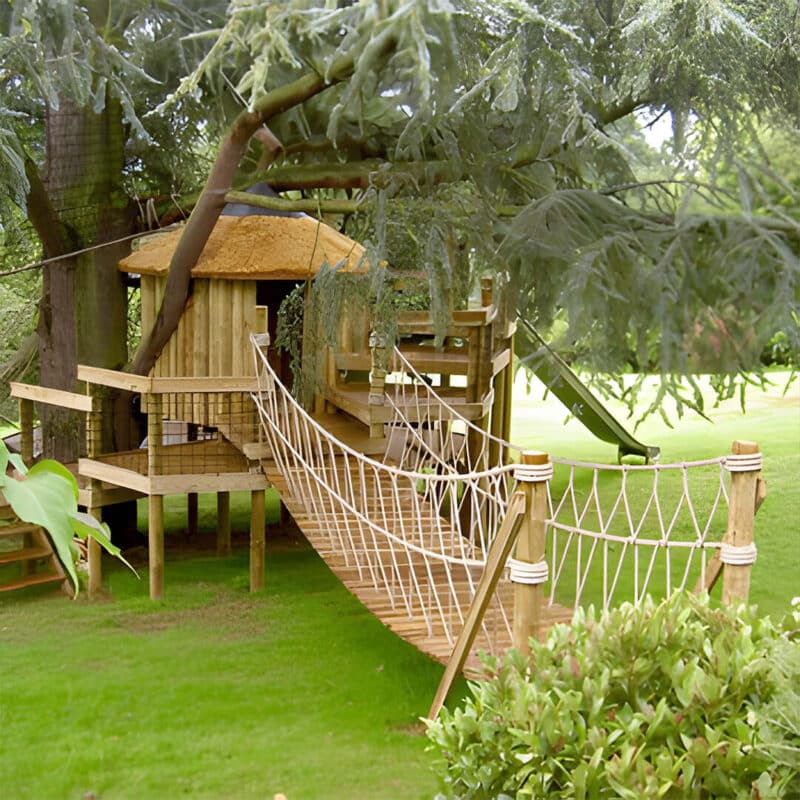
Rethinking Land Use: Unlocking the Potential of “Sky-High” Living
Creative land use—building rooftop gardens in crowded cities, renovating ancient buildings, or transforming shipping containers into pop-up homes—is something we have all heard about. Tree houses, however, present an entirely new dimension—literally—by using vertical space. For rural landowners, they can maximize large forest plots. For municipal planners, they might introduce new ways to enhance underused green areas. Let’s explore the key points.
1. Elevating Development Beyond Ground Level
Developing land usually involves clearing space, leveling terrain, and constructing conventional structures. But with tree houses, you rely on (and carefully preserve) existing trees as part of the architectural framework. This top-down view can greatly lower land impact, cut excavations, and protect more natural habitat. This forward-looking attitude appeals in a time molded by environmental issues and ethical development.
2. Criteria for Ideal Locations
Not every place fits a tree-house. Local climate, tree species, soil stability, and zoning laws all have bearing on things. Prime prospects are robust, firmly rooted, disease-free trees. Likewise, extremely appealing are places with magnificent views—that of a dense forest canopy, undulating hills, a calm lake, or great mountains. By means of an environmental feasibility analysis, one guarantees that neighboring ecosystems as well as the trees stay healthy and intact over the lifetime of the project.
3. Forest Conservation and Biodiversity
When you build tree houses, you’re inherently motivated to protect the forest. Why? Because the entire structure depends on living trees that need regular checkups and maintenance. When done right, tree house building can serve as a focal point for eco-tourism projects, habitat preservation, and biodiversity campaigns. This is a novel substitute for conventional land development plans, which can completely change or clear-cut local ecosystems.
Policies, Regulations & Safety: Keeping Your Treetop Dream Legit and Secure
Though it seems carefree and magical, living in a tree is not a legislative “Wild West.” Particularly for business rentals, different areas have varied building requirements, licenses, and safety rules. One must know and respect these rules. Let’s address some often asked questions.
1. Yes, Tree Houses Do Need Permits
A backyard tree fort for children can go unnoticed, but a large tree house with plumbing, electricity, or commercial rents usually calls for zoning permission and building licenses. While some governments have specific rules, others treat them as either cabins or small dwellings. Early on in the planning process, getting in touch with local authorities will help you avoid legal hotpots later on.
2. Structural Integrity & Tree Health
Safety in a tree house goes beyond stable floors and sturdy railings. You’re dealing with a living, growing support system—your tree. If it’s rotting inside or damaged by pests, that’s a major red flag. To make sure your supporting tree(s) can manage the additional weight and stress, qualified arborists can assess their long-term survival. Additionally lessening damage to the trunk, branches, and root network are mechanical fasteners and specific bracketing systems.
3. Insurance & Liability
Tree houses carry a degree of risk, just as any unusual construction. From liability insurance for mishaps to coverage for wind, storms, and fires, owners have to handle the threats all around. If you intend to rent your house, be sure your insurance includes temporary lodging in a tree house specifically. Visitors want it to be magical as well as safe.

Design & Construction: Transforming Creativity into Sky-High Comfort
Building a tree home might be as basic as a platform and a roof or as complex as a multi-room suite including contemporary conveniences. It’s the secret: Combining creative creativity with unwavering safety criteria. Here’s how to improve utility and looks.
Merging Aesthetics with Practicality
Small footprints from tree homes mean that interior design must be deliberate. Clever storage options, adaptable layouts, and multipurpose furniture can surprisingly open even the tiniest area. Consider fold-away desks, built-in chairs under window ledges, and creative trunk-wrapping shelves. The end effect is a warm yet completely functional living area that is as pleasing to view as it is to use.
Choosing Sustainable, Lightweight Materials
Given the environmental emphasis, it is not surprising that builders of tree houses sometimes give eco-friendly materials top priority. Reclaimed wood, bamboo, cork, and salvaged windows or doors lower the carbon impact and mix peacefully with the surrounding environment. If the metal frame is responsibly sourced and correctly insulated, it can also be light-weight. Actually, mixing current engineering ideas with traditional materials can produce a real but solid construction.
Don’t Forget the Tech
Who says to go “off-ground” means to go off-grid? Modern tree houses might have cutting-edge technology for sustainability and comfort from solar panels for electricity, a rainwater collecting system, or composting toilets. Tree houses are flexible enough for year-round use thanks to high-speed internet, subdued LED lighting, even climate control systems—perfect for distant professionals or retirees yearning a picturesque location to concentrate and unwind.
The Triple Bottom Line: Economic, Environmental, and Social Benefits
We’ve touched on how tree houses boost property values and preserve nature. But there’s more—building in the canopy can yield a trifecta of benefits for local economies, ecosystems, and communities.
Economic Perks for Owners and Communities
Tree houses can serve as prime attractions for tourism, tapping into niche markets eager for unusual accommodations. When visitors flock to an area, local restaurants, shops, and service providers also benefit. In fact, entire communities can see a rise in economic activity due to successful tree house developments. TreeLofts, for example, has collaborated with local tour operators, outdoor activity providers, and farm-to-table restaurants to create immersive tree house vacation packages that boost regional prosperity.
Environmental Stewardship in Action
A well-designed tree home conforms to the ideas of little environmental effect. You protect understory plants, soil, and wildlife paths by raising living areas above ground. Furthermore, demanding continuous tree health monitoring makes caregivers more conscious of elements including general forest vitality, fungal infections, and invading pests. This awareness results in improved land management, which transforms tree house developments into a paradigm for environmentally sustainable architecture.
Community & Cultural Exchange
Tree house experiences can also foster cultural enrichment. Picture a region famous for local crafts or indigenous traditions incorporating tree houses into a cultural itinerary. Along with staying among the rustling leaves, visitors may eat area food, learn from local artists, and see historical landmarks. By highlighting the special legacy of the area in an immersive environment, this method not only supports local livelihoods but also helps to preserve cultural integrity.

Overcoming Challenges: From Construction Costs to Climate Risks
Tree houses are not an exception; no great undertaking is without challenges. You will want to be ready for upfront costs, environmental issues, possible weather extremes. Let’s explore some typical problems together along with some tested fixes.
Construction Budget vs. High ROI
Particularly in cases of unique engineering, tree homes can be more costly to design and construct than conventional buildings. Having said that, the possible financial and personal pleasure returns on investment (ROI) can be really great. Often with premium nightly rates, luxury tree house rentals draw adventurous guests appreciating the uniqueness and seclusion. If you approach location and design strategically, the initial build-out expenses could be recovered more quickly than you would have guessed.
Weather, Natural Disasters & Tree House Lifespan
Tree houses are more likely to be exposed to wind, rain, ice, and snow given their height. The supporting trees may be shook or bent by hurricanes, blizzards, even mild storms. Usually advised by building professionals are flexible supports and specific fasteners that let the tree move without sacrificing structural integrity. Regular visits are crucial, and as seasons change and trees develop owners might have to modify or strengthen connection.
Ongoing Maintenance
Tree houses depend on a living creature in constant flux unlike traditional buildings, where foundations are solid and unmoved. Routine inspections by arborists are therefore absolutely essential, not to mention maintenance of the building components and any specialist hardware that can deteriorate with time. Though it’s a necessary investment to guarantee lifetime and safety, maintenance can be a bit more hands-on and somewhat costly than in normal homes.
The Future of Elevated Living: Will Tree Houses Become Mainstream?
The excitement around tree houses is more than a fleeting trend—it’s part of a broader movement toward sustainable, nature-centric architecture. Will every new neighborhood have tree houses in the future? Maybe not. But there’s significant potential for them to become more integrated into urban planning and rural development, given ongoing innovations and growing environmental awareness.
Cityscapes with Treetop Visions
In dense cities, we might see creative experiments like “tree house parks” or suspended pathways linking rooftop gardens. Designers are already toying with vertical forests and eco-bridges that incorporate living trees on tall buildings. The leap to fully functional tree houses—especially smaller, modular ones—may not be as far-fetched as it seems. It’s all about reimagining how we use vertical space in an ever-growing urban landscape.
Rural Renaissance & Eco-Tourism
Tree houses can be a spark for economic recovery in rural areas and smaller cities. Offering unique housing, small businesses can attract travelers looking for real, off-the-beaten-path activities. Tree house lodging allows educational programs about local ecosystems, star-gazing tours, or even art retreats to blossom.
Lessons for Sustainable Living
Tree homes are ultimately more than just architectural curiosity. They stand for teachings in harmonic coexistence with nature, creative land use, and low effect. Tree houses stand out as shining examples of creativity and environmentally responsible thinking as public debate about carbon footprints, deforestation, and climate change gets more intense.
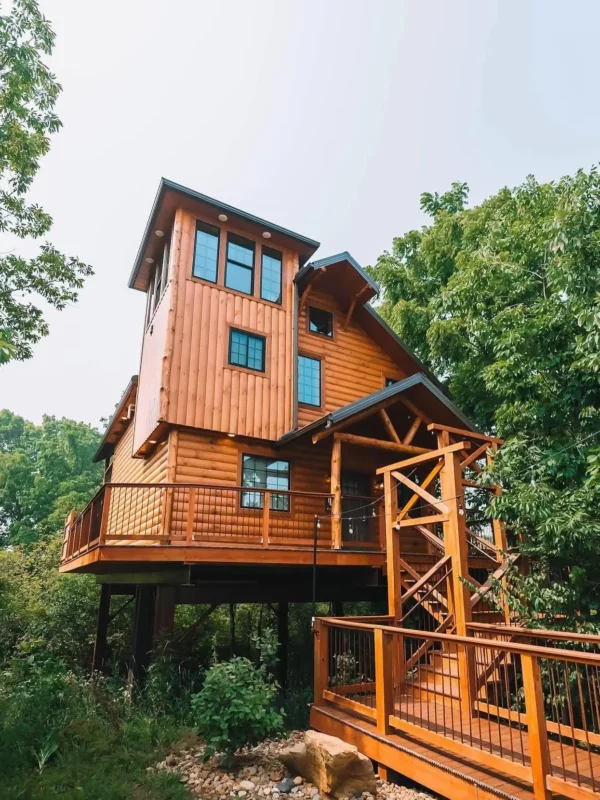
Let Your Life Soar: How to Bring the Treetop Experience to You
Now is the ideal moment to turn your dream into a strategy if reading this sparks something inside of you—if you want to sip your morning coffee among the sound of leaves and bird chirp. Although building or investing in a tree home can be challenging, the benefits in terms of lifestyle, investment possibilities, and personal fulfillment are just unmatched.
Tree houses serve more than only nostalgic dreamers or quirky off-griders. These dynamic, multifarious buildings can increase the value of your house, save nearby ecosystems, and inspire everyone who walks inside to explore. Why not leap into the trees if you’re looking for a way to add magic into your life—and into your real estate portfolio?
With this thorough exploration of the realm of tree houses, maybe your appetite for the opportunities will be sharpened. Not limited to childhood dreams, these architectural wonders provide daily doses of peace and serenity, a strong financial vehicle, and useful purposes. So let your dreams soar skyward and find the future of land usage and property just above ground level!
FAQ
Which tree should I choose for a tree house?
Pay first attention to health and maturity. Select a tree, or trees, devoid of major structural flaws, decay, or disease. Often working best are species with hardwood and strong root systems, such as oak, maple, or several conifers. Finding any underlying problems that can impact longevity or safety is much aided by the assessment of an arborist.
Are year-round use tree homes safe?
Indeed, if done correctly. A tree home can negotiate several climates with enough insulation, weatherproofing, and structural engineering. When selecting materials and support systems, take climate-specific needs as snow load, severe winds, or heavy rainfall into account.
How much does a tree home typically cost?
Size, materials, design intricacy, local labor rates all affect costs greatly. While luxury, multi-room tree houses with high-end finishes might run six figures, more basic designs might begin around a few thousand dollars. Permits, inspections, and contingency reserves should also be included of budget planning.
Do tree houses follow accepted building codes?
Tree houses used as rental or permanent homes in many areas must follow the same structural and safety standards as conventional buildings. This can entail getting licenses for plumbing, electrical, and building projects. To guarantee compliance, always see local authorities and experts.
