


Hello there. My name is Natalie, and I have long-standing experience as a tree house marketing consultant turned fervent supporter of unusual workplaces. Having spent more than ten years in glass cubicles and dreary offices, I realized I needed a drastic shift. Now, one of the most fascinating finds I have found on my path—turning a basic tree home into a vivid, artistic workspace—excites me to share with you You did really hear correctly—an office housed in a tree home! Let’s start straight forward and investigate how this seeming amusing concept may be useful, motivating, and even game-changing for companies and people both.
Designed to help you comprehend why a tree houses office might be the fresh, energetic workspace option you never knew you needed, below is a detailed investigation of the idea. You will have a strong grasp of the advantages, design concepts, financial concerns, and even actual examples of tree homes offices done well. Not to fear though; I will also introduce you to TreeLofts’ knowledgeable staff who can help realize your ideal treehouse office.
Why Would You Need an “Office in a Tree,” Anyway?
I recall the precise moment I knew my workplace required a dramatic change. It happened in a plain business office during an afternoon lull. The fluorescent lights hummed, the AC was blasting full force, and I could almost see imagination fading into the beige carpet. It dawned on me: work does not have to look this way. There has to be a more natural, inspiring approach to accomplish tasks.
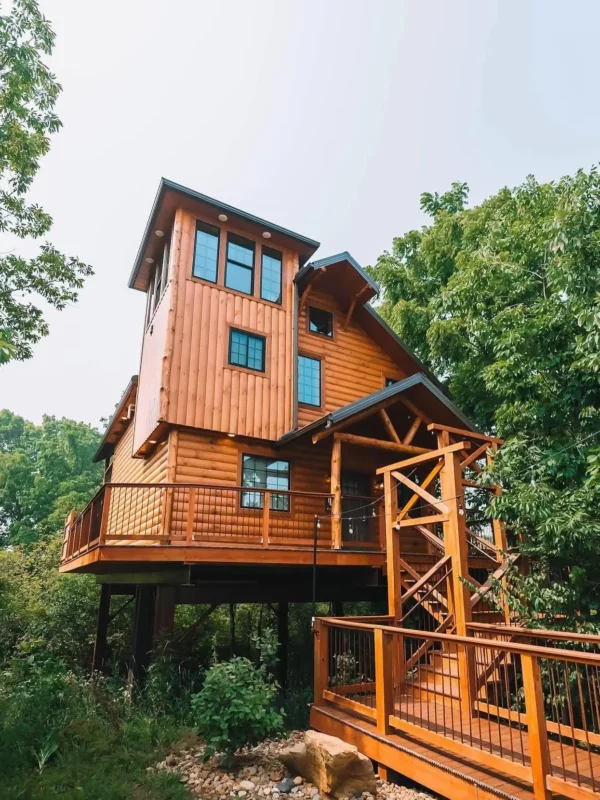
Tree houses always felt like a childish dream, a kind of escape from reality. One evening, though, I came onto pictures of an amazing “office in the sky,” set in a verdant forest, while browsing social media. It appeared both elegant and businesslike at once. The concept of “tree houses offices” not only appealed to my sense of whimsy but also connected with a rising push toward green spaces, flexible work methods, and designs that give well-being and creativity top priority.
I want to show in this blog how this idea might go beyond novelty. When done well, a treehouse office may be a serious workplace that satisfies modern technical criteria and provides a dose of happiness and inspiration sometimes lacking in conventional offices. Let’s ascend step by step and investigate why moving your office to the canopy could prove to be your greatest commercial choice yet.
The Rise of Creative Offices: Why We’re Desperate for Something Different
Even before the global shift toward remote and flexible work, companies were experimenting with ways to boost creativity, employee satisfaction, and well-being. We’ve seen an explosion of “creative office” trends: open-concept layouts, nap pods, office slides, even in-office baristas. Sure, these designs can be fun, but do they go far enough?
1. Burnout and the Cubicle Era
For years, we treated offices like factories, valuing efficiency and productivity above all else. Rows of identical cubicles and harsh lighting were the norm. Although this setup might have delivered a certain uniformity, it often smothered employee morale and drained imaginative thinking.
2. A Shift to “Experience” Workspaces
Millennials and Gen Zers brought different values when they started the workforce: work-life integration, social responsibility, and the yearning for places that inspire. Suddenly “experience-driven offices” began to show up. These comprised cosy lounge areas, group breakout rooms and rooftop gardens. offices started to look more like second homes than like administrative fortresses.
3. Pandemic-Driven Changes
The pandemic introduced the global workforce to the reality (and feasibility) of working from home. No longer tethered to conventional offices, people started reevaluating what they truly want from a workspace—an ergonomic setup, mental wellness considerations, natural light, and an environment that sparks creativity.
The “treehouse office” fits perfectly into this continuum. It’s not just a whimsical fantasy; it’s a symbol of what’s next: a reimagining of the office concept that aligns with sustainability, employee wellness, and dynamic collaboration.
Nature Meets Creativity: The Irresistible Allure of Treehouse Offices
Now, let’s dive deeper into the “why” behind treehouse offices. What does being surrounded by nature really offer?
- A Dose of Biophilia
Biophilia is the innate human affinity for nature. Research consistently shows that exposure to natural elements—like greenery, fresh air, or even just glimpses of the outdoors—can reduce stress, heighten creativity, and boost overall mental health. Shifting your workspace to a treehouse basically saturates you in a biophilic environment, which can be a huge boon for imaginative thinking. - Elevated Perspective
There’s a certain psychological lift from being high above the ground. Viewing your surroundings from a tree-level vantage point can spark new ways of thinking. Problems look smaller, and your mind often feels clearer. This change in perspective might sound symbolic, but it holds real power in fostering creativity and problem-solving. - Natural Inspiration
Forests, birds, leaves swaying in the wind—these elements provide a dynamic backdrop for daily tasks. I’ve noticed that I can conquer even mundane tasks more enthusiastically when my environment is a living canvas. The rustling leaves become a soundtrack, gentle breezes replace the stale AC, and natural light flows in, eliminating the need for harsh fluorescent bulbs. - Playfulness Infused with Professionalism
Treehouse offices strike a rare balance between a sense of play and legitimate workspace functionality. This combination can encourage teams to embrace brainstorming more openly. After all, how stiff and unimaginative can you be in an office that literally rests among branches?
IV. The Practical Advantages: More Than Just Romanticism
Before you dismiss the treehouse office concept as whimsical, let me reassure you—there are tangible, day-to-day benefits that go beyond the fairytale aura.
1. Productivity and Efficiency
When employees are happier, they work smarter. That’s not just a cliché; ample studies show a positive work environment correlates with fewer mistakes and better output. Treehouse offices, by virtue of their ambiance, can promote better focus and reduce stress, leading to increased productivity.
2. Team Collaboration
Think about it: a treehouse sparks curiosity. Colleagues might be more inclined to collaborate, share ideas, and interact spontaneously in such a unique space. The “wow” factor fosters a sense of camaraderie, as everyone’s in on the same adventure.
3. Brand Image and Public Relations
From a business perspective, having a treehouse office can set you apart as an innovative, eco-conscious brand. Imagine bringing potential clients to a meeting in your “sky-high workspace.” That’s a memorable experience that can be leveraged for PR, marketing, and recruitment. Just picture the photos, videos, and social posts that come out of such a setting—pure gold for brand awareness.
4. Alignment with Sustainability Goals
Many organizations aim to reduce their environmental footprint and adopt greener practices. Treehouses can be built to be eco-friendly. They occupy minimal land space and can be constructed from sustainable materials. Building around a living tree also underscores a commitment to preserving natural habitats.
V. Design Part I: How to Build a Safe Yet Cozy Treehouse Office
Of course, transforming a treehouse into an office space means you’re not just nailing up a few boards in your backyard. Safety and structural integrity are paramount, especially if you plan to use this space for regular work. Let’s dig into some foundational design considerations.
1. Selecting the Right Tree(s) and Location
I once toured a property where the team had chosen a massive oak tree that had been growing for over a century. An arborist confirmed that the trunk was healthy, with strong root systems and thick main branches. Finding such a robust tree is your first big step. If your site lacks a single large tree, multi-tree support systems or a combination of posts and trees can be used.
Additionally, think about the surrounding environment:
- Accessibility: How will people get to the treehouse? Consider ease of entry, especially if you plan on daily use.
- View and Light: Position the structure so it captures natural light without glaring into your computer screens. Also, take advantage of any scenic vantage points.
- Microclimate: High humidity, extreme winds, or areas prone to storms require special structural designs.
2. Structural and Weight Planning
Treehouses must accommodate not just their own weight but also the load of furniture, electronics, and multiple occupants. Engaging an experienced architect or a specialized treehouse designer is a must. They’ll calculate the best methods to anchor supports without damaging the tree, choose the right beams and braces, and ensure even load distribution.
3. Materials and Durability
Since your office is essentially outdoors, the materials you select should be weather-resistant and sturdy. Options might include:
- Pressure-Treated Lumber: Offers decent resistance to rot and insects.
- Cedar or Redwood: Naturally resistant to decay and visually appealing.
- Composite Materials: Can be both sustainable and durable, though it’s essential to ensure compatibility with treehouse structures.
Try to pick eco-friendly or reclaimed materials when possible. This not only aligns with green values but also sends a strong message about your organization’s commitment to sustainability.
4. Connectors and Fasteners
A big chunk of a treehouse’s longevity hinges on how well it’s fastened to the tree. Specialized tree bolts (TABs) are commonly used. They provide secure anchorage while allowing some room for the tree’s natural growth and movement. Over-tightening can harm the tree, while insufficient anchorage jeopardizes safety. This delicate balance is why professional expertise is invaluable.
VI. Design Part II: Creating a Seamless Blend of Office Functionality and Natural Charm
Once the foundational aspects are addressed, it’s time to craft an office environment that’s both aesthetically pleasing and eminently practical.
1. Interior Layout and Zones
When I planned a small-scale treehouse office for a client, we broke the space into three zones:
- Focus Area: A dedicated workstation or desk setup with comfortable seating, good lighting, and minimal distractions.
- Collaboration Nook: A small round table or bench area for discussions and brainstorming sessions.
- Relaxation Corner: A cozy spot near a window (or open-air balcony) for quick breaks or for reading documents in a more comfortable posture.
This zoning approach ensures that even a compact space serves multiple functions.
2. Lighting and Ventilation
Treehouses often rely heavily on natural light, which is wonderful but can be unpredictable depending on the tree canopy. Incorporate large windows or skylights. Supplement with warm-toned LED lighting for cloudy days or evening work. As for ventilation, windows on opposite sides of the structure can create a natural cross-breeze. If the climate is hot or humid, consider a small ceiling fan or even a mini-split AC for year-round comfort.
3. Green Design Elements
To truly embrace the synergy between nature and your new workspace, add interior greenery like potted plants or hanging terrariums. The interior décor can echo natural motifs—wood paneling, stones, bamboo mats, or repurposed textures. This cohesive design ensures a fluid connection to the living tree just outside your windows.
4. Furniture Selection
Ergonomics shouldn’t suffer just because you’re in a treehouse! Choose an office chair and desk combination that supports your posture. You can find numerous designs with a rustic or minimalist aesthetic that align well with a treehouse vibe. Keep in mind the weight of each furniture piece, though, especially if you plan to have multiple heavy items. Lightweight but sturdy furniture is ideal.
VII. Functionality Meets Tech: Making a Treehouse Office “Smart”
The biggest question I get from skeptics is: “But how can a treehouse match the technical demands of a modern office?” Here’s the good news: it’s more than possible with the right planning.
1. Reliable Connectivity
In some wooded areas, internet signals can be weaker. But between modern broadband solutions, satellite internet, or cellular boosters, you can ensure a stable connection. I’ve even seen treehouses that use line-of-sight radio antennas to connect to a main hub. Talk about an elevated solution!
2. Conference Equipment and Multimedia
Treehouse offices can absolutely host Zoom calls, in-person meetings, or presentations. Mount a flat-screen TV or projector on a secure interior wall. Keep cable management neat—consider running them through conduits that blend with the treehouse’s wood paneling. You might also look into wireless solutions like Bluetooth speakers or screen mirroring to reduce cable clutter.
3. Safety Systems and Monitoring
An outdoor environment can mean occasional weather surprises. Integrate sensors that detect high winds or severe storms, triggering alerts on your phone. If you plan to leave equipment in the treehouse overnight, a security camera or motion-detector lighting can deter unwanted visitors.
4. Sustainable Energy Options
Why not power your treehouse with green energy? Solar panels on the roof can supply electricity for lights, laptops, and moderate cooling or heating needs. Some owners even install small-scale wind turbines if local ordinances allow. Combining these solutions fosters a self-sufficient, eco-friendly workspace that truly embodies innovation.
VIII. Embracing Sustainability: How a Treehouse Office Can Champion Eco-Friendly Goals
Sustainability isn’t just a buzzword. For many businesses and individuals, reducing environmental impact is a core priority. Treehouse offices can seamlessly align with these values.
1. Minimal Land Disturbance
Building a treehouse uses vertical space instead of expanding your footprint on the ground. It respects the terrain and can preserve surrounding foliage. This approach is particularly compelling if your brand or personal ethos involves environmental stewardship.
2. Green Materials and Low-Waste Construction
From reclaimed wood to biodegradable insulation, there’s a host of ways to limit the carbon footprint. Bamboo floors, for instance, grow back faster than traditional hardwood. Ensuring local sourcing of materials also cuts down on transportation emissions.
3. Rainwater Harvesting
Depending on your region and local regulations, installing a small rainwater catchment system can provide water for hand-washing, cleaning, or watering potted plants. Even minor additions like this can significantly reduce reliance on municipal supplies.
4. Communicating Your Eco Journey
Treehouse offices double as a strong narrative tool. Sharing the story of how you built this eco-friendly workspace can inspire others and bolster your brand reputation. Whether you’re a small startup or a larger company, transparency about your building process and eco-friendly choices can engage your audience on a deeper level.
IX. Cost vs. Benefit: Making the Investment Count
I won’t sugarcoat it—building a treehouse office requires a financial commitment. But before you write it off as impractical, let’s explore the cost-benefit dynamics.
1. Initial Construction Costs
Factors influencing costs include:
- Tree Health Assessments and Arborist Fees
- Architectural and Engineering Services
- Materials and Labor
- Optional Tech Integrations (solar power, specialized internet solutions, security systems)
A small, simple treehouse office can be surprisingly affordable, while a multi-level, large-scale structure may parallel the cost of a high-end home addition.
2. Long-Term Value
Over time, a unique workspace can:
- Boost Employee Satisfaction: Leading to less turnover, higher morale, and improved performance.
- Elevate Brand Image: Making your company stand out for creativity and environmental responsibility.
- Enhance Client Experiences: A meeting in a treehouse is memorable, potentially increasing business opportunities.
- Generate Media Buzz: Journalists love novelty stories, so your treehouse office could become a PR magnet.
3. Phased Approach
If you’re still cautious, consider starting small—perhaps a modest structure that houses a single desk or a small conference table—and expand later. This incremental approach helps you manage costs and better understand how your team utilizes the space.
4. Return on Creativity
While intangible, the surge in creativity, problem-solving skills, and overall well-being can’t be overstated. I’ve witnessed entire teams transform when placed in an invigorating environment. The energy once consumed by stress or boredom is channeled into innovative ideas and effective collaboration.
X. Real-Life Inspiration: Treehouse Offices That Take Your Breath Away
No pitch would be complete without tangible examples. Over the years, I’ve encountered several jaw-dropping treehouse offices that prove these ideas aren’t just hypothetical.
1. “The Canopy Cabin” in Oregon
Nestled among towering conifers, The Canopy Cabin is a small, hexagonal treehouse with panoramic windows. Its owners are a tech startup specializing in nature photography apps—how fitting is that? Employees can step out onto a wraparound deck to test new software in the environment it’s designed for. Morale soared, and they claim productivity soared with it!
2. Woodland Eco-Lab in the UK
A sustainability consulting firm built a “Woodland Eco-Lab” with multiple platforms connected by rope bridges. Each platform serves a different purpose: one for group ideation, another for private calls, and one even includes a mini coffee bar. Visitors are immersed in the brand’s mission from the moment they step foot on the first suspension bridge.
3. Urban Oasis in Tokyo
Yes, even in dense urban settings, a treehouse office can flourish—literally. A marketing agency in Tokyo renovated a large, centuries-old Japanese zelkova tree in a hidden courtyard. Their treehouse sits about 15 feet off the ground and features sleek, modern design touches like glass railings. This blend of ancient and modern has garnered them local fame and plenty of social media buzz.
4. Corporate Retreat in Canada
An established finance firm built a treehouse retreat in the forest behind its main campus. Executives and teams use it for strategy sessions, away from the standard boardroom. They report improved decision-making, as the environment promotes honest discussions and disrupts hierarchical norms.
These real-world examples reflect how flexible the treehouse office concept can be, spanning all sorts of sizes, styles, and business types.
XI. TreeLofts: Your Partner in Treehouse Office Excellence
By now, you might be itching to explore how to make your dream of a creative treehouse office a reality. Let me introduce you to TreeLofts. They’re a standout in this specialized field, blending architectural finesse, ecological mindfulness, and a deep understanding of what makes an office functional.
1. A Seamless Experience
TreeLofts offers comprehensive support from initial site evaluations (including arborist reports) to final furnishing touches. Worried about structural engineering? TreeLofts has you covered. Concerned about design aesthetics? Their portfolio spans rustic-chic to ultra-modern minimalism.
2. Customized Solutions
No two businesses are the same, and no two trees are either. With TreeLofts, every aspect is personalized—whether you need space for a handful of employees or a full-scale multi-platform concept with dedicated conference rooms, lounge areas, or even a mini kitchenette.
3. Sustainable and Responsible
TreeLofts prides itself on using eco-friendly materials and minimizing environmental impact. Their design ethos revolves around giving back to nature while creating breathtaking human spaces. In a world increasingly prioritizing green initiatives, that’s a critical competitive advantage.
4. Proven Track Record
From private entrepreneurs to larger corporate entities, TreeLofts has a growing roster of happy clients who swear by their treehouse offices. The projects are not just conversation pieces; they’re fully operational workspaces that stand up to daily use and changing seasons.
If you’re intrigued (and how could you not be?), head over to TreeLofts to explore their offerings, see case studies, and talk to their expert team. Whether you have a meticulously planned design in mind or you’re starting with a blank slate, they’ll help you navigate the journey from dream to reality.
XII. Conclusion: Let Your Next Big Idea Take Root in the Treetops
We’ve traveled quite a distance in this blog post—over 3,000 words of exploring why a treehouse office isn’t just a quirky novelty but can be a potent instrument for boosting creativity, employee well-being, and brand reputation. From the rise of flexible, green-centric work culture to detailed design considerations and real-life success stories, it’s clear that taking your workspace into the branches can yield remarkable results.
Whether you’re an entrepreneur seeking a personal hideaway to spark your best ideas or a company executive eager to set your brand apart from the competition, a treehouse office may just be the breath of fresh air your business has been craving. The synergy of nature and professional utility is something you have to experience firsthand to truly appreciate.
So, what’s next? If your imagination has been piqued and your heart says, “Yes, I’d love to explore this,” then don’t let the opportunity pass. Reach out to TreeLofts—they have the know-how, the passion, and the proven processes to transform trees into thriving work environments. Let them handle the engineering while you focus on the magic: picturing your new office up in the leaves, brainstorming with a view of the treetops, and inviting clients into a space that whispers innovation before you even say a word.
In an era where the lines between work and life are increasingly blurred, why not step outside the box—literally—and discover a workspace that brings out the best in everyone? A treehouse can be far more than a childhood hideout; it can be the creative engine powering your professional dreams.
Are you ready to elevate your office experience—quite literally—and reap the rewards of an inspired, revitalized workspace? The canopy is calling, and the possibilities are as vast as the forest itself. Let’s climb up together and find the future of work waiting for us among the branches.


Frequencies of Questions
Q1: How can I guarantee enough natural light in my tree house office?
A: Add glass walls or big windows to give broad views of the surroundings. Furthermore enabling more natural light into the space are open roof designs and skylights.
Q2: Could team work take place in a tree house?
A: Sure! A tree house can readily facilitate team cooperation by including a conference table, presentation tools, and cozy seating into an open floor layout.
Q3: How may my tree house office be more environmentally friendly?
A: Choose environmentally friendly materials, add solar panels for power, and feature energy-efficient appliances. Additionally environmentally sustainable is the tree home with a green roof or rainwater collecting system.
Q4: Could client meetings take place in a tree house office?
A: Very true! A tree home offers an unusual venue for client meetings. To create a memorable encounter, you can construct a quiet, comfortable conference space with the extra benefit of surrounding natural settings.
Q5: How might I make my tree home office cosy for extended work?
A: Add dependable internet connectivity, sufficient ventilation, cozy lighting, and ergonomic furniture. Including a break space where you can unwind or go outside will also improve comfort and output.
