


The current era of noise and digital hyper-connectivity has led people to seek lifestyles that offer quietness and intentional living like never before. Treehouse living—a childhood dream—is now emerging as a practical, environmentally friendly option that offers profound benefits compared to urban dwelling.
The rise in treehouse living represents a special chance for distributors, developers and commercial buyers to tap into this market. Modern treehouse living attracts more consumers because it meets their needs for health-focused living and sustainable choices alongside uncomplicated lifestyles.
The article evaluates treehouse living through an examination of its essential advantages and design fundamentals while uncovering its potential as a peaceful lifestyle option for those seeking to move away from city life.
Why People Are Leaving Cities
Urban Burnout Is Real
Modern city life often comes with:
- Long commutes and traffic
- Expensive housing
- Noise pollution
- Overstimulation from screens and crowds
- Lack of privacy and green space
The adoption of remote work lets people understand that convenience no longer demands well-being sacrifices.
The Post-Pandemic Lifestyle Shift
Recent years have shifted priorities toward:
- Health and nature access
- Work-from-home flexibility
- Minimalist and eco-conscious living
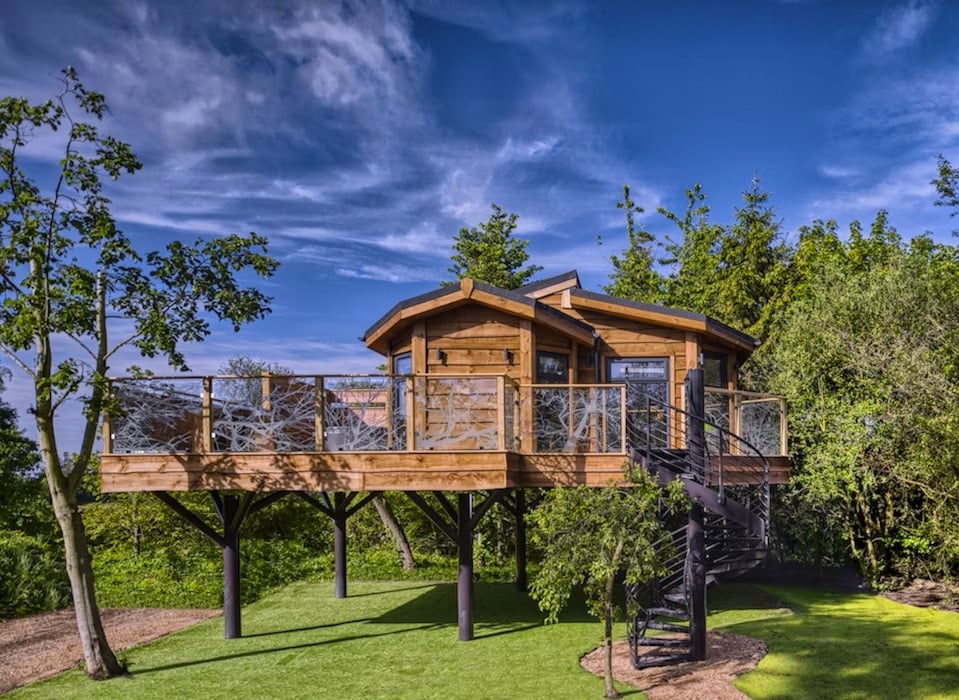
Treehouse living represents this cultural transformation by exchanging living space for peace and replacing concrete with trees.
Benefits of Treehouse Living
1. Mental Wellness and Mindfulness
Living in a treehouse promotes:
- Reduced anxiety and stress levels
- Natural circadian rhythm alignment
- Increased mindfulness and gratitude
- Improved sleep and cognitive clarity
Treehouses enable you to experience nature healing around the clock as nature itself possesses healing properties.
2. Connection with Nature
Treehouse dwellers experience:
- Birdsong instead of sirens
- Rain tapping on rooftops
- Seasonal changes felt first-hand
- Wildlife sightings from the front deck
Living in harmony with nature through daily immersion leads to a more profound appreciation of the environment and a slower lifestyle.
3. Sustainability and Low Impact
Compared to traditional homes, treehouses:
- Use fewer materials
- Leave smaller ground footprints
- Treehouses normally run independently from utility services using solar power and rainwater harvesting systems along with composting toilets.
- Encourage conservation-oriented lifestyles
People who care about the environment consider treehouse living to be in harmony with their ethical principles.
4. Privacy Without Isolation
Treehouses allow for:
- Physical separation without social disconnection
- Tranquility without total solitude
- Treehouses offer occupants a sense of spaciousness while staying within the same location.
Families along with creatives and remote workers and retirees find treehouses to be the perfect choice for their needs.
5. Flexible, Customizable Designs
Treehouses can be:
- Minimalist single-room lofts
- These two-story family homes feature complete kitchens along with full plumbing systems.
- Modular compounds with walkways, decks, and studios
Treehouses are able to adapt to different terrains, climates, and budgets which enables their scalability in various markets.
Key Considerations When Building for Full-Time Living
1. Structural Reinforcement
For year-round use, treehouses must have:
- Strong anchors and load-bearing supports
- Engineered beams and joists
- Movement-tolerant joinery (trees sway!)
Opt for steel-reinforced platforms combined with hybrid post-and-beam structures to achieve stability.
2. Insulation and Weatherproofing
To withstand seasonal changes, install:
- Closed-cell foam or natural wool insulation
- Double-pane or storm windows
- Roof overhangs with proper flashing
- Vapor barriers and moisture-resistant cladding
These features keep interiors comfortable and mold-free.
3. Utilities and Infrastructure
Off-grid or hybrid systems can include:
- Solar panel arrays with battery storage
- Composting or incineration toilets
- Rainwater collection with filtration
- Propane heaters or wood-burning stoves
Distributors need to provide modular utility packages to streamline installation.
4. Accessibility and Layout
Think about:
- Safe stairs, ramps, or mechanical lifts
- Ground-level utility access
- Multi-room configurations for families
- Built-in storage solutions
Well-designed treehouses achieve a high level of efficiency while maintaining compact dimensions.
Treehouse Living Markets on the Rise
| Market Type | Opportunity |
|---|---|
| Remote employees market wellness retreats together with productivity pods to customers. | |
| Retirees and downsizers can find peaceful living options that are alternatives to suburban homes. | |
| Sustainable communities | Provide modular eco-living clusters |
| Hospitality developers | Design for long-stay eco guests |
| Landowners | Market treehouse homesteads as land investments |
B2B Opportunities for Treehouse Living
Expand Your Product Line
Offer:
- Full-time residential treehouse kits
- Hybrid steel-wood structures for added strength
- Year-round insulation and energy packages
- Smart design upgrades including walkable rooftops and solar heating systems along with composting toilets
Position Treehouses as Livable Alternatives
Shift messaging from:
“Play space” to “Peace space”
“Novelty” to “Necessity”
“Weekend stay” to “Lifelong sanctuary”
For product naming choose terms such as eco-retreat, micro-homestead or canopy residence.
Bundle Financing and Planning Support
Help customers navigate:
- Zoning and building codes
- Sustainable financing or off-grid grants
- Site preparation, tree evaluation, and soil testing
Providing complete planning support establishes your brand as a standout choice.

Conclusion
Treehouse living has evolved from a childhood fantasy into a practical lifestyle choice for those who want to leave urban noise and expenses behind. These elevated homes provide both comfort and aesthetic appeal while serving a meaningful purpose when situated in natural surroundings through proper design and structural planning.
Commercial builders alongside resellers and distributors now face an opportune moment to deliver more than mere shelter through this movement by providing a new life experience.
Are you prepared to offer treehouse living options to family units, property developers and individuals seeking independence from traditional utility grids? Our team is ready to discuss custom kits while offering commercial pricing and modular design options. **
???? info@treelofts.com
???? [+1 503 793 2928]()
???? https://treelofts.com/
FAQ
Is treehouse living legal year-round?
The legality of year-round treehouse living depends on local zoning rules and permit conditions. Treehouse homes receive support from various areas under classifications like tiny houses or eco-dwellings.
Treehouses withstand winter or severe weather conditions through effective insulation combined with proper roofing materials and heating systems.
Treehouses maintain comfort throughout all seasons when they have appropriate insulation with roofing and heating.
It is possible to build a treehouse home connected to conventional utilities.
Absolutely. Several homeowners connect to local utilities while others implement hybrid systems to maintain flexibility.
Full-time treehouses typically measure between 150 and 800 square feet.
Full-time treehouses have sizes that range between 150 and 800 square feet based on their location and intended use.
Do you offer kits for treehouse living?
Yes. Our modular kits offer long-term usability through customizable layouts and insulation options and extensive off-grid system enhancements.
Contact Us
Let’s turn backyard dreams into stunning realities—together.
???? Email: info@treelofts.com
???? Phone: +1 503 793 2928
???? Website: https://treelofts.com/
