


When you imagine a stunning treehouse rising above the undergrowth, you likely picture cozy decks, leafy canopies, and perhaps a rope swing gently swaying in the breeze. What’s often forgotten? The hidden treehouse mounting hardware—the unsung hero that ensures your treetop perch is safe, sturdy, and tree-friendly. While beams and boards grab visual attention, the real magic happens where bolts, brackets, and cables meet living timber.
In this blog, we’ll unravel how top-notch mounting hardware can transform your childhood fantasy into a long-lasting reality. But before you roll up your sleeves, remember: We specialize exclusively in treehouse design and consultation, handing you the plan so you—or your chosen builder—can confidently craft that elevated retreat without nasty surprises. Ready to climb up?
Why Every Screw and Bracket Determines Your Treehouse’s Destiny
The Overlooked Yet Vital Backbone
Think about it: your treehouse might feature gorgeous rails, pitched roofs, or whimsical furnishings, but nothing matters if the structure can’t hold together. Bolts, brackets, and connectors don’t just keep your platform intact; they protect the tree from undue stress. In a high-up environment prone to wind, swaying branches, and weather shifts, reliable mounting hardware is non-negotiable.
From Childhood “Nail a Board” Days to Serious Engineering
In simpler times, folks hammered random nails into a trunk, hoping for the best. Modern treehouse enthusiasts, however, realize that a few ill-placed nails can stunt a tree’s growth or compromise the entire deck’s stability. Treehouse mounting hardware is designed for these dynamic conditions—preventing trunk damage, distributing weight effectively, and ensuring the tree can breathe and grow around the installed pieces.
How Treelofts Fits In
While we at Treelofts don’t get our hands dirty with actual installs, we excel at showing you exactly where and how these pieces should be placed. Our design plans indicate bolt angles, recommended bracket types, and precise anchor points. Then, whether you go DIY or hire a local pro, you’ll have a blueprint that ensures every piece of metal does its job flawlessly—no guesswork needed.
“Mounting Hardware” Unveiled: What Exactly Does It Include?
Beyond Bolts: The Full Family of Fixings
When you hear the term “treehouse mounting hardware,” bolts may spring to mind first—but the supply list extends much further. Specialized washers, cable tensioners, corner brackets, angle irons, and more all play critical roles in letting your treehouse flourish on a living trunk. Each item has a unique job, whether it’s distributing load or securing beams to a stable pivot point.
Treehouse Attachment Bolts (TABs), Standard Bolts, and More
- TABs: Purpose-built for treehouses, with expanded shank diameters to avoid choking the trunk.
- Regular Galvanized Bolts: Useful for less intensive stress points but not always ideal for major load-bearing.
- Custom Brackets & Plates: Often used where beams meet trunks or branches, distributing weight across a larger surface area.
Protecting the Tree and Your Platform
Mounting hardware must also minimize the intrusion into living tissue. Drilling too many holes can hamper sap flow, introduce pests, or cause rot. Treehouse hardware counters that by using fewer, more carefully chosen anchor points. This synergy ensures both your deck and the tree remain healthy.
Treelofts’ Role
This approach helps you purchase only what’s needed and place each item in the optimal position. We’re not showing up with a toolbox, but our designs leave zero confusion for the actual build phase.
The Right Bolts = A Double Win for Tree & Treehouse
Is a Standard Screw Really Enough?
Standard hardware found at home-improvement stores might suffice for a small porch or fence, but a treehouse deals with multi-directional forces, trunk movement, and vertical load. Traditional screws often pinch the bark, hastening rot or weakening the trunk over time. Factor in moisture and wind sway, and it’s easy to see why standard screws can become a high-risk gamble.
TAB Bolts: King of the Canopy
The star of many designs is the Treehouse Attachment Bolt (TAB). It’s thicker than ordinary bolts, with a specialized design that distributes weight outward, sparing the tree from intense localized pressure. Many TAB systems even provide space for the trunk to expand year after year, maintaining a healthy bark layer.
When Both Tree & Structure Thrive
Properly installed bolts preserve the tree’s cambium (growth layer) while supporting the platform, walkway, or multi-level deck. This mutual respect for trunk health and occupant safety is why advanced hardware is crucial.
We incorporate the recommended number and size of TABs in our design blueprint based on your tree’s diameter, species, and the overall deck load. That means you won’t overuse or underuse hardware. By the time you or your installer picks up a drill, the plan is set for an enduring bond between bark and beam.
Support Structures: Columns, Suspension, or a “Floating” Illusion?
Feeling Torn About Ground Posts?
If you’re not into the fully suspended look, you might consider columns or footers on the ground. These can lighten the load on your trunk. However, columns require concrete footings and can disrupt the natural landscaping. Some people love the stability—others yearn for a more “in the trees” vibe.
Hanging It All with Cables
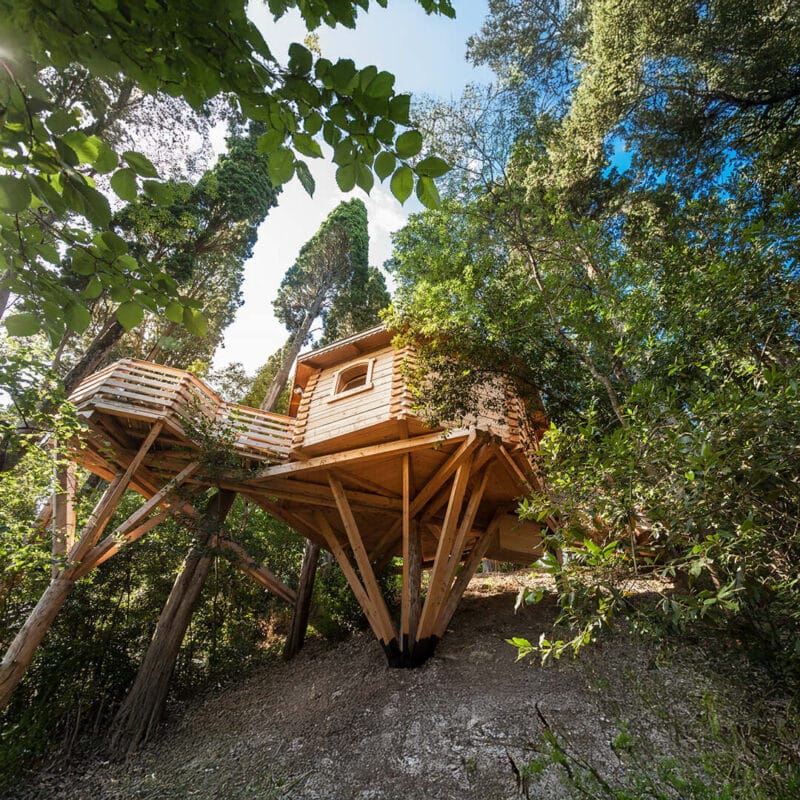
A purely suspended treehouse uses cables attached high on the trunk or multiple trunks, offering a mesmerizing floating effect. But that calls for specialized tension systems and hardware rated for dynamic loads. The “wow” factor is huge, though so is the engineering challenge.
The “Floating Brackets” Trend
Some modern setups employ partial brackets that let the tree move without compressing the trunk. This method marries the concept of suspension with TAB anchors, creating a platform that appears to hover around the trunk. It’s a premium approach, ideal if you want minimal ground contact and maximum trunk health.
Treelofts doesn’t dig footers or string cables, but we do chart out your best structural route. Whether you want ground columns for a more “cabin-like” aura or a suspended masterpiece for that dramatic flair, our design consult ensures you understand each approach’s pros and cons. Then, with blueprint in hand, you can shop for the hardware suited to that structure—no confusion, no second-guessing.
Anti-Corrosion and Weatherproofing: Embrace All Four Seasons Without Fear
Why High and Dry Matters, Especially Up in the Air
A treehouse is exposed to the elements in ways a typical ground structure might not be—there’s more wind, potential for swaying, and constant humidity around living leaves and bark. When your hardware rusts or wood rots, repairs become complex. After all, you’re not just replacing a deck board on level ground; you’re climbing up a trunk with specialized tools.
Coatings and Treatments for Metal
Galvanized or stainless steel hardware stands up well to moisture, resisting corrosion that can degrade structural integrity. Sometimes a simple rust-proof coating is enough, but in rainy or coastal climates, you might want even more robust solutions. Don’t forget washers, nuts, and brackets—neglecting these small parts can lead to big, squeaky problems.
Weatherproof Wood and Protective Sealants
Of course, it’s not just about metal. Wood boards or beams need the right weatherproofing: sealants, stains, or even epoxy solutions. The idea is to prevent water absorption, minimize warping, and keep rot at bay. If you ever spot blackish mold or spongy spots, it’s time to reapply protective layers or replace compromised sections.
In our design consult, we highlight recommended protective finishes for your chosen hardware and wood species. That includes specifying galvanization grades or stainless steel categories. Because we don’t do the physical build, we equip you with the knowledge to select the best coatings. Then, it’s up to you or your contractor to locate the right brand or formula, following the blueprint to a T.
Drainage & Flooring: Don’t Let a Little Rain Turn Into a Big Problem
A Floor That Doesn’t Become a Sponge
Platforms with closed gaps, no slopes, or inadequate drainage can trap water, leading to slick surfaces and hidden rot. You want to enjoy a morning coffee among the leaves, not wade through puddles. The correct combination of water-resistant decking material and strategic spacing helps moisture escape rather than pool.
Slopes and Gutters (Yes, in a Treehouse!)
You might add a slight slope to deck boards so water naturally runs off. Or, if you have a partial roof over part of the platform, you might install mini-gutters or simple drip edges. Even small design tweaks can keep your feet dry and your boards healthy.
The Art of Seamless Drainage
Properly planned water flow ensures that soggy conditions don’t degrade hardware or invite mold to creep in under the boards. It might sound elaborate, but a well-orchestrated drainage path can be subtle and highly effective—nobody wants a “swampy” deck after a mild rain.
In our designs, Treelofts typically includes notes on how to space boards (like a ¼-inch gap), recommended slopes, and places to incorporate gutter elements if you choose a partial roof. By capturing these details upfront, you’ll skip frantic supply runs mid-build and ensure the hardware and boards can go the distance in all weather.
Railing & Fencing: Enjoy the View—Without Sacrificing Safety
Craving a Panoramic Look but Afraid to Lean Over?
Railing or fencing is often the finishing touch that separates a snug, secure deck from a dizzying drop. The key is striking a balance between open vistas and robust guardrails. After all, a scenic vantage matters little if you’re too nervous to stand near the edge.
Materials: Wood, Metal, Glass, or Hybrid?
- Wood: Warm and natural, but needs consistent sealing.
- Metal: Sleek, sturdy, and can be shaped into artistic forms.
- Glass: Maximizes sightlines, though it might require frequent cleaning and top-tier brackets to hold in place.
Kid- or Pet-Friendly Touches
Spacing between balusters is critical if kids or pets roam the deck. Many safety codes suggest less than four inches for gap spacing to prevent accidental slips or entrapment. Elevated treehouses can face stricter guidelines, so check local rules or be extra cautious.
We integrate railing specs—height, spacing, recommended materials—directly into your blueprint. That includes angles or unique design flourishes. If you crave a modern, airy feel, we might suggest a cable railing system. For a more rustic vibe, vertical wooden spindles or a cross-lattice design might suit you better. Either way, you or your contractor will have a clear roadmap to safe, beautiful edges.
Learn More: https://treelofts.com/the-woodland-adventure-treehouse/
Accessories & Interior Touches: Because “Small but Mighty” Should Still Feel Like Home
Lightweight Furniture for High-Altitude Comfort
Yes, you can have style in the sky! But skip the massive sectional sofa. Instead, think fold-out chairs, small modular tables, or bench seating built right into the platform edge. Lightness is key to keep the structure from overburdening the trunk. Weather-resistant fabrics or quick-dry cushions also help if part of your deck is exposed.
Lighting, Power & Cozy Decor
Some folks choose off-grid solutions—like solar lights—to add eco-friendliness to their high perch. Others run a discreet power line (in a flexible conduit that moves with the tree). Fairy lights, lanterns, or subtle LED strips can transform your treehouse into an enchanting evening retreat. And yes, you can even rig a tiny projector for a midnight movie among the leaves.
The Magic in Small Details
Potted plants, hanging macramé, or a mini bookshelf turn a platform into a personal nook, a place to linger for hours. Just keep an eye on overall load capacity. You can always add bracing or bigger hardware if you plan to set up heavier decor items (like a mini aquarium or a large beanbag chair).
Treelofts’ Layout Guidance
Treelofts can detail how to carve out corners for certain accessories in your design plan, marking recommended spots for built-in shelving or a simple corner bench. We’ll ensure your anchor points and brackets align with these features. Then, once you gather your “tree house supplies,” you’re free to style the interior exactly how you wish—knowing the underlying design can handle it.
Business Potential: How Smart Hardware Choices Boost Profit and Appeal
Is Your Treehouse Just for Fun, or a Potential Gold Mine?
If you’ve considered monetizing your elevated nook—through short-term rentals, event hosting, or even creative workshops—quality mounting hardware becomes even more crucial. One shaky handrail or squeaking bracket can scare off guests and tarnish your online reviews.
The “Wow” Factor that Sells
People remember experiences, especially out-of-the-box ones like chilling in a canopy retreat. By ensuring your deck or multi-level structure is safe and visually compelling, you can command premium nightly rates on travel sites. Strong, rust-resistant hardware also reduces downtime for repairs—vital if you want consistent occupancy or event bookings.
Conclusion: Gather Your “Treehouse Mounting Hardware” and Soar into the Canopy
Why Settle for Ground-Level Mundane?
With the perfect blend of bolts, brackets, beams, and boards, your treehouse can be more than a fleeting childhood memory—it can be a modern, safe, and eco-friendly getaway. Carefully chosen treehouse mounting hardware ensures you enjoy the height, the breeze, and the panoramic views without sacrificing trunk health or structural integrity.
Design Magic, Zero Construction
Remember, we at Treelofts specialize in the blueprint side—designing your dream layout and specifying exactly which hardware suits your trunk’s diameter, local climate, and aesthetic goals. We don’t do installations or hammer a single nail, but we’ll equip you with a thorough plan so you or your local builder can bring it to life. From recommended TAB bolts to suggested bracket angles, you’ll have zero guesswork.
Don’t Keep Your Sky-High Vision Waiting
Why linger in daydreams? Visit Treelofts to explore how our design packages can guide you in selecting the ideal treehouse mounting hardware, structural approach, and finishing touches. It’s time to gather the supplies and harness that childhood wonder—just with grown-up reliability. Because the best vantage point in life might just be from up in a tree, where everything else fades into the forest hush, and your imagination takes flight.

FAQ
FAQ 1: What’s the main difference between regular bolts and specialized treehouse hardware?
Standard bolts or screws often fail to distribute weight properly and can pinch or damage a tree’s growth layers. Specialized treehouse hardware – such as Treehouse Attachment Bolts (TABs) – is engineered to handle heavier loads and allow the trunk to expand over time, protecting both the tree and your elevated structure.
FAQ 2: Can I use generic hardware store brackets for my treehouse supports?
Generally, it’s safer to go with brackets designed for treehouse projects or heavy-duty outdoor constructions. Generic brackets might corrode too quickly or lack the strength needed to withstand dynamic loads, wind sway, and changing seasons. A well-constructed bracket system not only boosts safety but also reduces long-term repair costs.
FAQ 3: How many bolts or brackets do I need for a medium-sized treehouse platform?
That depends on factors like platform size, total load (people, furniture, etc.), and trunk health. Fewer, well-placed TABs or heavy-duty bolts usually outperform multiple low-grade anchors. A professional design or consultation (like from Treelofts) helps pinpoint the exact count, position, and type of hardware for your specific project.
FAQ 4: Will drilling to install hardware harm my tree in the long run?
If you use the correct hardware (e.g., TABs) and install them according to professional guidelines, the trunk generally adapts and heals around the hardware without severe harm. Problems arise when bolts are placed incorrectly, or multiple small fasteners crowd the same area. Proper planning ensures healthy trunk growth and stable support.
FAQ 5: Where can I get help choosing the right treehouse mounting hardware?
A treehouse design service (such as Treelofts, though we don’t do physical construction) can advise on everything from anchor bolt selection to the best bracket materials. Once you have a tailored blueprint, you can purchase the recommended hardware from a trusted vendor or local hardware store. This approach ensures each piece of metal you buy truly fits your unique design and safety needs.
