


Outdoor learning has become essential in modern education rather than being a luxury. Education facilities and recreational camps are now utilizing nature-based classrooms to promote student engagement and support different learning methods while improving mental health. How Schools and Camps Are Using Treehouses for Outdoor Education. The treehouse stands as both an unexpected element and a powerful instrument at the core of this movement. Treehouse structures function as immersive environments free from distractions making them ideal spaces for group learning while supporting personal reflection and environmental exploration. Treehouses constitute an emerging market opportunity for distributors and procurement professionals within the educational, recreational and wellness industries. This manual examines the use of treehouses in educational settings for outdoor learning and offers information on scalable design and implementation strategies.
Why Treehouses Are Ideal for Outdoor Learning
Enhanced Engagement
Treehouses make learning more thrilling and innovative for students. The combination of heightened views and nearby natural settings creates an environment that increases student curiosity and participation.
Improved Focus and Retention
Natural environments decrease stress levels and sensory overload which helps students enhance their memory retention and attention spans with notable improvements seen in students who have ADHD or sensory processing differences.
Support for Multiple Learning Styles
Flexible layouts and nature-based materials in treehouses create adaptable learning environments for tactile, kinesthetic, visual, and auditory learners.
Flexible Curriculum Integration
Treehouses provide dynamic spaces that connect multiple fields like science and storytelling with mindfulness and music for versatile teaching methods.
Wellness Benefits
Studies show that consistent interaction with green spaces leads to better mental health outcomes and enhanced mood regulation and immune system performance for school-aged children and teenagers.
Use Cases in Schools and Camps
Nature-Based Elementary Classrooms
Treehouses are integral to forest school programs at educational institutions where students engage with reading, math and science lessons every day while developing a commitment to environmental care.
STEM Exploration Labs
Treehouses serve multiple functions as weather stations, observation decks, and physics laboratories. Students examine rainfall patterns while testing solar panels and observing ecological transformations from above.
Reading and Reflection Nooks
Treehouses serve as excellent spaces for reading nooks, creative writing retreats, and social-emotional learning sessions.
Camp Program Hubs
Treehouses function as activity centers at camps and serve as counselor lounges and stations for arts, crafts and team-building themes.
Outdoor Counseling or Mindfulness Rooms
Treehouses provide therapeutic programs with spaces for private meetings, mindfulness practices and group reflection sessions distant from institutional environments.
Treehouse Design Elements for Educational Use
Safety First
- Anti-slip flooring and guardrails on all sides
- Rounded corners and tamper-resistant hardware
- Enclosed staircases or ADA-compliant ramps where possible
Open-Air and Enclosed Options
- Fully open decks for warm-weather use
- Semi-enclosed cabins with windows for colder climates
Group-Ready Layouts
- Benches around perimeter or center
- Foldable work tables
- Clipboards, hanging whiteboards, and chalkboard walls
Durable, Low-Maintenance Materials
- Pressure-treated wood or composite panels
- Steel railings or cable systems
- UV-protected polycarbonate roofing
Natural Integration
- Designs that preserve existing trees
- Use of tree trunks as center columns
- Camouflaged finishes that blend with surroundings
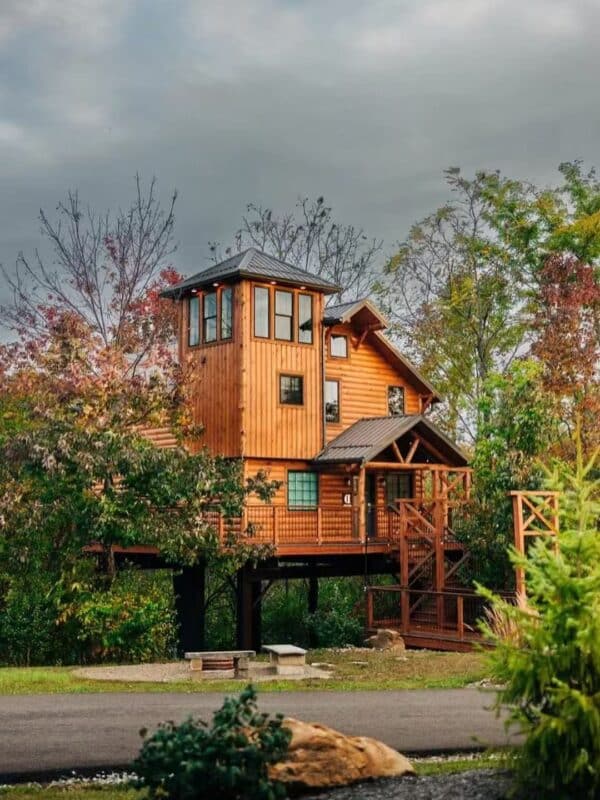
Implementation Strategies for Schools and Camps
Site Planning
- Select peaceful locations close to forested areas that remain walkable from primary facilities
- Evaluate the condition of trees and soil before installation begins
Modular Build Options
- The assembly of prefabricated pods at the school or camp site results in minimal operational disruption.
- Multiple treehouses can be added in phases
Permits and Compliance
- Check local regulations for educational structures
- Follow ADA guidelines where applicable
- Make sure structures adhere to regulations governing wind resistance, load capacity, and fire safety standards.
Teacher and Staff Training
- Educate staff about safety procedures and evacuation plans alongside educational applications.
- Include maintenance guidelines and checklists
Bulk Procurement Considerations
Volume Discounts
Schools benefit from reduced unit costs and combined shipping expenses when ordering three or more units.
Unified Design Themes
Create unique treehouse clusters by selecting color themes or logos that represent your camp or school.
Delivery & Assembly
Manufacturers deliver flat-packed units by truck which require on-site assembly that may or may not need crane access for installation.
Service Packages
Many suppliers offer:
- On-site surveys and layout design
- Installation teams or remote assembly support
- Post-installation maintenance plans
Estimated Costs for Educational Treehouses
| Component | Cost Range per Unit |
|---|---|
| Base Structure & Platform | $18,000 – $35,000 |
| Safety Features (Railings, Ramps) | $2,000 – $6,000 |
| Educational Add-Ons (Benches, Boards) | $1,000 – $4,000 |
| Roofing & Weatherproofing | $1,500 – $5,000 |
| Shipping & Assembly | $2,000 – $6,000 |
| Total Estimated Range | $24,500 – $56,000 |
Benefits for Distributors and Procurement Officers
High-Volume Repeat Potential
Institutions such as camps, school districts, and non-profit organizations frequently request large-scale orders and staggered installation processes.
Grants and Funding Sources
The acquisition process is simplified for buyers who tap into government grants or wellness program and educational innovation funding sources.
Year-Round Revenue Stream
Treehouses serve educational and therapeutic purposes throughout the entire year beyond their seasonal play capabilities.
Long-Term Relationships
Units that receive proper maintenance can generate lasting contracts which cover maintenance services, system enhancements, or new construction projects.

Conclusion
Schools and camps are adopting treehouses to transform their outdoor educational models. These inspiring treehouse structures provide beneficial physical, emotional, and intellectual growth opportunities while creating unforgettable natural experiences. The market needs for premium treehouse solutions that can expand effectively continues to increase among developers, distributors and those who make purchasing choices. Through the provision of educational designs that ensure safety while maintaining flexibility your business will play a fundamental role in influencing educational development through every treehouse built.
FAQ
Are treehouses safe for school-aged children?
Yes. Treehouses become safe educational spaces for schools when they incorporate proper design and guardrails along with age-appropriate supervision.
Can treehouses be used year-round?
Absolutely. The combination of weatherproof roofing and insulation with enclosed designs enables treehouses to function as educational spaces throughout all seasons.
Are treehouses ADA-compliant?
They can be. Accessible treehouses require ramps and low-platform access while maintaining wide doorways for inclusive design.
How long do educational treehouses last?
Proper maintenance ensures educational treehouses remain functional for 15 to 25 years based on material type and environmental conditions.
Schools and camps can set up treehouses without needing heavy equipment through modular and lightweight designs.
Yes. Installation of modular and lightweight treehouses can be accomplished through scaffolding or using light machinery.
Contact Us
Let’s turn backyard dreams into stunning realities—together.
???? Email: info@treelofts.com
???? Phone: +1 503 793 2928
???? Website: https://treelofts.com/
