


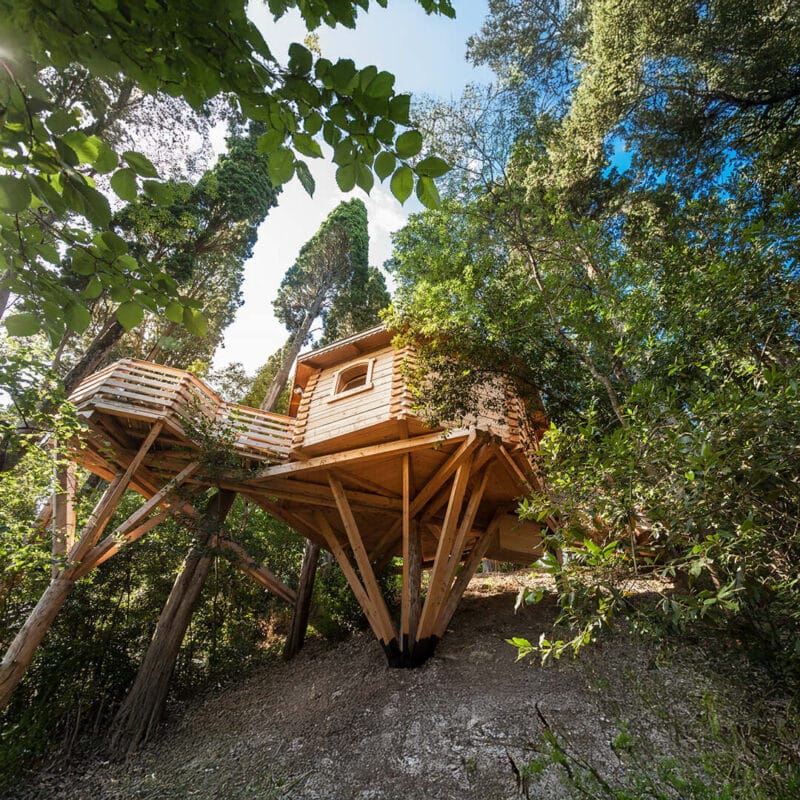
From a childhood ideal to a profitable commercial possibility, the idea of tree houses has changed drastically. Tree houses are in growing demand as more people search for unusual, immersive, and environmentally friendly travel experiences. For tree house vendors, distributors, and investors wishing to diversify their portfolios and capitalize on this expanding trend, this change offers an interesting future.
Tree houses are fast becoming a sought-after housing option for guests all around; they are not only a novelty now. Tree homes have a special value proposition that can provide significant returns on investment regardless of the type of trip—family holiday, eco-tourism retreat, or business team-building experience. For companies engaged in the tree house business, increasing demand opens fresh chances for expansion and creativity.
We shall delve deeply into the commercial advantages of investing in tree houses in this article, offer ideas and techniques for optimizing returns, investigate market trends, and show the possible value of tree houses by means of actual cases.

Tree houses are becoming more and more popular.
The Move toward Environmental Tourism
Tree houses integrate quite nicely in the explosion of eco-tourism. Increasingly conscious of the environmental effects of their trips, travellers are looking for more sustainable substitutes. Often constructed of natural materials and with environmentally beneficial design, tree houses reflect these ideals. Using this eco-tourism movement can be a calculated approach for companies to satisfy the expectations of a market driven by environmental concern.
Tree houses give an immersive natural experience without sacrificing comfort, therefore balancing luxury and sustainability. Whether situated above calm settings or in isolated forests, these buildings give visitors a special means of communing with the surroundings.
The Emerging Trend of Experiential Travel
Travelers of nowadays search for experiences rather than only locations to rest. Growing desire for unique, one-of-a-kind lodging results from the advent of experienced travel. Tree houses are a unique choice for individuals looking for something remarkable since they provide an amazing experience. For companies which sell or distribute tree houses, using the need for experiential travel provides a road to success.
Tree houses can be sold as an adventure and a holiday all combined unlike conventional hotels. Their special attraction comes from their connection to the natural world, sense of originality, and privacy they provide.
The Financial Benefits of Tree House Investing
High ROI on Investment
The possibility for great returns on tree houses is among the most convincing arguments for investing in them. Tree houses are unique and offer an experience that justifies premium price. Particularly in picturesque or highly sought-after areas, guests are sometimes ready to pay more for the chance to stay in a tree house.
Particularly in tourist hubs or remote locations with great demand for vacation rentals, rental rates may rise as tree homes become more and more popular. Businesses can expect significant income sources and a remarkable return on investment over time by investing in top-notch tree houses and carefully arranging them in appealing sites.
Low Maintenance and Operations Costs
Particularly when compared to conventional hotels, tree houses typically have less running and maintenance costs. Usually easier to build and maintain, the structure itself helps to save general building and maintenance costs. Furthermore lessening expenses is the natural environment in which tree houses are typically located, which lessens the need for significant landscaping or infrastructure building.
Tree houses are a reasonably priced way for companies trying to reduce their investment risk. For individuals wishing to diversify their portfolios and enter the hotel or tourism sector with a sustainable, low-maintenance asset, tree houses appeal because of their lower overhead expenses.
Scalability and long-term growth
The market for tree houses is showing indications of long-term expansion, hence companies who invest in them now can profit from the continuous trend. Tree houses will probably be in demand as more people search for unusual travel experiences. Your tree houses should be positioned deliberately in prime areas to leverage this expanding market and increase your visibility over time.
The tree house business’s scalability offers dealers and distributors a major benefit. Modular and flexible, tree homes let companies rapidly expand their operations by adding more units as demand rises. Whether one is expanding into new areas or adding more tree houses to an existing property, the expansion possibilities are great.
Diversification: Increasing Your Product Lines Using Tree Houses
Drawing a varied clientele
Building tree houses lets companies vary their clientele. Families, single travelers, couples, business groups, and eco-tourists are just a few of the many people that find appeal in tree houses. Offering a range of tree houses that meet various demands, from family-friendly areas to romantic getaways, companies may appeal to a larger audience and draw consistent visitors.
Developing Special Experiences
Tree homes may also be sold as part of an experience package. Family holidays, destination weddings, business retreats, or wellness getaways can all be scheduled using them. Tree houses’ adaptability enables companies to design special events fit for certain client requirements. Tree house stays combined with guided tours, outdoor activities, or local experiences will allow companies to provide all-inclusive packages generating more income.
One major corporate advantage is the possibility to personalize the experience and design unforgettable stays. Providing a variety of choices for design and customizing can be a major selling feature for distributors and dealers appealing to possible consumers.
Customer Case Study: Tree Houses Supported a Company’s Growth
Case Study: Cedar Grove Tree Houses
Small Midwest company Cedar Grove Tree Houses is a striking illustration of how investment in tree houses could result in commercial success. Targeting eco-tourists and nature lovers, the company began with just three tree houses constructed in a picturesque woodland region. Cedar Grove experienced a 50% annual bookings rise within three years, mostly from the rising appeal of eco-tourism.
One of the company’s most unique approaches was emphasizing building a luxurious experience in an environmentally friendly surroundings. Designed with locally sourced, environmentally friendly materials, each tree home let visitors experience contemporary conveniences including private decks, hot tubs, and complete kitchens. Cedar Grove also profited from the trend in experience tourism by providing visitors guided hiking trips and outdoor yoga classes.
Cedar Grove Tree Houses thus not only became a well-known location but also a well-known brand in the market of tree houses. The business grew by installing more tree homes and branching into providing business events and getaways. Their narrative emphasizes the several income sources tree home investments can create as well as their great potential.
Starting With Tree House Investments
Selecting the Correct Location
The success of every tree house venture depends mostly on location. Tree homes are most successful when situated in naturally appealing and beautiful locations. Popular sites are national parks, mountain areas, lakesides, or rural get-aways. Before making a specific region investment, one should also consider local demand, zoning rules, and accessibility.

Verifying Sustainable Design and Construction
Tree home building should be done with environmental considerations first. Priority should be given to environmentally friendly materials that appeal to the market concerned: recycled goods, bamboo, and recovered wood. Energy-efficient devices like rainwater collecting or solar panels can help improve the attractiveness of tree homes and lower running expenses over time.
Design is also very important. Tree houses should be comfortable and modern, yet they should also fit very well with their surroundings. To guarantee the lifetime and attractiveness of the tree houses, one must make investments in top-notch design and construction.
Finish
For those in the tourism, hotel, and real estate sectors, investing in tree houses offers a major commercial prospect. Tree houses provide a creative and profitable approach to satisfy the expectations of modern guests given a developing market for eco-tourism, experience travel, and sustainable lodging. Tree homes are a wise investment for companies trying to grow and flourish in a competitive market because of their financial advantages as well as their capacity to broaden your offers.
The tree house trend is not better for distributors or dealers than right now. Businesses may leverage this expanding market and open new income sources by providing premium, bespoke tree houses that fit a range of client requirements.
Often Asked Questions, or FAQs
Q: Why should I choose tree houses over more conventional lodging?
A: Tree houses present special experiences that draw clients looking for something unusual. Their freshness, eco-friendly design, and close proximity to nature make them quite appealing and capable of fetching more rental prices than conventional lodging.
Q: How might I maximize the return on investment with tree houses?
Invest in sustainable building, pick good sites with great demand to maximize ROI, and sell your tree homes as part of a distinctive experience. Providing other services like event planning or guided tours would help to increase income as well.
Q: Could business events or retreats take place in tree houses?
A: Tree houses are ideal for retreats, team-building exercises, and business meetings. Their special location provides a calm and motivating surroundings that could boost output and creativity.
Q: Which materials would be most suited for environmentally friendly tree houses?
A: Rebuilt wood, bamboo, and other sustainable materials are ideal for environmentally friendly tree homes. Their environmentally friendly appeal can be improved even more by solar panels, rainwater collecting systems, and energy-efficient appliances.
Q: How should I begin my tree home investing adventure?
A: Beginning with a desired site, make sure it complies with zoning rules and restrictions. Then concentrate on building sustainably. At last, market your tree houses as part of an immersive trip package to draw in different client groups.
