


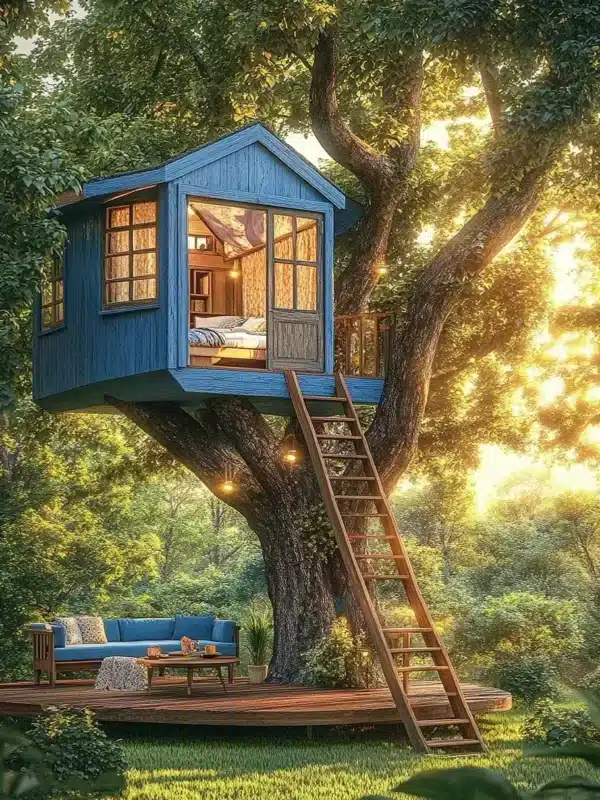
Although building a tree home is an interesting endeavor, without a well-considered tree house plan, your ideal getaway can rapidly become a financial disaster. Choosing the correct tree house designs is the basis for a safe, sturdy, and useful construction whether your dream is of a backyard playhouse for your children or an opulent treetop escape.
Our specialty at Treelofts is creating completely customised, high-end, structurally solid, tree house plans that realise your idea. Our knowledgeable staff makes sure every design takes long-term durability, weight distribution, weatherproofing, and tree health into account so you won’t have to go through trial and error learning.

Sadly, many homeowners and do-it-yourself builders choose or construct their tree house plans with avoidable but expensive errors. From choosing the incorrect tree to ignoring safety rules, these mistakes can cause unstable buildings, expensive maintenance, and maybe legal problems.
This tutorial will dissect the five most often occurring errors individuals make when selecting tree house designs and offer professional advice to enable you to confidently create a beautiful, long-lasting tree home.
Choosing the Wrong Tree for Your Tree House Plans
Regarding tree house plans, most people get enthralled with the design—the layout, the size, the features—but overlook the most crucial element: the tree itself. Your tree house is only as sturdy as the tree supporting it; choosing the wrong one could result in structural instability, significant safety concerns, and expensive repairs down-stream. Consider the tree as your base; would you build a house on shifting ground? Quite definitely not. Here also the same idea holds.
Actually, not every tree is appropriate for building a tree house. Some grow too quickly, some have thin wood, and some lack the root system needed to support a construction’s weight. If you want to ensure your tree house plans stand the test of time, you need to select a strong, healthy, and well-rooted tree from the very beginning.
Why the Right Tree Matters in Tree House Plans
A great tree home begins with a fantastic tree. Your tree house may swing too much, develop stress fractures, or perhaps fall if your tree lacks the ability to maintain a construction. To be honest, nobody wants to face with the nightmare of reconstructing their tree home just a few years following creation.
A properly selected tree ensures:
- Stability: A substantial tree reduces movement, therefore maintaining the stability of your tree house.
- Longevity: Your tree home will endure longer the more healthily the tree is.
- Environmental Sustainability: The building process will not damage a well-selected tree.
How then should one decide what to do? All of it boils down to size, strength, health, and root depth.
What Makes a Tree Ideal for Tree House Plans?
Particularly with regard to supporting a structure, not all trees are made equal. Before deciding on your tree house designs, consider these features in a tree:
- Strong Trunk and Mature Growth: Search for trees whose trunks at least measure 12 inches. Stronger support results from a thicker trunk.
- Deep Root System: Steer clear of shallow-rooted trees since in heavy gusts they may move or even topple over.
- Healthy: No infestation, no decay, no cracking. A tree in poor condition is a calamity just waiting to occur.
- Minimum Sway: Some trees swing more than others. You want one that is constant even in strong storms.
These features will help your tree home be firmly supported for decades, therefore lowering maintenance and safety issues.
Best Tree Species for Tree House Plans
Tree house building is best suited for some tree species because of their strength and durability. If you are lucky enough to have one of these in your backyard, you will start out very nicely:
- Oak: Unquestionably the best champion of tree house foundations. Built to last, strong, slow-growing.
- Maple: Has great weight-bearing capacity, thick roots, and solid wood.
- Douglas Fir: A wonderful choice for places with strong winds or erratic temperature.
- Beech: Though limb placement must be carefully considered, this is an extremely durable material.
If one of these trees is accessible, you are already headed in the correct direction for a solid and safe tree house.
Trees to Avoid When Planning a Tree House
Some trees are horrible decisions, while others are ideal for tree houses. Some just lack the strength to sustain a building; others have brittle wood; still others grow too quickly. Here are a few trees you really ought to avoid:
- Willows and Poplars: Shallow root systems and weak wood make these totally inappropriate for tree houses.
- Fruit Trees: Though they look fantastic, fruit-bearing trees are not designed for big loads. Continue to pick apples, not expand on them.
- Elms: Prone to illness that over time might weaken the tree.
If you only have access to these weaker trees, think about changing your tree house plans to incorporate more support posts or looking at a different design without entirely depending on the tree for construction.
Expert Tips for Selecting the Right Tree
If you intend to create a top-notch tree home, treat tree choice with great respect. These professional suggestions will help you ensure that your tree home designs begin on solid ground:
- Examine the health of the tree for fungus, cracks, or evidence of decay. If in doubt, see an arborist.
- Plan for expansion; your tree will keep growing, so ensure that over time branches won’t cause damage to your construction.
- Share weight equally rather than depending just on one strong limb’s support from a single attachment point.
- Choose environmentally friendly fasteners. Steer clear of immediately pounding nails into the tree. Choose Treehouse Attachment Bolts (TABS), which support without compromising the tree’s integrity.
Choosing your tree wisely now will help you avoid structural problems, maintenance nightmares, and future safety hazards. Want professional direction on your tree house designs? Let’s discuss.
Building a tree house is about ensuring your construction is based on a solid, dependable foundation rather than only about choosing the correct design. While selecting the wrong tree could result in expensive errors, with the correct knowledge you can build a sturdy, safe, and exquisitely crafted tree home spanning years.
Our specialty at Treelofts is creating unique tree house designs considering structural stability, weight distribution, and tree selection. Our crew can help you avoid mistakes and design the ideal tree house for your space whether your planning is just beginning or you are ready to start building.
Ignoring Weight Distribution and Structural Support
When dreaming up your tree house plans, it’s easy to get caught up in the fun details—windows, rope bridges, hidden trapdoors. The truth is, though, that your tree home may become a swinging, imbalanced disaster without appropriate weight distribution and structural support. Understanding weight distribution is non-negotiable whether you want your tree home to feel like a boat in a storm or—worse—risk destroying the tree itself.
Many first-time builders believe they can just mark the day by attaching a platform to a few branches. Sadly, that leads quickly to instability, too much tree stress, and possible failure. A well-supported tree house guarantees both lifetime and safety by distributing weight equally. How therefore may one prevent this expensive error?
Why Tree House Plans’ Weight Distribution Counts
Think of your tree house as a building in the sky. It must be balanced, correctly supported, and able of changing weight over time, much as any house on the ground. Should one part be overloaded, you will begin to hear tilting, cracking noises or, in severe circumstances, structural collapses.
A tree house in good balance guarantees:
- Even weight distribution helps to avoid weakening of the tree by stressing spots.
- Minimal swaying helps to lessen too much movement within.
- Longevity guarantees that the tree stays healthy and supports the construction for decades going forward.
Ignoring this stage could result in expensive repairs and safety risks; so, it is imperative to get it right from beginning.
Common Mistakes That Lead to Poor Weight Distribution
Even well-designed tree house plans can fail if they don’t consider weight distribution. Among the most common errors builders make are these:
- Using a single branch for support: No one branch, regardless of thickness, should support a tree house totally. Breakage, shifting, or tree damage can follow from this.
- Attaching everything to the trunk: Although tree trunks are robust, stressing one trunk alone could cause stress fractures or limit future tree growth.
- Ignoring Tree Movement: Trees move with the breeze by nature. Your tree house may cause bolts to loosen over time if it is overly tightly fastened.
- Changing Nails for Structural Fasteners: Loose nails allow one to create an unstable construction. Rather, lag bolts, or professional-grade Treehouse Attachment Bolts (TABs), should be used.
- Overloading Weak Trees: Some trees lack the strength needed to completely support a tree house, hence extra beams or posts are needed for stability.
Building a safe and long-lasting tree house depends on avoiding these errors.
How to Properly Distribute Weight in Your Tree House Plans
Weight distribution should be considered before building starts if you wish a strong and safe tree house. The following will help to guarantee even support:
1. Distribute the Weight Among Several Support Sites
Share the weight across several strong points rather than tying your tree home to one trunk or branch. Your tree’s structure will determine whether you can:
- Form a more balanced load-bearing system with two or more branches.
- Rather than stressing weight in one region, attach support beams throughout several limbs.
- Consider floating brackets, which allow the tree to move naturally without pressuring the structure.
2. Reinforce with Additional Support Structures
Not all trees are strong enough to hold a fully suspended tree house. Should you have questions regarding the capacity of your tree, extra supports greatly improve stability.
- Post-and-Beam Support – This method involves placing vertical posts under the tree house, transferring some of the weight directly to the ground instead of the tree.
- Cable Suspension Systems – Some tree house plans use cables to distribute weight evenly across multiple attachment points, reducing pressure on the tree.
Both methods work well for larger or heavier tree houses, especially if you plan on using heavy materials or additional features like decks or multiple levels.
3. Choose the Right Fasteners for Maximum Stability
One of the biggest mistakes people make is using standard nails or screws, which are not designed to handle the weight shifts that come with a tree house. Instead, opt for:
- Treehouse Attachment Bolts (TABs) – These specially designed bolts are made to hold up heavy structures without excessively damaging the tree.
- Heavy-Duty Lag Bolts – A strong alternative that provides deep penetration into the tree for a more secure hold.
- Compression Clamps – If you want to minimize tree penetration, clamps can be used to attach support beams without drilling directly into the trunk.
Using the appropriate fasteners and connection methods guarantees that your tree house remains solid for years to come.
Signs That Your Tree House Has Weight Distribution Issues
If you’ve already built a tree house and feel weight distribution could be incorrect, check out for these warning signs:
- Noticeable Tilting or Leaning – If one side of your tree home sits lower than the other, weight distribution is uneven.
- Creaking or Swaying – A little movement is okay, but excessive swaying or creaking can suggest weak attachment points.
- Visible Damage to the Tree – Look for stress marks, fissures, or areas where the tree appears stretched.
If any of these concerns develop, it’s time to fortify your framework before problems worsen.
Expert Advice for Long-Term Tree House Stability
Building a tree house should be a long-term investment, not a transitory building that requires continuous repairs. If you want your tree house plans to be safe, durable, and structurally solid, follow these expert recommendations:
- Before building, assess tree strength working with an arborist.
- Rather than depending just on a branch or trunk, use several support points.
- Spread load-bearing areas around several places to equally balance weight.
- If the tree’s structure is insufficient to handle the whole weight, reinforce with ground supports.
These techniques can help you to prevent expensive structural collapses and guarantee that your tree home is constructed to last.
Build with Confidence – Let Treelofts Help You Get It Right
One of the biggest errors people make when building a tree home is ignoring weight distribution and structural support; it is also one of the easiest to avoid. A well-supported tree house will be safer, sturdier, and longer-lasting, allowing years of fun free from ongoing maintenance headaches.
Designing expert-engineered tree house layouts that give weight distribution, tree health, and long-term durability top priority is our specialty at Treelofts. Let our professionals walk you through the process of correctly reinforcing your tree home if you’re not sure how to do so.
Overcomplicated or Unrealistic Tree House Plans
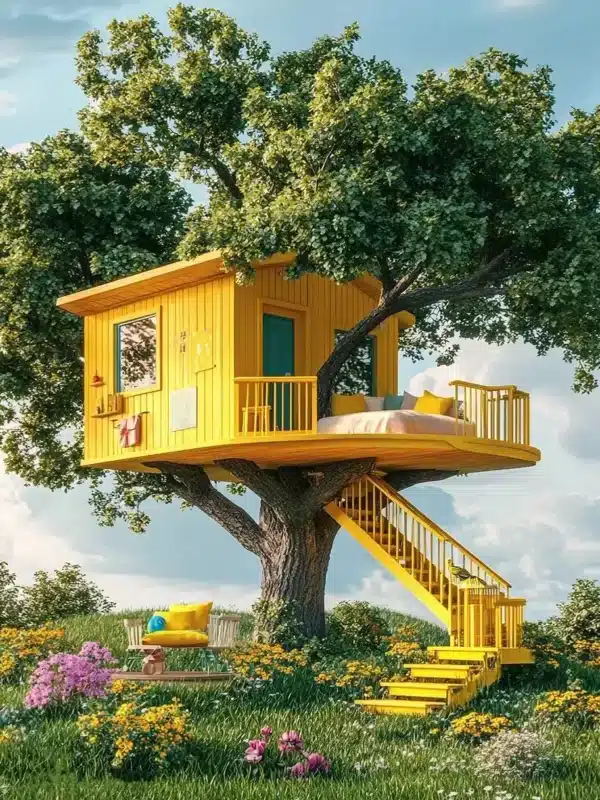
Designing tree house plans can easily lead one into excess. You begin to see several floors, a suspension bridge, an observation deck, or perhaps a secret chamber. Although ambition is high, too elaborate or impractical tree house designs usually cause frustration, spiraling expenses, and a structure never really ever created.
Undervaluating the difficulty of tree house construction is one of the most common errors both homeowners and do-it-yourself builders make. Tree houses have to be carefully planned to allow tree movement, weight distribution, and long-term durability unlike a ground-level construction. Should your designs be overly complicated, you could find yourself caught midway through building with increasing costs and no usable tree house.
Why Simplicity Is Key in Tree House Plans
A well-designed tree house need not be unduly complicated to be safe, useful, and attractive. Actually, some of the best tree house plans adopt a “less is more” philosophy, guaranteeing seamless construction and long-term stability at the same time.
Overcomplicated designs often lead to:
- Structural instability can make the tree home dangerous from too strong add-ons, unsupported weight, and weak attachment points.
- Higher costs: Your plan’s complexity will determine the materials and skilled personnel required, which will rapidly exceed your budget.
- Longer construction times for complicated buildings mean possible delays and irritation since they take much more time.
Maintaining your sensible and well-organized tree house ideas can help you to maintain them realistic, reasonable, and long-lasting as such.
Common Mistakes in Overcomplicated Tree House Plans
If you’re not careful, even well-meaning tree home designs might spiral out of hand. These are some of the most often occurring traps that result in ill-founded ideas:
- Ignoring Tree Limitations: Every tree has weight capacity and natural development pattern. Ignoring these elements in design will soon result in structural problems.
- Overloading with Features: Though slides, bridges, decks, zip lines, and trapdoors are exciting, too many elements can tax the construction.
- Ignoring Prudence: On paper, certain tree houses look fantastic; unfortunately, with common tools and materials, they are practically difficult to create.
- Ignorance of Accessibility: Difficult access to a tree house—from a dangerous ladder or inappropriate entrance point—will not be used as much as expected.
- Neglecting Maintenance Requirements: Maintaining something more complex in design becomes more difficult. Consider how you will over time clean, fix, and enhance the building.
Designing Functional and Realistic Tree House Plans
Follow these professional design guidelines to keep your ideas realistic and effective if you wish a tree house that is both fascinating and useful.
1. Start with a Basic, Scalable Design
Any outstanding tree house design depends on a solid base. Rather than beginning with a complex multi-level structure, think about a simple, single-platform design that might be developed over time.
- Most tree houses start on a 10′ x 10′ platform.
- If you need more room, think about an elevated deck instead of a second floor.
- Initially keep the design light to lessen strain on the tree.
2. Design in Motion and Tree Growth
A tree home has to allow for natural movement and tree growth unlike a ground-level residence. If your design is overly inflexible, over time structural tension or even tree damage could result.
- Use floating brackets to let the tree’s growth cause the building to slink somewhat.
- Rather than fixing the tree house, keep attachment points adaptable.
- Though you should leave space for future growth, avoid overloading the tree from beginning.
3. Select Strong and Sensible Materials
Complicated tree house designs can need for specialist materials that might be costly to install or difficult to get. A practical approach emphasizes reasonably priced, durable, easily worked with materials:
- Choose pressure-treated lumber for longevity.
- To guard against the elements, choose weatherproof roofing materials.
- Simplify windows and doors; intricate glasswork or hefty shutters are not required difficulties.
4. Put Safety Above Appearance
A tree home should be robust, safe, and simple to keep up. Give extreme architectural elements second priority instead of stressing:
- Strong, stable ladders are more crucial than a sophisticated spiral staircase at safe access locations.
- Simple, perfectly placed slats in a reinforced railing offer safety without needless complication.
- Stable weight distribution: Steer clear of unequal load distribution that can tilt or swing the tree home too much.
5. Strategically Schedule Future Additions
If you’re eager about adding more features, create your tree house designs such that they let for slow improvements.
- Start with a simple framework and then add later swings, climbing walls, or a zip line.
- Make sure the original basis can support future growth without significant rebuilding.
- Make paths and access changeable so you may change the design as necessary.
You will guarantee that your tree house designs produce a useful, safe, and exciting environment by keeping things straightforward and initially stressing practicality.
Signs Your Tree House Plan Is Too Complicated
Ask yourself these questions to see if your tree home ideas are reasonable:
- Does the design call for professional engineering knowledge for execution?
- Excessive unsupported elements—floating decks, extended extensions, etc.—exist in some areas?
- Is the price really more than anticipated?
- Would building take more than few months to finish?
- Over time will it be challenging to keep?
Should you have “yes” for any of them, you might want to streamline your design. Always, a practical tree home will be preferable than an unbuilt one.
Let Treelofts Realize Your Tree House Vision
Planning a tree home can easily overwhelm one with possibilities. On the other hand, too complicated or unrealistic designs could cause structural problems, construction delays, and financial overruns. The secret is to strike a balance between imagination and pragmatic execution such that your tree home designs are realistic and long-lasting.
Custom tree home designs that combine beauty, safety, and use abound at Treelofts. Our professionals can help you design a tree house that is exciting, structurally sound, and constructed to last regardless of your desired basic, beginner-friendly style or luxury getaway.
Neglecting Weatherproofing and Long-Term Durability
Many times when people begin designing their tree house, they concentrate on design, layout, and entertaining elements; but, one of the most underappreciated elements is long-term durability and weatherproofing. Once your tree house is constructed, it’s tempting to believe it will last for years; unfortunately, fluctuations in temperature, humidity, rain, and wind can rapidly have an impact without the appropriate preventative steps.
A badly weatherproofed tree house may have rotting wood, rusty metal, leaks, bug infestations, and perhaps structural deterioration. If your intention is to build a long-lasting, safe tree home, then making sure it is correctly sealed, reinforced, and constructed using sturdy materials is quite important.
Why Tree House Plans Need Weatherproofing?
A tree house is not your average residence. It is raised, out in the elements, and built on a living structure that moves with the breeze as seasons change. This increases the significance of weatherproofing above that of ground-based construction.
Ignoring to guard your tree house from the elements could result in:
- Water damage and wood rot: Rainwater can swell, split, and degrade untreated wood.
- Build-up of mold and mildew within can pose health risks and compromise structural integrity.
- Trapped moisture inside can, over time, cause non-rust-resistant metal corrosion—that which affects screws, bolts, and brackets—leading to instability.
- Pests: Termites, carpenter ants, and other pests find perfect habitat in untreated, moist wood.
- Wind damage: Strong gusts might knock a tree home if it is not securely fixed and fortified.
Correct weatherproofing is absolutely essential to avoid expensive repairs and guarantee that your tree house will endure decades.
Essential Weatherproofing Techniques for Tree Houses
Use these main weatherproofing methods to ensure your tree home is robust, dry, and safe in all conditions:
1. Choose the Right Type of Wood
Using weather-resistant wood is absolutely vital since your tree house will be subjected to rain, humidity, and shifting temperatures. Among the best woods are:
- Cedar – Naturally resistant to rot and insects.
- Redwood – Robust, strong, and moisture-resistant.
- Pressured-treated Lumber – Though it should not be utilized in interior spaces, it is chemically treated to withstand deterioration.
Steer clear of cheap softwoods like pine since they readily absorb water and break down under extreme conditions.
2. Seal and Protect the Wood
Even the greatest wood requires more defense from the elements. Using these guidelines will help your tree house be watertight and sealed:
- Apply premium external wood sealer to stop absorption of moisture.
- To guard against sun damage and fading, cover with UV-resistant paint or stain.
- For ongoing protection, reapply sealant every one to two years.
- Use marine-grade varnish to offer an additional layer of durability for tree houses in humid or wet climates.
3. Design a Proper Drainage System
Among the main hazards to the lifetime of a tree home is standing water. Rainwater can lead to wood rot and mold development should it gather on the platform or leak into the walls. One should avoid this by:
- Creating a steeply pitched roof so water runs off readily.
- Channeling water away from the construction using gutters and drip edges.
- Creating little water drainage spaces between flooring.
A well-considered drainage system can help your tree house remain damage-free and dry.
4. Use Rust-Proof Hardware
Standard nails and screws can rapidly rust, weaken, and break under outdoor conditions; they are not meant to be used there. Instead, employ:
- Strongly resistant to corrosion, stainless steel bolts and screws.
- Galvanized fasteners, coated to stop rusting.
- Designed especially to manage outdoor exposure and mobility, Treehouse Attachment Bolts (Tabs).
Making sure your fasteners resist the elements will help to avoid structural collapses brought on by corroded or weaker hardware.
5. Shield from Wind Damage
Strong winds must be able to be endured by a tree house yet still let the tree move naturally. To strengthen wind opposition:
- Instead of fighting every breeze, use floating brackets to let the structure move somewhat with the tree.
- Set the tree home in a shaded area to minimize direct high wind exposure.
- Steer clear of big, flat surfaces that could collect wind; substitute open railing plans over solid walls.
Strong enough to endure storms, a well-built tree house should be flexible enough to move with the tree.
6. Prevent Insects and Pests
Though a tree home in nature will naturally draw insects, birds, and small animals, you can reduce damage by:
- Treating wood with insect-repellent to discourage carpenter ants and termites.
- Covering cracks and crevices helps stop rodents or wasps from nesting within.
- Keeping food and organic waste out of the tree house helps prevent drawing unwelcome visitors.
- Frequent search for indications of an infestation helps to avoid long-term damage.
Indices Your Tree House Needs Improved Weatherproofing
Poor weatherproofing will finally reveal warning signals even if your tree home plans appeared ideal at first. These red flags suggest that the elements are causing problems with your tree house:
- Wood feels soft, damp, or shows signs of cracking and splitting.
- Underneath the roof or on the internal walls, mildew or mold is growing.
- Metal brackets, screws, or bolts reveal rust or corrosion.
- After rain, you find leaks or water marks.
If you see any of these indicators, act right away to seal the building, strengthen it, and increase drainage.
Build a Weatherproof Tree House That Lasts a Lifetime
Though it won’t last long without appropriate weatherproofing and sturdy materials, a tree house should be a haven of adventure, creativity, and leisure. Following correct sealing, drainage, and reinforcing techniques can help you to make sure your tree home stays strong, weather-resistant, and safe for many years to come.
Our area of expertise at Treelofts is creating custom tree home designs with premium durability and weatherproofing. Our professionals assist you in selecting the best materials, sealing strategies, and reinforcement procedures so that your tree home resists the elements robustly.
Not Following Safety Regulations and Local Permits
Assuming one may begin construction without thinking through local building ordinances, zoning restrictions, and safety requirements is one of the most common errors people make when constructing tree house plans. Actually, breaking these guidelines might result in legal action, forced relocation, fines, or worse—a hazardous construction endangering individuals.
Nobody wants to invest time and money creating their fantasy tree house just to be informed it needs to be destroyed because local laws violate. Researching permits and safety rules is a phase you cannot afford to overlook if you are committed to building a legal, long-lasting, safe tree home.
Why Safety Guidelines and Permits Count for Tree House Designs?
In many places, a tree house is regarded as a permanent or semi-permanent construction unlike a tiny backyard playground. This implies it has to follow particular guidelines varying depending on:
- The height of the tree house: Many towns restrict the height of any building in residential areas.
- The scale of the construction: While a tiny, open tree home might not call for a license, a big enclosed construction with a roof might.
- Property lines and neighbor concerns: You can run across zoning problems if your tree home stretches too near a neighbor’s yard.
- Safety regulations: To guarantee safety, certain states mandate particular weight restrictions, railing heights, and anchoring methods.
Ignoring these rules not only causes legal problems but also could lead to dangerous building endangering your family and you.
Typical Errors Causing Safety and Legal Problems
Many individuals do these crucial mistakes even with the best tree house designs:
- Skipping the Permit Process: Some homeowners believe they don’t need a building permit as their tree house is just penalties or forced removal could follow from this.
- Building Too Close to Property Lines: Many places call for buildings to be erected a specific distance from fences or adjacent yards. Ignoring these guidelines could cause conflicts or legal action.
- Ignoring Safety Guidelines: Ignoring recommendations for ladder stability, weight restrictions, or railing height runs the risk of injury or accident.
- Ignoring Fire and Emergency Access: Should an emergency strike, would medical professionals or firefighters have simple access to the tree house? Should not be the case, it could pose a major safety concern.
- Ignoring Tree Growth: Not accounting too tightly secured tree houses can limit the tree’s growth and over time cause structural damage.
Researching local rules and avoiding these errors can help you create a legally acceptable, safe tree home for many years to come.

How You Make Sure Your Tree House Uses Safety Guidelines
1. Review Local Zoning Rules and Permit Requirements
See your local building department to find out whether you require a permit before developing your tree home blueprints. While some places may have rigorous criteria, others might let smaller buildings without a formal permission.
- Inquire about height restrictions; many places have rules on the height of a construction project.
- Verify property boundary rules to prevent future conflicts by making sure your tree home isn’t erected too near a neighbor’s land.
- Know foundation and anchoring standards; certain localities can have regulations regarding the attachment of tree homes to trees or their support by ground poles.
Talking quickly with your local building office may help you avoid later on expensive blunders and legal problems.
2. Adopt Basic Safety Rules
Following industry-standard safety measures will assist avoid mishaps even if your city lacks particular rules for tree houses.
- If your tree house platform rises over six feet, it should feature at least 36-inch high rails and barriers.
- Ladder Safety: The stairs or ladder should have strong attachments and non-slip steps. Steer clear of small toddlers utilizing rope ladders.
- Make sure the tree house design can securely handle the weight of several people, including extra strain from swinging or jumping.
- Every tree house should feature a safe exit plan including a supplementary ladder or escape hatch.
3. Get Neighbor Approval—Should It Be Necessary
Even if your tree house is on your property, it’s a good idea to ask neighbors before building—especially if the construction faces their backyard.
- Before beginning building, it’s advisable to acquire permission as certain HOAs (Homeowners Associations) may have restrictions about structures seen from adjacent properties.
4. Select Appropriate Building Methods to Save the Tree
Unlike a conventional construction, a tree house depends on a live tree for support. To guarantee the tree stays in good condition supporting the construction:
- Nails can harm the tree; use Treehouse Attachment Bolts (TABS).
- Steer clear of enclosing cables or chains around the trunk since this will limit expansion.
- Use flexible joints or floating brackets to let future tree movement room.
A well-made tree house should let the tree grow organically while maintaining stability of the construction.
Indices Your Tree House Might Violate Permission Guidelines or Safety Standards
Should you already have a tree home but worry about compliance or safety, here are warning indicators suggesting it might not follow rules:
- Under weight, it obviously leans or moves.
- Before building started, you neglected to review local legislation.
- There are no safety obstacles or railings.
- The attachment sites exhibit indicators of stress or injury to trees.
- Neighbors have objected against the construction.
If any of these apply, think about strengthening the framework, including safety elements, or calling on a professional to guarantee compliance.
Construct a Long-Lasting, Legal, and Safe Tree House
Though it should be a haven of adventure, leisure, and enjoyment, a tree house built against municipal standards and safety guidelines could result in expensive penalties, legal problems, or structural collapse. The best course of action is to make forward plans, acquire the required permits, and construct with safety in mind.
Our area of expertise at Treelofts is creating not only aesthetically pleasing but also completely comply with safety criteria tree house designs. Our staff is here to help you ensure your tree house is correctly strengthened or negotiate permit requirements.
Conclusion
Choosing the right tree house plans is about more than just aesthetics—it’s about safety, functionality, and long-term enjoyment. Avoiding these five expensive blunders will help you to guarantee that your tree house satisfies all safety criteria, resists the elements, and is designed to last.
At Treelofts, we remove the guessing involved in creating your ideal tree house. We are ready to assist you with either professional structural integrity advice or tree house plans fit for your garden.
Don’t put your tree home project to chance; get experienced advice from Treelofts now and help to realize your ideal tree house!
